
Table of Contents
Most longevity diets fail because they are prescribed like a medication, not taught like a skill. The world’s longest-lived communities rarely follow one strict meal plan. Their eating habits share a structure: plenty of plants, enough protein to keep muscle, healthy fats, almost no ultra-processed food, and a daily period without food. That structure is the longevity diet in its simplest form.
The good news? You do not need a supplement shelf full of powders to eat this way. The pattern can be built in six practical steps with food you can find in any ordinary supermarket.
What the Longevity Diet Looks Like in Real Life
Before you change anything, it helps to picture a day that follows the pattern. Use this as a benchmark, not a rigid prescription.
- Breakfast: 200g Greek yogurt with mixed berries, a handful of walnuts, and a spoonful of ground flaxseed.
- Lunch: a large salad with lentils, roasted sweet potato, crumbled feta, olive oil, and lemon.
- Snack: an apple with a tablespoon of peanut butter.
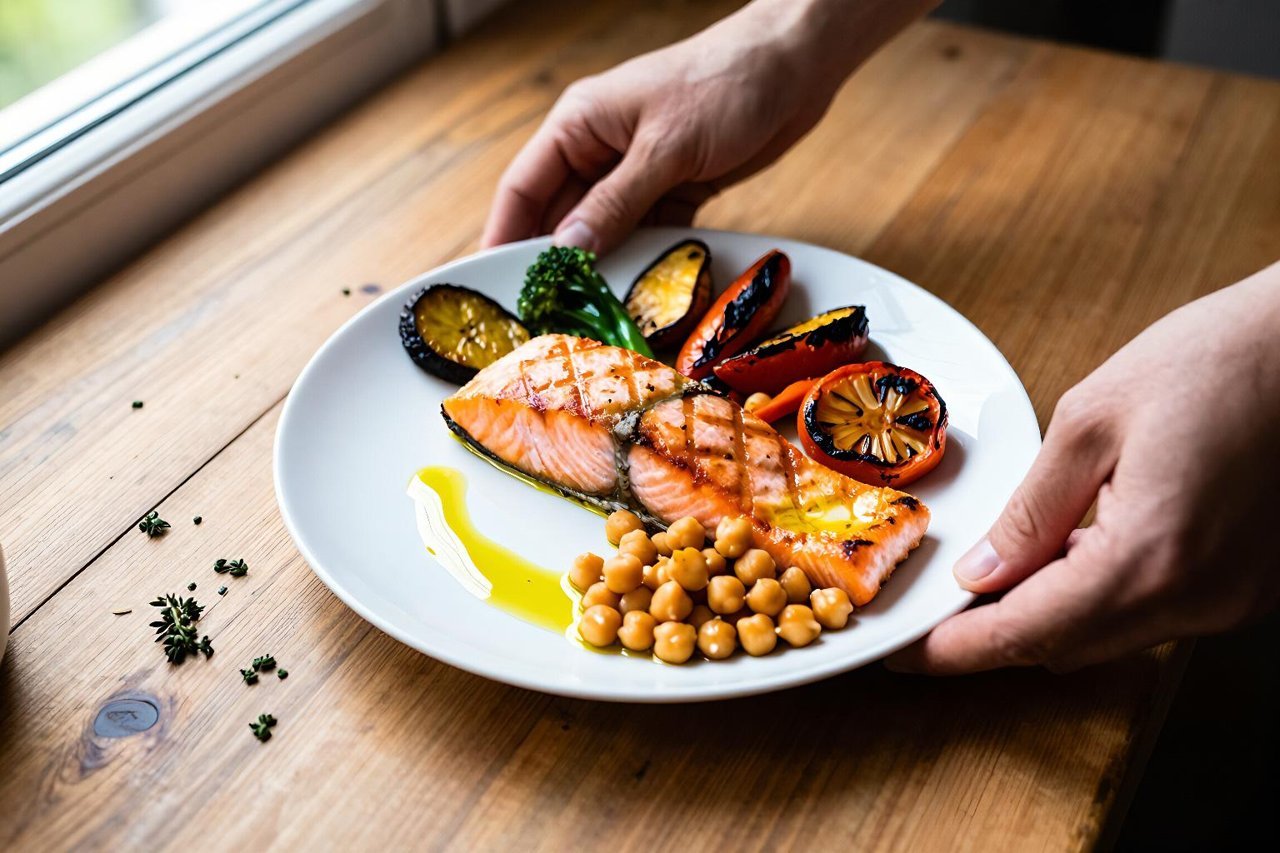
- Dinner: baked salmon, steamed broccoli, sautéed spinach, chickpeas, and a modest portion of brown rice.
If that is more structure than your current week, don’t worry. A bowl of lentil and vegetable soup with whole-grain toast, followed by natural yogurt, hits the same notes. Each meal should combine fibre, protein, and enough fat for flavour. For a closer look at the evidence behind these choices, read the full longevity diet overview.

Step 1: Apply the Half, Quarter, Quarter Plate Rule
This one visual rule prevents the most common mistake in plant-forward eating: a giant bowl of pasta with a scattering of vegetables and no real protein.
Imagine your dinner plate cut into halves and quarters. Half goes to non-starchy vegetables such as broccoli, peppers, green beans, tomatoes, or leafy greens. One quarter goes to protein-rich food like chicken, fish, eggs, tofu, or legumes. The remaining quarter is for slower carbohydrates: sweet potato, quinoa, brown rice, beans, or whole-grain bread.
Use the same ratio at lunch, at dinner, and even in one-dish meals. If you cook a stir-fry, simply make sure the vegetables outweigh the rice and a palm-sized portion of protein is not hiding underneath. A Mediterranean-style plate follows this ratio naturally, and our guide to starting the Mediterranean diet walks you through the pantry essentials and a simple weekly rhythm.
Step 2: Build a Plant Variety Habit
Gut health is one of the strongest levers for healthy aging. Instead of making you count every calorie, many longevity researchers now focus on plant variety. A common target is thirty different plant foods per week.
That number sounds intimidating only if you think a serving of vegetables has to be a separate meal. In practice, it happens through small additions:
- Add a tablespoon of mixed seeds (pumpkin, sesame, sunflower) to yogurt, oats, or salad.
- Swap white rice for brown rice, or cook rice with an equal amount of lentils or quinoa.
- Stir frozen peas and spinach into soup, curry, pasta sauce, or scrambled eggs.
- Grate carrots and courgette into stews, ragus, or fritters.
- Mix a bag of pre-made coleslaw into your lunch bowl.
Keep a running list of different plant foods as you eat them. Once you notice themes (for example, no seeds or alliums this week), use one of the swaps above. The variety adds up quickly.
Step 3: Give Yourself a Manageable Daily Fasting Window
Timing matters as much as content. The calorie-free window between dinner and breakfast appears to support cellular repair, insulin sensitivity, and circadian rhythm. Jumping into 16-hour fasting or the aggressive protocols covered in our deep dive on extreme longevity and health optimization is not necessary at this stage. A simple 12-hour fast is enough to produce benefits.
The 8pm to 8am starter fast
Pick a ten-to-twelve-hour window that fits your life. If you eat early, finish dinner by 7pm and delay breakfast until 7am. If you socialise late, try eating your last meal by 9pm and breaking the fast at 9am. Consistency matters more than perfection.
During the fast, drink water or unsweetened tea. If you usually snack after dinner, replace the habit with a walk, a shower, or brushing your teeth. After two weeks you may not miss the evening snack at all.
Step 4: Give Every Meal a Protein Anchor
Protein protects the muscle mass that keeps you strong and metabolically healthy as you age. Many plant-forward eating plans fail because they are not clear about protein quantity. Current guidelines for older adults often suggest 1.2 to 1.6 grams per kilogram of body weight per day.
A 70kg person aiming for the higher end will need about 100 grams of protein daily. Divide that across three meals, and each meal should contain roughly 30 grams.
What 30 grams of protein looks like
- 100g cooked chicken breast: about 31g protein.
- 200g firm tofu: around 30g protein.
- 250g Greek yogurt: roughly 25g protein.
- 100g canned tuna: about 25g protein.
You don’t need to weigh everything every day. Instead, use an approximate anchor at each meal: a palm-sized portion of meat, fish, or tofu, or two eggs plus a yogurt on the side. Also think about source diversity. Replacing some red and processed meat with fish, legumes, tofu, and yogurt is one of the most consistent dietary patterns among people who live longest.
Step 5: Clean Up the Liquids
The longevity diet can survive a bowl of rice, but it is easily wrecked by liquid sugar. A single 330ml can of cola often contains 35g of sugar. Swapping that one can for sparkling water removes 35g of simple sugar without forcing you to change a single meal.
Unsweetened coffee and tea contribute to longevity in observational studies. Vegetable juice and smoothies are trickier because blending can destroy fibre and make blood sugar spike. If you do drink smoothies, keep fruit to one serving and add a handful of greens. The best beverage for most meals is still plain water.
Step 6: Track One Metric for 21 Days
Don’t measure everything. Choose one metric that captures the habit you want to change. If you rarely eat vegetables, track plant portions. If sugar-sweetened drinks are your weak spot, track how many days you go without one. If you’re worried about muscle, count approximate protein anchors.
Write the number on a wall calendar or in a note-taking app. After three weeks, the behaviour becomes a default. This kind of habit loop matches what we cover in the article on science-backed habits that extend healthspan. And if you want help turning diet intentions into a realistic annual plan, the episode on longevity goals, strength, and sustainable health habits provides a useful template.
Do all of this imperfectly and you will still be ahead of someone waiting for the perfect longevity diet. Six steps, one meal at a time, is how eating for a long life actually happens.


