
Table of Contents
Ask ten people to name the best collagen supplements and you will get ten different answers. Whole-collagen jars, marine peptide sachets, capsules stacked next to vitamin C. The confusion is understandable. In this category, there are more trade-offs than in most other supplement aisles. This comparison is not another list of best sellers. It maps each major choice to what it gains, what it costs, and where it falls short.
Collagen is not one thing: choose a type by goal
Collagen is a family of proteins, not a single molecule. Type I is the main structural protein in skin and bone. Type II is the dominant collagen in joint cartilage. Type III appears with type I in skin, blood vessels, and internal organs. Most brands name their type, but the usefulness of that type depends on your target.
Clinical studies of skin elasticity and hydration typically use hydrolysed type I collagen at 2.5 to 10 grams daily. If your main concern is fine lines and skin firmness, a type I product is probably a better bet than a multi ingredient blend. For a close inspection of how those studies are interpreted, look at this deep-dive on collagen for skin, joints and hair, which separates the hopeful results from the overstated ones.
The multi-blend compromise
Multi-collagen powders combine type I, II, III and sometimes V and X. They sell the promise of covering every tissue at once. The problem is timing and dosage. Cartilage research often uses very different doses from skin research, yet a blend scoops everything together. You get convenience, but you lose the ability to adjust one type without changing the others. That is a fair trade if you only want general wellness. It is less smart when you have a specific joint or skin issue because you cannot tune the formula without abandoning the jar.

Bovine, marine, chicken, or porcine: pick your source trade-off
Once the collagen type is decided, the animal source determines taste, price, and how many environmental or dietary issues you have to swallow. Each major source comes with its own plus column and minus column.
- Bovine (cow hide): Provides type I and III, and tends to be the cheapest per gram. The taste can be slightly beefy, but good flavour systems cover it. Grass-fed versions cost more because the cattle are pasture raised, not because the collagen molecule is stronger.
- Marine (fish skin and scales): Almost always type I, and often sold as smaller peptides for skin products. Prices run two to three times higher than bovine. It smells faintly fishy before mixing, and the sustainability story depends on whether the source is farmed or wild-caught by-product.
- Chicken (sternum cartilage): The main source of type II. This is the collagens used in joint formulas, not beauty powders. It is hard to find in plain powder and usually expensive.
- Porcine (pig skin): Structurally close to human collagen and common in medical settings. In supplements it is less popular because many people avoid pork for cultural or religious reasons.
A marine collagen may sound premium, but digestive tolerance often matters more than the label. If fish burps appear after two days, a high-quality bovine peptide with vitamin C might end up being the best collagen supplement for you.
Powder, capsules, or liquid: what your routine can actually handle
The format changes more than convenience. It changes how much you can realistically ingest and what each serving costs.
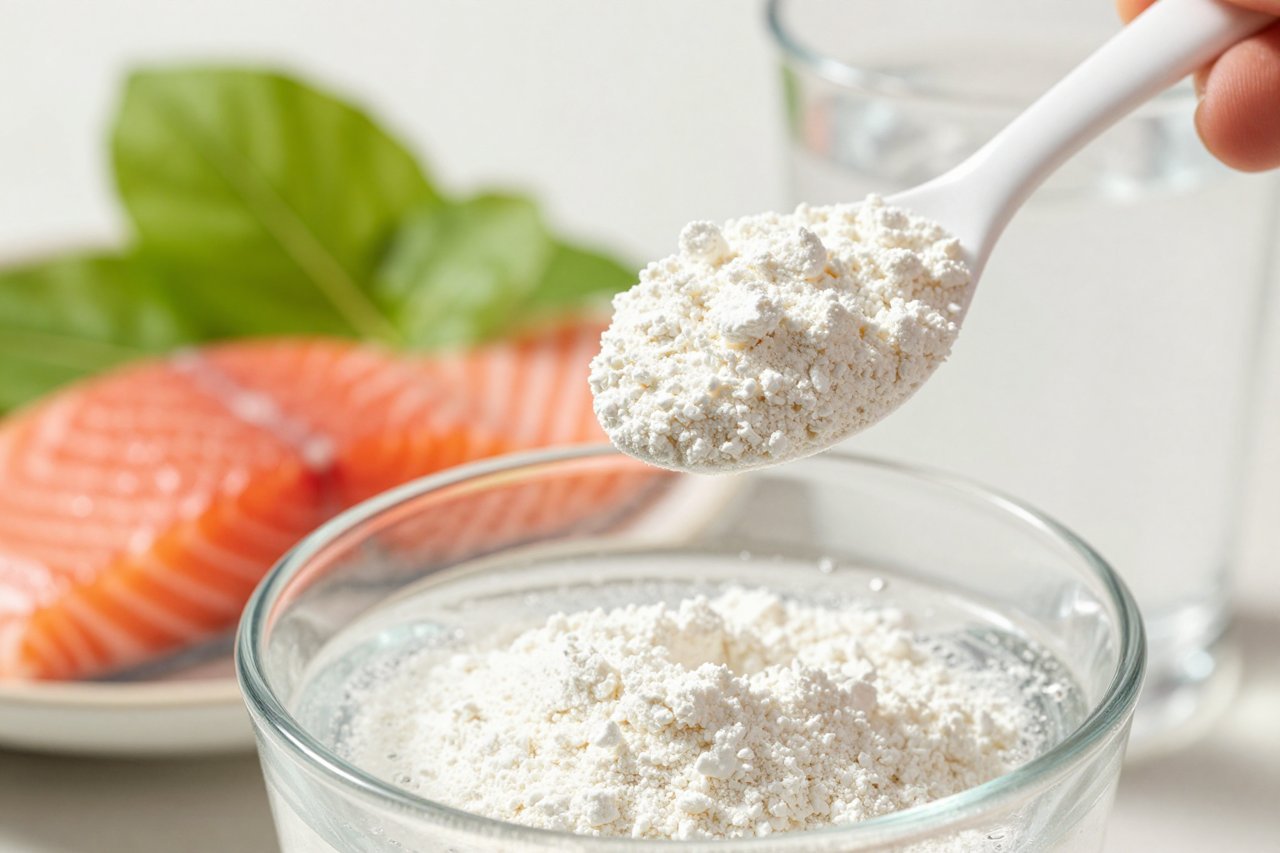
Powders are the most flexible and the best value for high doses. A 500-gram tub can provide 10 grams of collagen for a fraction of the price of fancy sachets. Some brands dissolve well only in warm liquid, so check the label before stirring into cold smoothies.
Capsules are the easiest to carry but the hardest to dose upward. A typical capsule holds 500–750 mg of collagen. To reach 10 grams, you would need to swallow 13 to 20 pills in a day. Most people give up by capsule number eleven. Capsules make sense for a low dose such as 2.5 grams for skin support or to keep in your bag on a plane.
Liquid collagen shots sit somewhere in between. They are portion-controlled and portable, but you are often paying for packaging and flavouring rather than extra protein. Check the box for grams of collagen, not total drink volume. Some shots contain only 2.5 grams, despite the premium price.
A note on hydrolysation and heat
The term to look for is hydrolysed collagen, sometimes written as collagen peptides. Hydrolysing breaks the protein into shorter strands so they can dissolve and get absorbed. Heat no longer does much to these fragments. That is why you can stir a powder into hot coffee without turning it into a gel or ruining its structure. The old rumour about losing benefits in warm liquids does not survive contact with how peptides are actually manufactured.
Collagen cream is not the same fight as a supplement
A topical collagen product puts collagen on the surface of your skin, where the molecules are far too large to pass easily into the dermis. That does not make it worthless: heavy topical peptides can hydrate and temporarily plump the outer layer. But a collagen moisturiser works differently from an oral supplement that aims to supply raw material through the bloodstream. Make that separation before spending money. A collagen cream and a supplement should be treated as different skin-care tools, not interchangeable versions of the same thing.
Oral collagen also sits beside other anti-aging ingredients. Vitamin A derivatives and peptides can affect skin through their own pathways, and sometimes these outperform a collagen supplement at reducing deeper wrinkles. If you are already using a powder and notice little change after four months, a retinol, peptide, or natural cream may deserve the next trial. The side-by-side trade-offs between retinol, peptide, and natural formulas show how different the mechanisms can be.
Before checkout: the maths and labels that actually matter
The phrase “best collagen supplements” only becomes useful when you have a way to compare jars. Start with price per gram of actual collagen, not the price of the jar. A 60-capsule bottle at $25 may contain just 30 grams of collagen, which means $0.83 per gram. A $45 tub with 500 grams would cost $0.09 per gram. The tub looks more expensive but is wildly cheaper per dose.
Then look for third-party testing. Several collagen brands now publish heavy metal tests for lead, arsenic, cadmium, and mercury, since animals can accumulate contaminants in their tissue. The absence of a certificate does not guarantee a problem, but it does make the label claim harder to trust. The step-by-step field guide to choosing a collagen supplement walks through label red flags and supplement verification in more concrete detail.
Consistency is the hidden variable
The most elegantly sourced marine peptide will not work if you take it every other day and forget on weekends. Collagen is a slow-turnover protein. In most trials that show a benefit for skin, participants stay consistent for 8 to 12 weeks. That makes routine compatibility a bigger factor than the source or form.
The true comparison therefore ends with your own habits. Which supplement can you put in your morning coffee without thinking? Which one fits in your carry-on? Which one tastes tolerable enough to finish? All the type and source distinctions only matter if the jar is actually being used.
And no supplement should carry the whole anti-aging burden alone. Collagen breakdown accelerates with sun exposure, smoking, and poor sleep. Picking a collagen product gets you only part of the outcome. Pair it with an honest look at natural anti-aging remedies, including topicals and lifestyle changes, then choose the tool you can follow through on.


