
Table of Contents
Ask ten sports fans to name the best athletes of all time and you’ll get ten different lists. A track fan says Usain Bolt. A basketball fan says Michael Jordan, and their friend says LeBron James purely to start an argument. Serena Williams, Lionel Messi, Tom Brady, Simone Biles, Wayne Gretzky. Everyone is answering the same question while quietly using completely different rules.
That’s what makes the debate so addictive, and also why it never ends. Nobody agrees on the criteria, so nobody agrees on the list. Fix the criteria first and the conversation gets a lot more interesting.
What Actually Counts When We Rank the Best Athletes
Strip away the nostalgia and a handful of measures do most of the work:
- Dominance over peers — not just beating the field, but making the field look ordinary for years at a time.
- Longevity — a decade at the top beats three spectacular seasons.
- Strength of competition — a record set against deep, professional fields carries more weight than one set in a shallow era.
- Versatility and skill range — can they win in different ways, on different surfaces, against different styles?
- Impact on the sport — did they change how the game is played, coached, or watched?
Weight those five differently and you get a different GOAT. That’s not a flaw in the system. It’s the system.

The Numbers That Ended Arguments
Some athletes produced statistics so absurd they read like typos. Usain Bolt ran 9.58 seconds for 100 metres in Berlin in 2009, then 19.19 for the 200 metres four days later. Both records still stand. Michael Phelps retired with 23 Olympic gold medals and 28 medals overall, including eight golds in a single Games in Beijing.
Serena Williams won 23 Grand Slam singles titles and spent 319 weeks ranked world number one. Wayne Gretzky finished with 2,857 career points and 1,963 assists, which means he handed out more assists than any other player in NHL history has managed total points. Michael Jordan went 6-0 in NBA Finals with six Finals MVPs. Tom Brady won seven Super Bowls across 23 seasons. Lionel Messi has eight Ballon d’Or awards and a World Cup winner’s medal from Qatar in 2022.
Numbers don’t settle the argument, but they do narrow it. Anyone without a case this strong usually gets filtered out quickly.
Individual genius versus team sport
Team sports complicate everything. A quarterback’s greatness depends on an offensive line, a receiving corps, and a coach who trusts him. Basketball is kinder to individual brilliance because one player can control so much of a game, which is why Jordan’s perfect Finals record and LeBron James’s 20-plus seasons of elite production — capped by passing Kareem Abdul-Jabbar’s all-time scoring record in February 2023 — sit at the heart of the modern debate.
In individual sports, there’s nowhere to hide. That’s why sprinters, swimmers, gymnasts and tennis players often top the purest versions of these lists.
The Same Greatness Looks Different Across Sports
Speed and power
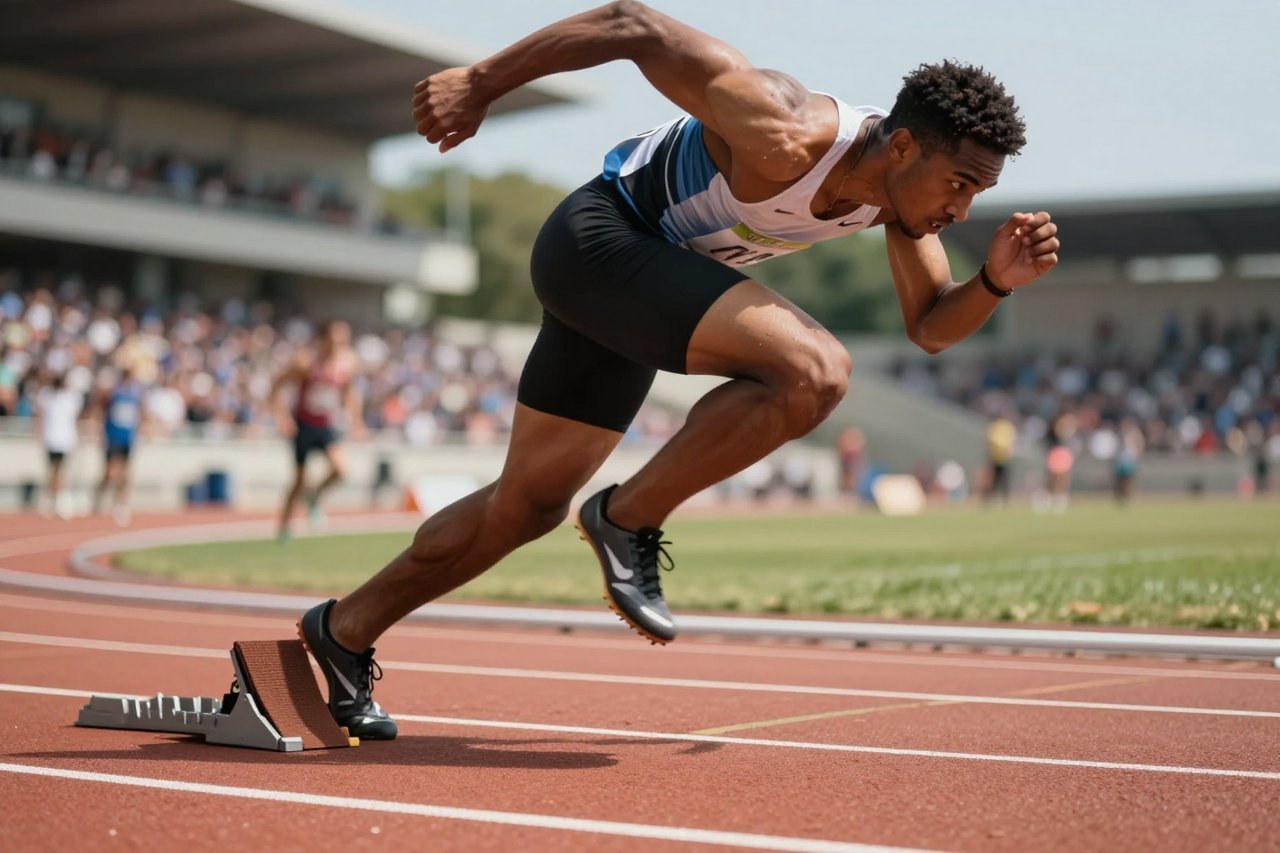
Bolt covered 100 metres in fewer strides than almost anyone in history, and he was still pulling away at the finish line. Katie Ledecky has won Olympic gold by margins measured in body lengths. Raw physical output is the easiest greatness to measure, which is why it dominates highlight reels.
Skill, touch and vision
Messi plays a game most professionals can’t see. Roger Federer made impossible shots look like a warm-up. Simone Biles has skills named after her because nobody else could perform them safely. This kind of greatness doesn’t always show up in a stat column, which is exactly why it’s easy to undervalue.
Nerve
The mental side decides who wins when everyone is equally talented. Biles withdrawing from most of the Tokyo 2021 programme to protect her safety, then returning in Paris 2024 to win three more golds, says more about elite sport than any scoreboard. So does Muhammad Ali talking his way into fights he was supposed to lose, then winning them.
How Rankings Turn Arguments Into Math
Official ranking systems try to make this objective, and they mostly succeed — with caveats. Points tables weight tournaments differently, count results over rolling windows, and sometimes punish players for simply not playing. If you want to see how much maths sits behind a single number next to a name, this breakdown of how the world’s best golfers are really measured is a genuinely useful read.
Rankings are a tool, not a verdict. They tell you who has performed best recently under a specific set of rules. They can’t tell you who was the most talented, or who would win across eras.
Are Modern Athletes Actually Better Than the Legends?
Today’s elite athletes benefit from sports science that Jesse Owens could only dream about. Altitude tents, GPS tracking, sleep monitoring, personalised nutrition, and recovery protocols that cost more than most club budgets. LeBron James reportedly spends well over a million dollars a year maintaining his body. That investment buys durability, and durability buys records.
The fair comparison respects the era. Jesse Owens ran on cinders in borrowed shoes. Gretzky played against goaltenders wearing pads that barely covered their knees. Give those athletes modern equipment, medicine and coaching and the gap shrinks fast. Keeping up with which contemporary stars are actually worth your attention is its own skill, and this guide to what’s worth following in sports news in 2025 helps you filter the noise.
Why Underdogs Keep the Debate Honest
Greatness isn’t a closed club. In 2018, UMBC became the first 16-seed to beat a 1-seed in the men’s NCAA tournament, dismantling Virginia by 20 points. Five years later, Fairleigh Dickinson did it again to Purdue. That appetite for chaos is part of why March Madness keeps producing Cinderellas and ruined brackets year after year.
Underdog runs matter because they remind us that talent is unevenly distributed but not perfectly concentrated. The next all-time great is usually someone nobody ranked highly at 17.
The Unglamorous Routine Behind Every Highlight
Watch a slow-motion replay of a game-winning shot and you miss 99% of the story. The story is 5am alarms, ice baths, physio tables, and a decade of doing boring things consistently. The hidden grind behind a celebrity lifestyle looks much the same whether the person is an actor or a wide receiver.
Bolt trained for years to shave hundredths of a second. Federer rebuilt his game in his late twenties and won more majors after 30 than before it. Serena came back from a pulmonary embolism to win again. Talent gets you in the room. Routine keeps you there.
How to Build a List You Can Actually Defend
If you want to argue this properly with friends, do three things.
- Pick one sport at a time. Cross-sport comparisons are fun but impossible to settle fairly.
- State your weighting up front. Peak dominance, longevity, or career totals? Say it before you name anyone.
- Watch full games, not just highlights. Highlights hide the defensive rotations, the off-ball movement, and the boring 40 minutes that made the last two possible.
Then leave room for the future. Victor Wembanyama is 21 and already warping how teams build rosters. Caitlin Clark dragged a struggling league into mainstream conversation almost overnight. Lamine Yamal was winning a European Championship before he could legally drive in most countries.
The best athletes of all time aren’t a fixed list. They’re a moving target, and every generation gets to argue about it all over again. That’s the point.


