
Table of Contents
You ate a protein bar at 3:40pm. By 4:15 you were back in front of the fridge, wondering what went wrong. Nothing went wrong with the bar itself. The problem was everything around it.
Protein snacks have become such a crowded category that the label tells you almost nothing. Every cracker, cookie, yoghurt drink and “protein water” now carries a number on the front, and most of us buy on that number alone. The result is a cupboard full of expensive things that don’t keep you full, don’t help your training, and quietly add 400 calories a day you never planned for.
These are the mistakes that trip people up most often, and the fixes. None of them require a new supplement.
Mistake 1: Buying the number on the front of the pack
“20g protein” is a marketing decision, not a nutritional one. A bar can reach that figure with a blend of whey, collagen and soy while carrying 26g of sugar and 340 calories. Collagen counts on the label but is an incomplete protein, low in leucine, so it does far less for muscle repair than the gram count suggests.

Judge the ratio, not the headline
A useful filter is 10g of protein for every 100 calories. Greek yoghurt clears it easily. Most protein cookies, granola clusters and breakfast biscuits do not. If a snack hands you 8g of protein for 220 calories, you’ve bought a dessert with a fitness sticker on it. Fine occasionally, but it isn’t the thing holding your diet together.
Mistake 2: Grazing all day and calling it strategy
Six small protein snacks spread across the day sounds disciplined. In practice it means your appetite never gets a chance to speak, and you stop noticing what hunger actually feels like. People who graze constantly tend to eat more total calories than people who eat three or four real meals, because a snack rarely triggers the satisfaction a proper plate does.
Pick your slots. A mid-afternoon protein snack that bridges lunch and dinner earns its place. A handful of nuts at 10am, a protein ball at 11:30, a shake at 2 and cheese at 5 is just unstructured eating with extra packaging.
Mistake 3: Swapping a meal for a snack
A shake at 1pm instead of lunch feels efficient until 9pm, when you’re standing over the counter eating cereal out of the box. Liquid and bar snacks empty the stomach fast and take very little chewing, so the hormonal signals that tell you a meal has happened stay quiet. If you keep crashing into evening overeating, that’s often the culprit rather than a lack of willpower, and it’s one of the most common patterns in high protein meal mistakes that quietly wreck your results.
Snacks should top up a day of decent meals, not replace them. If you’re genuinely short on time, build something chewable: cottage cheese with tomatoes, tuna on rye, or leftovers eaten cold.
Mistake 4: Assuming bars, shakes and real food do the same job
They don’t, and the differences matter more than the protein count. Real food brings fibre, water and volume, which is what actually switches off hunger. Bars are portable and shelf-stable, which makes them excellent in a bag and mediocre at a desk. Shakes are the fastest option and the easiest to overdo without noticing. Choosing the right format for the moment is a bigger deal than choosing the highest gram count, as this comparison of bars, shakes and real food makes clear.
The “30 grams is the ceiling” myth, and its opposite
You’ll still hear that the body can only use 30g of protein per sitting and the rest is wasted. That’s a garbled version of real research. There is a leucine threshold, roughly 2.5 to 3g, above which muscle protein synthesis is properly stimulated, and most studies show a plateau somewhere between 20g and 40g. Nothing is dumped in the bin.
The opposite mistake is just as common: assuming a 45g protein bar beats a 20g one. If the bigger bar also brings 200 extra calories and a sugar load, you’ve traded a good snack for a worse one. Portion creep disguised as ambition.
Mistake 5: Ignoring what you drink alongside it
A 180-calorie protein bar paired with a large flavoured latte is a 600-calorie event. Milk alternatives, juice, smoothies and “healthy” iced teas routinely out-calorie the snack itself. Water, black coffee or plain tea keep the snack doing its job. This one change costs nothing and surprises people more than any supplement swap.
Mistake 6: Trying to fix a snacking habit by buying more powder
The instinct when snacks aren’t working is to buy a fancier tub. Flavoured blends, mass gainers, collagen add-ins. Powder is genuinely useful, but it can’t rescue a day built on poor meals, and a lot of money gets spent on tubs that are mostly filler. Before you reorder, read up on the protein powder mistakes that waste your money. Buying better rarely helps as much as eating differently.
Mistake 7: Never revisiting your daily target
Snack planning only makes sense against a number. If you’ve been aiming at 150g of protein since a bodyweight and a training schedule that no longer apply, your snacks are calibrated to the wrong day. Most people either overshoot badly or fall 40g short without realising, and the calculation itself is usually where it goes wrong. These protein intake calculator mistakes cover the usual traps: wrong activity multipliers, lean mass versus total weight, and logging the supplement but not the food.
A filter you can apply in the shop
Standing in an aisle with 40 options, run this quickly:
- Protein per 100 calories: 10g or more. Under 6g, put it back.
- Added sugar: ideally under 8g. Sugar alcohols are fine unless they bloat you, in which case they aren’t.
- Fibre or whole ingredients: 3g of fibre, or something you’d recognise in a kitchen.
- The taste test: would you eat it if it had no protein in it? If not, you’ll resent it by Thursday.
- Cost per serving: under about £1.50 or $2. Above that you’re paying for packaging.
Running that filter is also the fastest way to see how much of the shelf is basically confectionery. If you want a wide spread of options that pass, there are plenty of easy high-protein snack ideas that keep you full without any of them coming out of a wrapper.
Two snacks that survive a real week
Forget the ideal snack. Think about the one you’ll actually have on a Wednesday when you’re tired and the fridge is half empty.
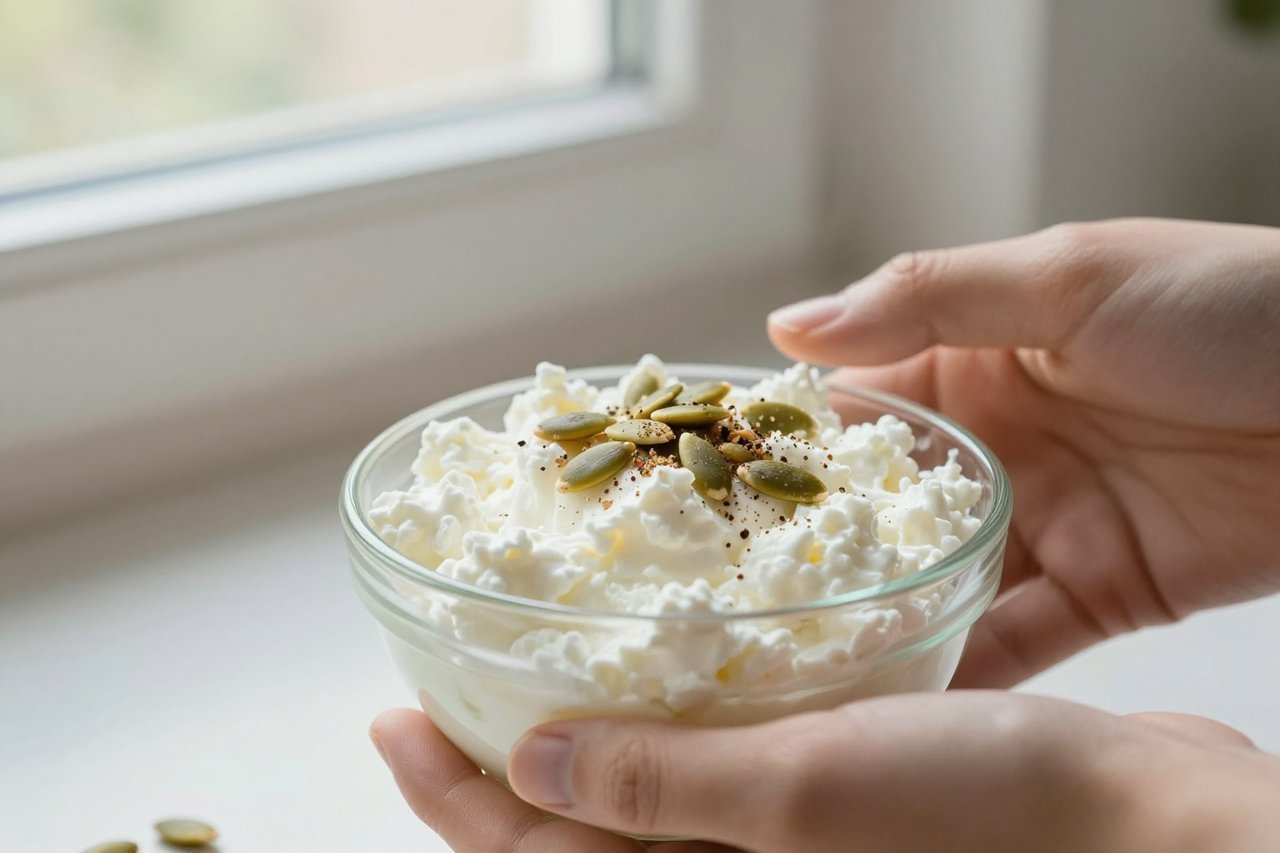
The first is a tub of cottage cheese with a handful of pumpkin seeds and black pepper. Around 25g of protein, 250 calories, no prep beyond opening a lid, and it takes long enough to eat that your appetite registers it. Add chopped cucumber if you want volume.
The second is a hard-boiled egg or two with a small bowl of shelled edamame, cooked from frozen in three minutes. Roughly 20g of protein, decent fibre, and something to do with your hands. Both cost well under a protein bar, both are chewable, and neither leaves you hunting for something else twenty minutes later.
Build two or three of those and you’ll stop needing the rest of the aisle.


