
Table of Contents
There is a particular stretch in late winter when office productivity drops, and it has nothing to do with daylight saving time. March Madness grips the country with the promise of buzzer beaters, improbable comebacks, and the quiet fury of a bracket torn to shreds before the first weekend ends.
Every year, 68 college teams enter the NCAA Division I men’s basketball tournament. Only one will be standing after six rounds of single-elimination chaos. The rest go home, sometimes with a heroic story to tell and sometimes with the look of a team that just ran into a red-hot shooter. That unpredictability is the lifeblood of the event, and it’s why people who have not watched a single game all season suddenly care deeply about a 12-seed from a mid-major conference.
How the Big Dance Actually Works
Before dissecting which 5-seed might get knocked off, it helps to understand the structure. The tournament committee selects 68 teams, which are split into four regions of 17 teams. Each team is assigned a seed from 1 to 16, with the 1-seed theoretically being the strongest. The bottom four at-large teams and the four lowest-seeded automatic qualifiers play in the First Four, a preliminary round that trims the field to 64.
From there, the tournament is a brutal single-elimination slog. Win and you move to the next round; lose and your season is over. This is why relatively unheralded teams can advance deep into the bracket while perennial powerhouses go home early. If you watch closely, you will notice how the game can shift on a single possession: a missed box-out, a costly turnover, or a one-legged heave from half court.

Building a Better Bracket Without Losing Your Mind
Everyone wants to be the person who wins the office pool, but the odds are astronomically against it. Mathematicians have calculated the chance of picking every game correctly at roughly one in 9.2 quintillion. That number should free you from the pressure to be perfect and instead let you focus on a few evidence-based rules.
- Don’t pick a 16-seed to beat a 1-seed. It happened for the first time in 2018 when UMBC beat Virginia, and again in 2023 with Fairleigh Dickinson over Purdue. Even so, the 1-16 upset remains remarkably rare over the tournament’s history.
- Embrace the 5-12 trap game. A 12-seed has won at least one first-round game almost every year since the bracket expanded to 64 teams. Look for a 5-seed that struggled down the stretch and a 12-seed that shoots well from three.
- Balance your Final Four picks. You need one dark horse for bragging rights, but you also need actual contenders. In the past decade, champions have overwhelmingly been 1-seeds or 2-seeds, with UConn’s 2023 title as a 4-seed being the notable outlier.
No strategy can guarantee a perfect bracket, but a little research goes a long way. Watch how teams defended in their conference tournaments, check for injured star players, and remember that guard play often wins in March. A team with one confident ball-handler and a few shooters can beat a taller team that turns the ball over.
The Unforgettable Cinderella Stories
Maybe the most beloved aspect of March Madness is the Cinderella run. A small school with no blue-chip recruits somehow captures the nation’s heart for two weekends. Saint Peter’s made it to the Elite Eight in 2022 as a 15-seed, knocking off two conventional powers and showing that the tournament’s charm is its cruelty: talent matters, but so does who gets hot at the right time.
These runs are rarely random. Cinderella teams usually have a few overloaded traits: they play ferocious on-ball pressure, they rebound above their size, and they take, and make, an absurd number of deep shots. When you see a 14-seed draining threes in the first half, remember that basketball is not always the most gifted team winning. It is often the team playing without fear that survives until the next Sunday.
The Role of a Shooter’s Hot Streak
A single player can rewrite a team’s destiny. Think of a sharp-shooting guard who scores 30 points and hits seven threes on a night when the bigger school scores just enough to lose. That kind of performance can feel like magic, but it is the product of years of practice and a system that screens space for open launch pads.
The New Global Reach of College Basketball
One of the more interesting shifts in modern March Madness is how much of the talent now comes from overseas. If you have watched recent tournaments, you might have noticed more international accents in postgame interviews and more varied styles on display. As the article on why so many college basketball players are from other countries notes, the flow of international players into the NCAA has changed the way the game is played at every level. European big men bring finesse and pick-and-pop skills; guards from Africa and Australia add length and vertical explosiveness. This is no longer the purely American sport that casual viewers might remember from their childhood.
What That Means for the Tournament
When you see a mid-major team with a roster full of international players, do not assume they are merely thrilled to be there. Some of these teams have been playing together since junior national competitions, and their unselfish ball movement can frustrate more individualistic American rosters. The tournament is more unwieldy, more unpredictable, and frankly more fun because of this global infusion.
From College Stars to Legends in the Pros
Every March, a handful of players introduce themselves to the wider sports world. They make the play that lands on SportsCenter, and suddenly their names become familiar to people who do not follow recruiting rankings. Within a few years, some of them are anchoring the rosters of NBA franchises and competing for championships on the professional stage.
If you want to see how far these college standouts can go, check out the ranking of the best NBA players of all time, where several legends built their first reputations with unforgettable March performances. Michael Jordan hit the winning jumper as a freshman in 1982; Magic Johnson led Michigan State past Larry Bird in 1979. Those moments are the foundation of mythical careers.
Of course, not everyone becomes a top draft pick. Some players use March Madness to earn a professional contract overseas or to boost their stock within the league. The tournament is a job fair as much as a sporting event. With the rise of name, image, and likeness deals, college athletes can also start making money before they ever turn professional, which adds another layer to the boom of the event.
The Real Madness Happens Off the Court
Let’s be honest for a second. Half the fun of March Madness has nothing to do with X’s and O’s. It is the shared experience with coworkers, friends, and family. The office bracket pool turns into a running group chat. A lunch break might feature two strangers screaming at a television in a sports bar. The tournament’s unique format lends itself to this kind of social buzz.
That same cultural energy can be seen in other bracket-style competitions. Even the much-loved Alaskan spectacle of Fat Bear Week owes a bit of its popularity to the way fans cling to the idea of an underdog champion. If people can get emotional over the fattest bear in a river, they can absolutely get riled up over a college basketball team wearing funny uniforms. These events appeal to something human: we love a bracket because it gives order to chaos, and then we love watching the chaos break the bracket.
Let’s not forget the money swirling around the sports world. While college players do not earn NBA salaries just by reaching the Sweet Sixteen, the tournament generates enormous broadcast revenue, and the professional contracts later in life can be staggering. You can read about the highest paid athletes in the world to see how a few of these former college stars eventually learned to monetize their fame, but for now, everyone in a basketball jersey is playing for the name on the front.
One Shining Moment Is the Only Predictable Thing
There will be no guarantee about which team advances this year. A pre-season favorite could be knocked out in the first round. A player you have never root for might hit a miracle half-court shot as time expires. The tournament’s beauty lies precisely in its unpredictability, and the CBS montage known as “One Shining Moment” will inevitably feature a player crying happy tears next to a coach hugging everyone within reach.
The 2023 tournament gave us San Diego State’s first Final Four run, UConn’s dominance, and plenty of wacky finishes. The 2024 tournament featured a double-digit seed matchup in the Final Four for the first time ever. And the 2025 bracket is already being filled with FOMO and caffeine. No matter where you watched those moments, you remember exactly how it felt.
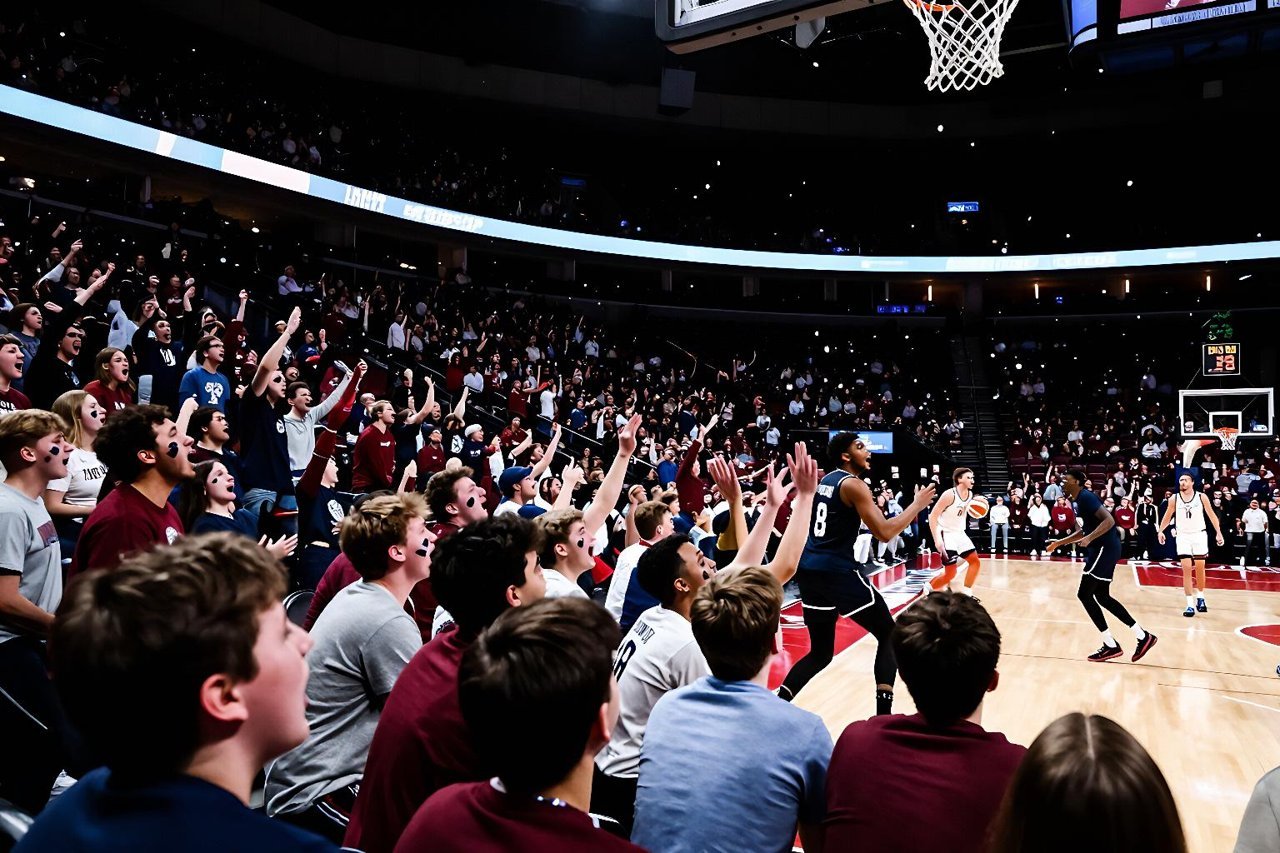
So print out that bracket, accept that you cannot possibly predict what will happen, and enjoy the next few weeks. There will be upsets, there will be heartbreak, and somewhere there will be a team that cuts down the nets in front of a roaring crowd. That is the real madness: we claim we want order, but we secretly cheer for chaos.


