
Table of Contents
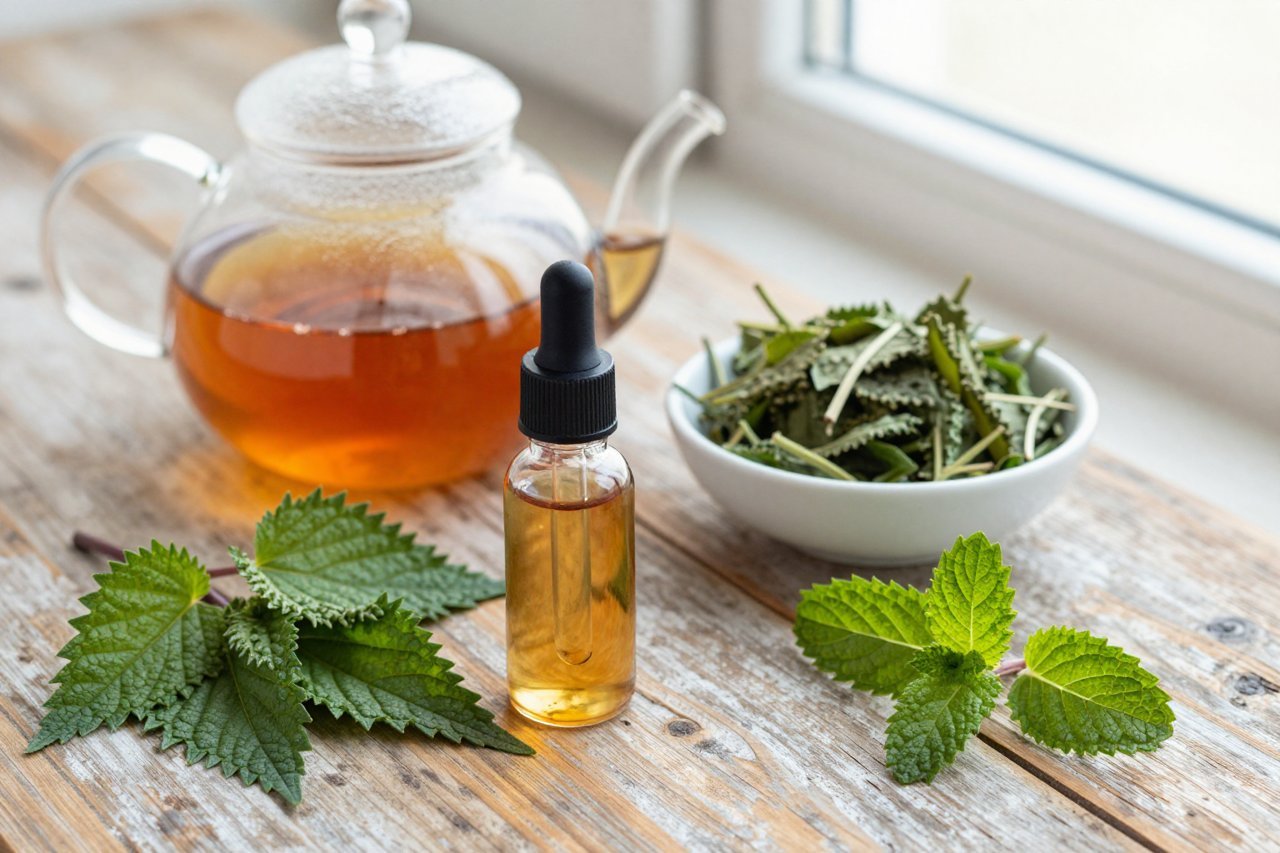
Walk into any health food shop and you’ll meet the same plant sold four different ways: a box of tea bags, a dropper bottle of tincture, a tub of capsules, and a bundle of dried leaf. Same herb, wildly different experience, and often a tenfold gap in cost per dose.
Format matters more than most people expect. It decides how much of the plant you actually absorb, how fast it works, how long it keeps, and whether you’ll still be using it in a fortnight. What follows is an honest comparison of the main options, including the places where each one falls flat.
Format Often Matters More Than the Herb
A typical cup of nettle tea uses around 2 grams of dried leaf steeped in hot water. A nettle tincture at a 1:5 ratio gives you roughly 200 mg of herb per millilitre, so a full dropper holds about a tenth of that tea’s raw material. By weight, the tea looks stronger. In practice the tincture often hits harder, because alcohol pulls out resins, oils and alkaloids that water leaves behind.
Flip that around and the same logic explains why some herbs are close to useless as capsules. A 500 mg capsule of a tough, fibrous root may pass through you largely undigested, while the same root simmered for 20 minutes releases its compounds properly. Format isn’t a delivery detail. It’s half the remedy.

Teas and Infusions: Cheap, Gentle, and Slow
Loose leaf or bags, hot water, a lid to trap the volatile oils. That’s it. A daily cup of chamomile or peppermint costs pennies, and the ritual itself does some of the work for sleep and digestion.
- Cost: the cheapest format by a wide margin, usually well under 20p a cup.
- Best for: sore throats, mild indigestion, bloating, wind-down routines, gentle daily support.
- Weak spots: water only extracts water-soluble compounds, the taste puts plenty of people off within a week, and a brewed cup goes off within 24 hours.
- Dose control: loose. Two spoons instead of one, five minutes instead of fifteen, and you’ve changed the strength substantially.
If you want a low-risk starting point, tea is it. It’s also where the evidence base is thickest for a handful of plants. I’d point anyone new to this at herbs with genuine research behind them before spending money on anything fancier.
Tinctures: Fast, Potent, and Fussy to Make Well
A tincture is herb steeped in alcohol, glycerin or vinegar for weeks, then strained. Alcohol versions last three to five years in a cool cupboard and act within 20 to 40 minutes under the tongue. That combination of shelf life and speed is hard to beat.
Where tinctures win
Travel, work bags, emergency use, and any herb whose active compounds aren’t water-soluble. Valerian, ashwagandha and most resinous roots perform noticeably better here than in a teabag.
Where they trip people up
Alcohol tinctures taste bracing, which is a real problem for children, anyone in recovery, and people with certain religious or health restrictions. Glycerin tinctures solve the taste and alcohol issue but extract resins poorly, so they’re a weak match for tough roots. Home-made versions also go wrong quietly: too little alcohol and you grow mould, too much and you strip the plant harshly. If you want to try it properly, a practical home apothecary walkthrough will teach you more than guesswork.
Capsules and Powders: Convenient, But You See Less
Capsules are the format most people default to, and the one with the widest quality gap. A 500 mg capsule is standard. Matching a 2 g cup of tea means swallowing four of them, which is fine at breakfast and tedious by Thursday.
The upside is obvious: no taste, easy to carry, and a fixed dose you can’t accidentally double. The downside is opacity. You can’t see the colour, smell the herb, or taste whether it’s fresh. Fillers, anti-caking agents and “proprietary blends” hide a lot. Powdered herbs also oxidise faster than whole leaf, so a tub sitting in a warm kitchen loses potency month by month.
Supplements deserve a category of their own, and plenty of them are worth skipping entirely. That comparison is covered well in this breakdown of herbs, kitchen cures, and supplements worth your money.
Fresh Herbs From the Garden: Best Quality, Shortest Window
Nothing beats a leaf you picked ten minutes ago. Volatile oils haven’t evaporated, you know exactly what the plant is, and the cost drops to nearly zero once it’s growing. Lemon balm, mint, thyme and calendula will take over a corner of any garden given half a chance.
The catch is seasonality and identification. Fresh herbs give you a four-to-six month window in most climates, and misidentifying a wild plant is the one mistake in this whole area that can genuinely hurt you. Start with things you planted yourself. Seven easy backyard herbs makes a sensible first crop list.
Making Your Own Versus Buying: The Honest Numbers
A mid-range bottle of tincture runs £10 to £15 for 50 ml, which works out at roughly 40p to 60p a dose. Making your own: £20 of dried root plus £15 of food-grade alcohol produces around 500 ml, or 200 doses at under 20p each. Cheaper on paper, but you’ve spent an afternoon, bought jars, and taken on the risk of a batch that doesn’t keep.
Buying wins on consistency and testing. Making wins on cost and control once you’ve done it a few times. The first batch is almost never cheaper than the bottle.
Where Herbal Remedies Lose to the Pharmacy
This is the part that gets skipped in most friendly write-ups. Herbal remedies are a poor substitute for antibiotics in a bacterial infection, useless in an asthma attack or anaphylaxis, and dangerous as a swap for thyroid or heart medication. Some herbs interact seriously: St John’s Wort reduces the effectiveness of several contraceptives and antidepressants, and ginkgo can thin the blood alongside warfarin. If you take prescription drugs, check interactions before adding anything.
Where the pharmacy genuinely loses is the softer, chronic territory: sleep quality, stress, mild digestive complaints, and the low-grade stuff that doesn’t warrant a prescription. For a fuller breakdown of that divide, this piece on home remedies versus pharmacy treatments is worth ten minutes.
Matching the Format to the Job
- Sore throat tonight: tea or a gargle. Fast to make, soothing, no equipment.
- Sleep, nightly, long term: tincture or capsule. Consistent dose, no brewing at 11pm.
- Travel and handbags: tincture. Small, sealed, lasts years.
- Kids, or anyone avoiding alcohol: tea, glycerin tincture, or a syrup.
- Tough roots and bark: decoction or tincture. Capsules are the weakest choice here.
- Daily gentle tonic: tea or fresh herb. Cheap enough to actually keep up with.
Pick One Format, One Herb, Two Weeks
The fastest way to learn what suits you is to stop buying broadly and test narrowly. Choose one complaint you’d like to chip away at, pick one herb with reasonable evidence behind it, and commit to a single format for fourteen days.
Keep it boring: same dose, same time of day, same format. Note two things only, how you slept and how the symptom behaved on a scale of one to five. If nothing shifts by day fourteen, the format or the herb isn’t right, and you’ve spent maybe £12 finding out. If something shifts, you now know exactly what to buy again instead of guessing at a shelf full of bottles.
That’s the whole trick. The people who get real use out of herbal remedies aren’t the ones with the biggest cupboard. They’re the ones who worked out which format they’ll actually take every day, and bought only that.


