
Table of Contents
Why Eating for Longevity Goes Wrong So Often
Two people, same age, same town. One spends £40 a month on supplement capsules, drinks a green smoothie every morning, and has a blood pressure reading of 152/94. The other eats sardines on toast twice a week, walks after dinner, and sits at 118/76. If you had to bet on who reaches 90 in decent shape, you already know the answer.
The gap between them isn’t information. It’s a handful of small, repeated errors that make a longevity diet look right on paper and do almost nothing in the body. Here are the ones that cost people the most.
Mistake 1: Hunting for the One Magic Food
Every few years a new hero arrives. Blueberries, matcha, bone broth, sea moss. The evidence behind foods for longevity doesn’t point to a single ingredient. It points to patterns, repeated across decades, in populations that ate a certain way by accident rather than design.
Take nuts. Pooled cohort data links roughly 30g of nuts, five or more times a week, to about a 20% lower risk of dying during the study periods. That’s a real number. But it comes from a habit rather than a pill, and the people in those cohorts weren’t eating nuts in isolation. They were eating them instead of something else.

What to do instead
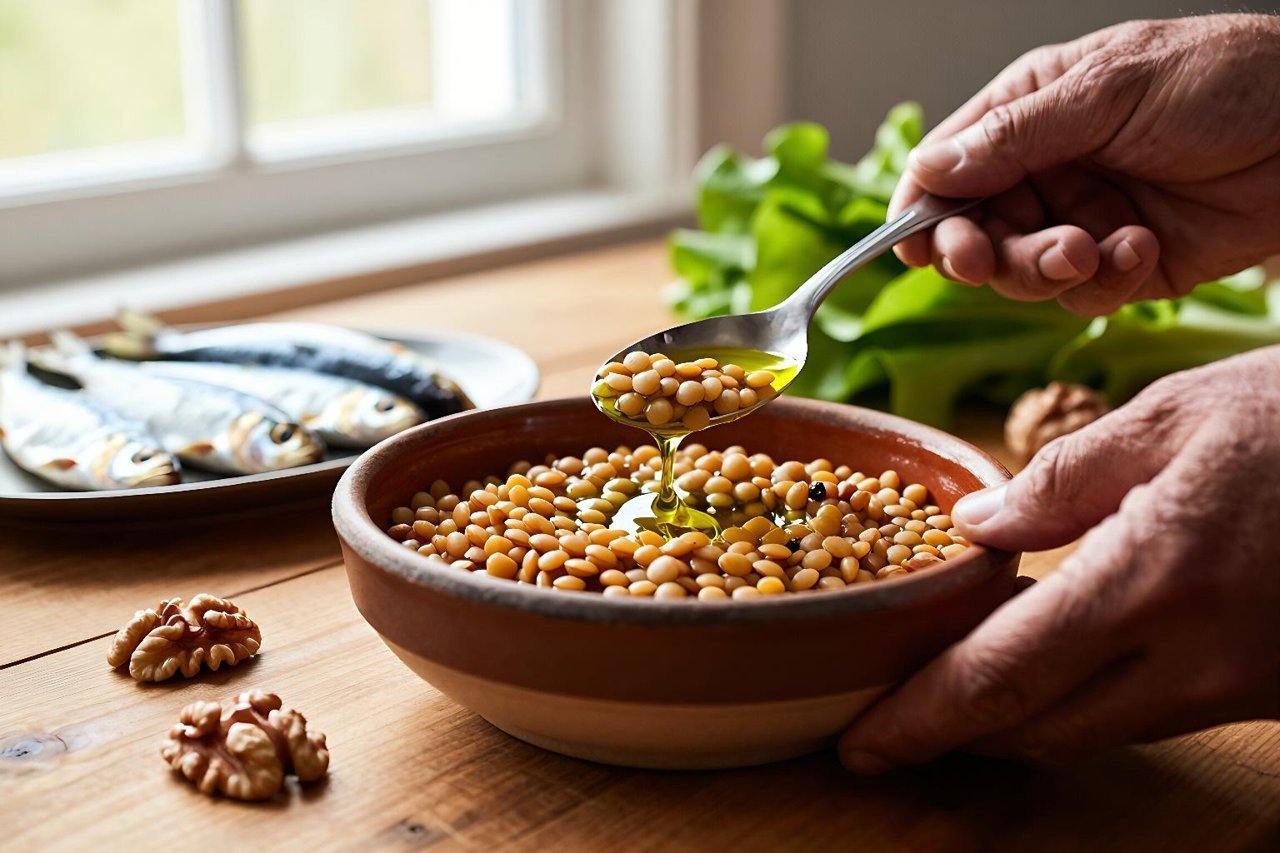
Pick four or five foods you genuinely enjoy from the well-evidenced list: olive oil, fatty fish, legumes, leafy greens, whole grains, berries, fermented dairy. Rotate them through a normal week. Boring beats exotic, because boring is what you’ll still be doing in five years.
Mistake 2: Treating Supplements as a Stand-In for Meals
The resveratrol story is the clearest example. Headlines promised that red wine would extend life. The human equivalent of the dose used in mouse studies would mean drinking hundreds of bottles a day, and follow-up trials in people found no longevity benefit at all. NAD+ precursors, high-dose vitamin E, antioxidant megadoses: the pattern repeats. Isolated compounds keep failing where whole foods keep holding up.
A multivitamin won’t hurt most people, and vitamin D or B12 can matter if you’re deficient or vegan. Swallowing capsules doesn’t cancel a diet built on white bread and processed meat, though. Food first. Supplements plug specific holes, and a blood test tells you which holes you actually have.
Mistake 3: Copying a Blue Zone Diet Without the Blue Zone Life
Sardinian shepherds, Okinawan elders, Ikarians. Their diets get the credit, but their daily lives did a lot of the work too: hills walked every day, meals eaten slowly with other people, no 11pm snacking, portions set by whatever the garden produced. Strip the diet out of that context and you get a plate of beans that doesn’t do much on its own. Comparing these patterns honestly is worth the time, and a side-by-side look at Mediterranean, Blue Zone and plant-based approaches makes the overlap obvious. The differences are smaller than the marketing suggests. The similarities, which are legumes, vegetables, olive oil, fish and very little processed food, are where the benefit lives.
Mistake 4: Falling for the Healthy Halo
This is the quiet one. Foods that are genuinely good for you get eaten in quantities that undo the point. A tablespoon of olive oil is around 120 calories. Three tablespoons drizzled over a salad is 360. Nut butter, hummus, avocado, dates, granola: all excellent, all easy to overdo.
- Shop-bought smoothie with banana, dates, oat milk and honey: 450 to 550 calories, barely any protein, gone in four minutes.
- Trail mix eaten straight from the bag: 600 calories before you notice.
- Two tablespoons of almond butter on toast: 200 calories on top of the bread.
- Olive oil poured rather than measured: often three times a “serving”.
None of these foods are the problem. The absence of a plate, a portion and a pause is.
Mistake 5: Cutting Protein Too Hard, Too Late
Plenty of people in their fifties and sixties hear “plant-based” and quietly drop protein to 40g a day. After 60, muscle loss accelerates at roughly 1% a year, and that’s the tissue that keeps you off the floor after a fall. Current guidance for older adults lands around 1.2 to 1.6g per kilogram of body weight daily, spread across meals rather than dumped at dinner. Greek yogurt, eggs, lentils, tofu, fish and cottage cheese all do the job. Protein is a longevity food, not an indulgence.
Mistake 6: Eating for Longevity While Ignoring the Numbers That Kill
You can eat salmon and kale forever and still be walking around with blood pressure of 150/95. Cardiovascular disease remains the leading cause of death worldwide, and diet only helps if it moves the markers that predict it. That means knowing your blood pressure, your LDL cholesterol or ApoB, your HbA1c and your waist measurement, then rechecking them.
If blood sugar is the weak link, the eating pattern needs to change shape rather than simply get “healthier”. A comparison of low-carb, Mediterranean, plant-based and plate-method approaches to blood sugar is a better starting point than adding cinnamon to your porridge. If cholesterol is the problem, a practical heart-health grocery list beats vague intentions every time. Food is the lever. The blood test is the feedback. Without the second one, you’re guessing.
Mistake 7: Treating It as a 30-Day Reset
Longevity benefit comes from decades of average behaviour, not three perfect weeks in January. The PREDIMED trial ran for nearly five years before the cardiovascular differences became unmistakable. Adherence is the whole game, which is why the most useful question isn’t “what’s the optimal diet?” but “what can I still be doing in year three?” If a plan needs a separate shopping trip, a blender and a spreadsheet, it’s already failing. A structured, step-by-step approach to eating for longevity that adds one change a week will outlast any dramatic overhaul.
Mistake 8: Chasing Antioxidants and Ignoring Fibre
Antioxidant claims sell products. Fibre quietly does the work. Most adults in Western countries eat around 15g a day against a target of 25 to 30g, and that shortfall tracks with worse gut health, higher inflammation and poorer metabolic outcomes. Fermented foods matter here too. In a 2021 Stanford trial, ten weeks of a fermented-food diet increased microbiome diversity and lowered 19 inflammatory markers, without any change in overall calorie intake.
Beans, barley, oats, lentils, kefir, plain yogurt, sauerkraut. Getting to 30g of fibre and a daily fermented food is unglamorous, and probably worth more than every superfood powder combined.
Where Most People Should Actually Start
If you’ve recognised yourself in three or four of these, don’t rebuild everything at once. Pick the trap that matches your worst number.
- High blood pressure? Cut back on bread, cured meat and restaurant food for a month, then measure again.
- Waist creeping up? Measure your olive oil and nut portions for two weeks. That’s usually enough.
- Blood sugar rising? Move most of your carbs into meals that also contain protein and fat, then walk for 15 minutes afterwards.
- Over 60 and losing strength? Get protein into every meal, starting with breakfast.
Do one, hold it for six weeks, then add the next. It’s a slower route than a full kitchen clear-out, and roughly the only one that survives contact with a normal life. The foods for longevity that matter, fish, legumes, vegetables, olive oil, whole grains, fermented dairy and nuts, are already well known. Sidestepping the eight traps above is what separates a diet that sounds healthy from one your arteries can actually measure.


