
Table of Contents
Strawberries that look flawless under supermarket lighting can grow a fuzzy grey beard by Wednesday. The gap between what a berry looks like on the shelf and what it looks like four days later is where most of the wasted money happens, and it comes down to two decisions: which punnet you pick up, and what you do with it in the first hour you’re home.
Fresh berries are pricey by weight and roughly 85 to 90 percent water, which is precisely why they bruise, leak and mould so fast. They also carry a decent hit of vitamin C, fibre and the plant pigments responsible for that deep red and blue. Berries earn their place among the top foods that support overall wellness, and getting an extra few days out of a $4 punnet is the easiest way to actually eat more of them.
Look at the Fruit, Not the Label
Ignore the best-before date. It tells you almost nothing about the berries inside. Open the lid, look at the fruit itself, then tip the container slightly so you can see the layer underneath.
What good berries look like, by type
- Strawberries: Red all the way to the tip, with green caps still attached and perky. White shoulders mean early picking; those berries will soften but won’t sweeten much. Skip any with dark, sunken patches.
- Blueberries: Plump, firm and dusty-looking. That whitish bloom is a natural protective wax, not pesticide residue. Shiny, wrinkled or leaking berries are old.
- Raspberries: Bright, dry and holding their shape. They’re picked without their core, so they should look hollow underneath. Dark, wet crush marks at the bottom of the punnet mean it sat too long somewhere warm.
- Blackberries: Deep purple-black with a pale core at the top. If the core runs white or green through the whole fruit, it was picked underripe and will taste sharp.
- Cranberries: Firm and bouncy, with no soft spots. They keep for weeks, which makes them the most forgiving of the lot.
Then smell. A ripe strawberry or raspberry has a sweet scent you can catch from a foot away. If a punnet smells of nothing, or faintly of vinegar, put it back.

Check the Bottom of the Punnet
Most mould begins in a bottom corner where a crushed berry sits in its own juice. Lift the container and look underneath. Stained cardboard or pink liquid pooling in the corner is a warning sign even when the top layer looks perfect.
Watch for condensation too. A sealed punnet with visible droplets inside is a miniature greenhouse for mould spores. The same goes for plastic-wrapped trays of mixed berries, which trap moisture far worse than a vented clamshell.
One shopping habit worth building: buy berries last. An hour in a warm car while you finish the rest of your errands softens them before they ever reach your fridge. At a farmers’ market, ask what day the fruit was picked. Local berries are usually harvested riper because they don’t have to survive a long haul, so they taste better but keep for less time. Eat those first.
The First Hour Home Matters Most
Berries arrive at their most fragile. Three quick jobs before you sit down:
- Turn the punnet out onto a plate or paper towel and remove anything crushed, leaking or fuzzy. One mouldy berry will spread to its neighbours within a day.
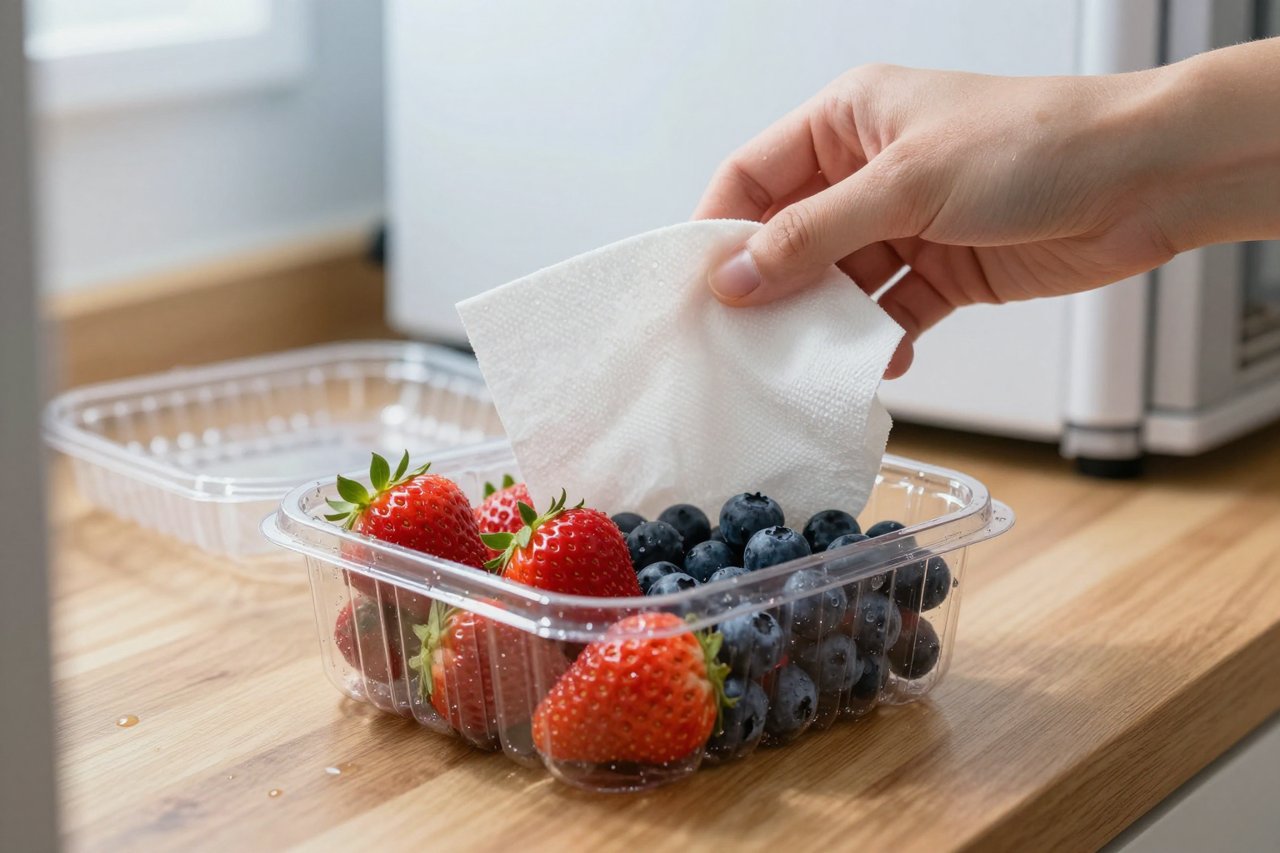
- Line the original container with a dry paper towel and tip the berries back in. The paper absorbs juice and condensation before it can pool.
- Leave the lid off, or rest it loosely on top. Airflow matters more than a tight seal.
Don’t stack heavy shopping on top of the punnet, and don’t decant berries into a deep airtight tub where the bottom layer gets squashed under the weight of everything above it.
Skip the Wash Until You’re Ready to Eat
Rinsing berries the moment you get home is the most common storage mistake there is. Moisture on the skin feeds mould and softens the fruit faster. Wash only what you’re about to eat, dry it gently on a paper towel, and leave the rest of the punnet dry.
If you want to wash in advance
A one-minute soak in one part white vinegar to three parts water knocks back surface mould spores and does seem to extend fridge life, especially for strawberries. The catch is drying. Drain them, spread them on a clean towel, and pat each berry dry before returning it to the fridge with fresh paper towel underneath. Do this only when you have ten minutes to spare. A rushed vinegar soak and a damp punnet is worse than no wash at all.
Where Berries Belong in the Fridge
Berries want cold, dry and ventilated. Strawberries and blueberries do well in a crisper drawer set to high humidity; raspberries and blackberries prefer slightly drier conditions, so keep them nearer the front where air moves. Check your fridge temperature, because most run warmer than the 1 to 3°C (34 to 38°F) that berries actually want.
Keep them away from the back wall, where they can partially freeze, and away from apples, bananas and avocados. Those release ethylene gas, which speeds up softening in everything nearby. On the counter, berries last about a day. Stored properly in the fridge, expect roughly this:
- Strawberries: 3 to 5 days, up to a week if they were very fresh
- Blueberries: 1 to 2 weeks
- Raspberries and blackberries: 2 to 4 days
- Cranberries: 3 to 4 weeks
Berries don’t ripen much after picking, so don’t wait for a pale strawberry to turn sweet. Eat the darkest, ripest fruit first and leave the firmer ones for later in the week.
Freeze What You Can’t Finish
A soft berry that’s past its best for eating raw is still perfectly good frozen. Spread them in a single layer on a tray lined with parchment, freeze for two hours, then tip them into a bag. Freezing them loose first stops the whole lot welding into one solid block, so you can pour out a handful at a time. Frozen berries hold for about six months and suit smoothies, porridge, crumbles and muffins. They release juice as they thaw, so don’t count on them for anything that needs to look tidy on the plate.
Blueberries and cranberries freeze best. Strawberries work well too if you remove the green caps and halve the big ones first. Raspberries lose the most texture, though it hardly matters once blended.
Using Up the Last Few
Half a punnet of softening fruit is an ingredient, not a problem. Fold bruised berries into yoghurt with a spoon of honey, mash them into a two-minute sauce for pancakes, or scatter them over porridge. If your mornings need persuading, these quick and filling healthy breakfast recipes show how far a handful of berries can stretch.
A small bowl of berries with a spoon of Greek yoghurt is also one of the smarter options when hunger hits at 10pm and you’d rather not open the biscuit cupboard, which is the thinking behind these healthy late night snacks.
Make Berries a Habit, Not a Treat
Households that actually get through their berries tend to do a few unremarkable things differently. They buy two punnets at a time, one for eating this week and one straight into the freezer. They keep the container at eye level in the fridge rather than in a drawer at the bottom, because food you can see is food you eat. They rinse a handful into a bowl while the kettle boils.
There’s a reason to bother. Berries feature in nearly every eating pattern linked to better heart outcomes, and you can see how they fit into each approach in this comparison of foods for heart health. A small bowl most days is enough to shift the overall picture; you don’t need a flawless diet for it to count.
If you’re building meals around one of those patterns, the Mediterranean diet meal plan styles all leave room for berries at breakfast without any fuss. Frozen works just as well as fresh once they’re stirred through yoghurt or oats, which means the punnet you forgot about in the freezer is still doing its job in February.


