
Table of Contents
Most advice on longevity foods falls into one of two traps: it’s either a list of obscure superfoods you’ll never find at your local store, or it’s so vague that you have no idea what to cook on Tuesday. Neither helps you make lasting changes.
This guide is different. It’s a practical, step-by-step plan for eating for longevity, built around real food and realistic habits. Follow these seven steps and you’ll have a clear system you can start using today.
Step 1: Rebuild Your Plate with the Half-Plate Rule
The simplest way to shift your diet toward longevity is to stop thinking about individual foods and start thinking about the structure of your meals. The half-plate rule is a good starting point.
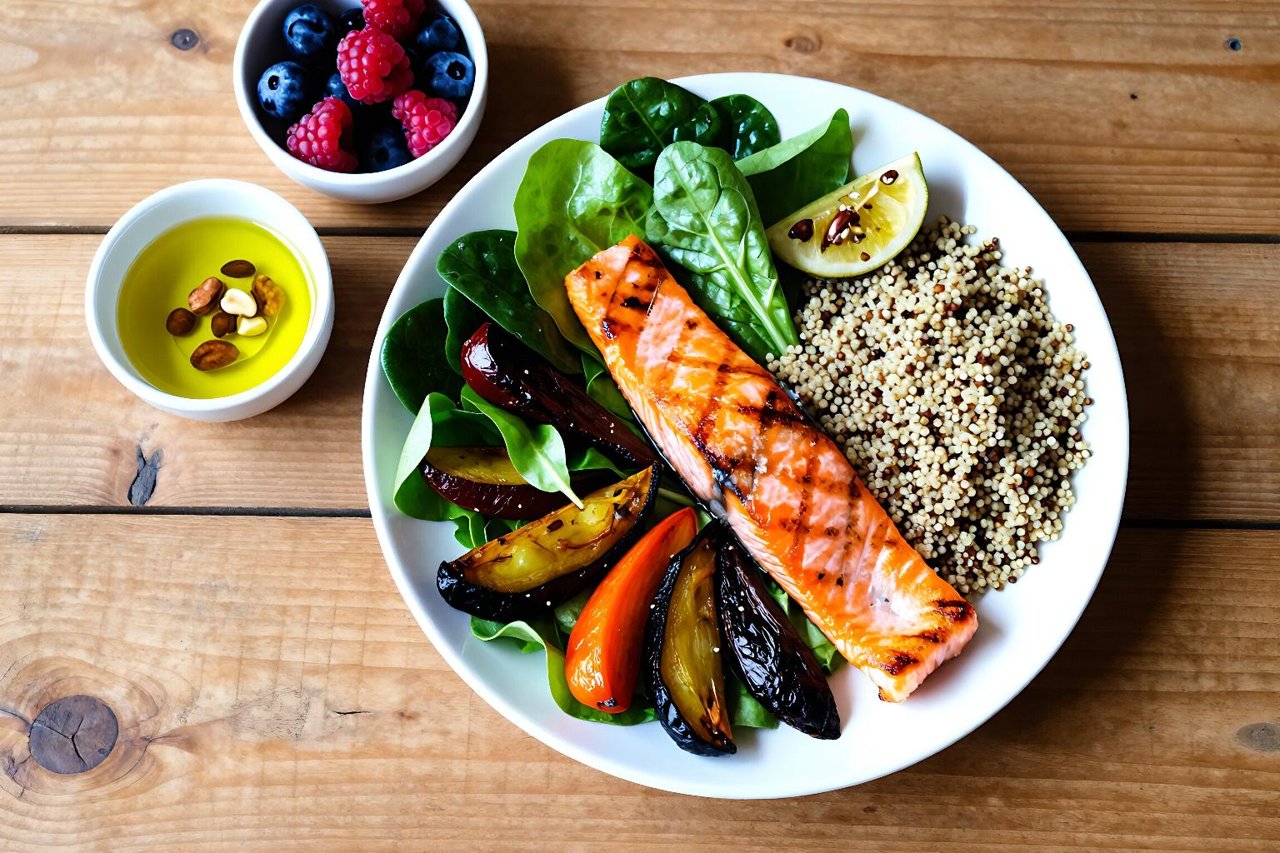
At each lunch and dinner, fill half your plate with vegetables and fruits. Split the other half between protein and whole grains or starchy vegetables. This doesn’t require a food scale or an app. It’s a visual cue you can use anywhere.

For breakfast, the same logic applies. A bowl of Greek yogurt with berries and a sprinkle of nuts counts. So does a vegetable omelet with a slice of whole-grain toast. The half-plate rule gets you close to the eating pattern associated with lower risk of chronic disease, which is the foundation of real-world nutrition that adds years to your life.
Step 2: Write a Shopping List You’ll Actually Follow
You can’t eat longevity foods you don’t have in the house. Before you go to the supermarket, write a list built around these five categories:
- Dark leafy greens: spinach, kale, Swiss chard, arugula
- Colorful vegetables: bell peppers, carrots, broccoli, tomatoes
- Fruit for fiber and antioxidants: berries, apples, oranges, papaya
- Legumes and whole grains: lentils, chickpeas, quinoa, oats, brown rice
- Healthy fats and lean proteins: olive oil, nuts, seeds, fish, chicken, eggs
Stick to the perimeter of the store for most of this list, but don’t avoid the frozen aisle. Frozen berries and vegetables are just as nutritious as fresh, often cheaper, and they don’t go bad in your fridge.
If you’re also watching your heart, many of these same foods show up in the heart-healthy lineup. You can see how they overlap in our real-world grocery list that works for heart health.
Step 3: Batch-Cook Your Longevity Staples
Eating well on a busy schedule requires a little upfront work. Pick one day a week to batch-cook a few staples. It takes under an hour, and it transforms your week.
Here’s a concrete example. On Sunday afternoon, cook a big pot of lentils, roast a tray of mixed vegetables, and cook a batch of quinoa. Store them in separate containers. During the week, you can assemble meals in minutes: quinoa bowl with roasted vegetables and a handful of arugula, lentils with sautéed greens, or a quick stir-fry with whatever you have.
Batch cooking is also the secret to following a Mediterranean-style eating pattern without thinking about it. If you want a detailed weekly plan, our step-by-step Mediterranean diet meal plan guide walks you through exactly how to structure your meals and snacks.
Step 4: Lean on Plant Proteins (But Don’t Overthink It)
Longevity research consistently points to a diet rich in plant foods, and protein is no exception. Swapping a few servings of red meat for beans, lentils, or tofu gives you more fiber and fewer saturated fats.
You don’t need to become vegetarian overnight. Start with one meatless dinner per week. For example, replace your beef chili with a bean-based chili or make a lentil bolognese instead of one made with minced meat. These small swaps are easier to maintain, and they still move the needle.
If you’re curious about protein quality, plant-based sources compare well when you eat a variety of them. The benefits of plant protein compared to animal protein go beyond just cholesterol levels. You also get extra fiber and antioxidants that animal foods simply don’t provide.
Step 5: Try One New Longevity Food Each Week
Adding novelty to your diet is not just fun, it’s also a practical way to expand your nutrient intake without feeling overwhelmed. Each week, pick one food you don’t usually eat and find a way to include it in your meals.
Take papaya, for example. It’s rich in vitamin C, fiber, and an enzyme called papain that aids digestion. It also counts as one of the fruits with notable anti-aging effects. You can find more detail on papaya’s health benefits and anti-aging properties, but here’s how to use it: slice it for breakfast, blend it into a smoothie, or serve it with a squeeze of lime and a pinch of chili for a savory twist.
Other ideas: add chia seeds to your oatmeal, roast chickpeas for a crunchy snack, or sauté some Swiss chard with garlic and olive oil. One new food a week gives you 52 new culinary experiences in a year.
Step 6: Eat with Intention and Slow Down
Longevity food isn’t just about what you eat, it’s about how you eat. Eating slowly gives your body time to register fullness, which can stop you from overeating. It also turns a meal into a more mindful, enjoyable event.
Try this: put your fork down between bites. Chew each mouthful thoroughly, aiming for about 20 chews. This simple habit slows you down and improves digestion. It also helps you appreciate the flavors, so you feel satisfied with less food.
Another practical strategy is to eat without screens. That means no phone, no laptop, and no TV during meals. When you’re distracted, you’re more likely to eat past your hunger cues. A 10-minute meal becomes a 20-minute meal, and that’s a good thing.
Step 7: Track Your Energy, Not Just Your Weight
The last step is to keep tabs on how you feel. The long-term payoff of a longevity diet is a lower risk of disease, but you shouldn’t have to wait years to notice benefits. Pay attention to your energy levels, digestion, and mood.
Here’s a simple way to track: keep a small notebook or a note on your phone. Twice a week, rate your energy on a scale from 1 to 10 and jot down what you ate that day. Over a month, you’ll start to see patterns. Maybe the days after a bean-heavy meal feel lighter, or the afternoons after a sugary snack bring a crash. Adjust accordingly.
You don’t need to be perfect. The goal is progress. If you have a day of less healthy eating, just return to the half-plate rule at your next meal. One meal doesn’t define your health, and neither does one day.
Your First 7 Days: A Simple Starting Point
To tie it all together, here’s a concrete example of what your first week could look like. This isn’t a meal plan set in stone, but a template you can adapt.
Day 1: Breakfast, Greek yogurt with berries and walnuts. Lunch, lentil soup with a side salad. Dinner, baked salmon with roasted broccoli and quinoa.
Day 2: Breakfast, vegetable omelet with whole-grain toast. Lunch, chickpea and tuna salad with olive oil and lemon. Dinner, stir-fried tofu with mixed vegetables and brown rice.
Day 3: Breakfast, oatmeal with sliced banana and chia seeds. Lunch, leftover stir-fry. Dinner, chicken and vegetable skewers with a big green salad.
Day 4: Breakfast, smoothie with spinach, papaya, and Greek yogurt. Lunch, quinoa and black bean bowl with avocado. Dinner, shrimp with garlic and sautéed kale.
Day 5: Breakfast, cottage cheese with peach slices and almonds. Lunch, vegetable and hummus wrap. Dinner, turkey chili with a side of roasted sweet potatoes.
Day 6: Breakfast, scrambled eggs with mushrooms and tomatoes. Lunch, leftover turkey chili. Dinner, baked cod with a Mediterranean tomato and cucumber salad.
Day 7: Breakfast, whole-grain pancakes with berries. Lunch, a big mixed salad with chickpeas, feta, and olives. Dinner, a “build your own” bowl night where everyone picks their own toppings.
Notice how each day follows the same structure. Half your plate is vegetables or fruit, a quarter is protein, and a quarter is whole grains or starchy vegetables. Once you internalize that, you can swap any meal in this plan for something you prefer.
Eating for longevity doesn’t have to be complicated or restrictive. It’s about consistent, small choices that add up over a lifetime. The steps above give you a framework you can start using at your next meal.


