
Table of Contents
Sixty tubes. Four feet of shelf. Labels promising volume, length, curl, lift, 24-hour wear and a “fanned-out effect”, all crammed into six-point type. If you have never bought mascara before, the aisle is not built to help you.
Here is the thing nobody mentions: there is no single best mascara. There is a best mascara for your lash type, your eye shape, your daily routine, and your patience level at 7am. This guide is about understanding what you are actually looking at, so choosing stops feeling like a lottery.
What mascara is really doing to a lash
You have roughly 90 to 150 upper lashes per eye. Each grows for a few weeks, rests, then sheds, with the full cycle taking four to six months. Mascara does not change any of that. It is a coating, a thin polymer film wrapped around each hair, and the quality of that film separates a good tube from a bad one.
Most formulas share the same basic recipe: water, wax, pigment, preservatives and film-forming polymers. The waxes (beeswax and carnauba are everywhere) supply body and darkness. The polymers do the clever part. They are what dries the coating in place and decides whether your lashes are still lifted at 3pm or have collapsed back down by lunch.

That is why a mascara that looks spectacular on your friend can look flat on you. Lash thickness, natural curl and oil production vary wildly between people, and the same film former behaves differently on each of them.
The brush does half the work
People obsess over formula and ignore the wand, which is a mistake. You could put a brilliant formula on a badly matched brush and get clumps, smudges or lashes stuck together in three fat spikes.
Bristle or silicone?
Classic fibre bristles grab more product, which builds volume fast, though they tend to clump if you go back in for a second coat too quickly. Molded silicone wands hold less product and comb through cleanly, which is why they show up on lengthening and definition formulas. If you have sparse or fine lashes, silicone is usually the friendlier starting point.
Shape changes the job
- Straight with dense bristles: maximum volume, highest clump risk.
- Tapered tip: reaches inner corners and lower lashes without stamping mascara on your eyelid.
- Curved: designed for straight lashes, pushing them upward as you coat.
- Hourglass or spool shape: loads the middle of the lash where it is widest, for a fuller look.
- Tiny precision wands: built for lower lashes and hooded eyes, where a full-size brush makes a mess.
A straight-lashed eye and a naturally curled eye need different wands, and no amount of marketing copy changes that.
Decoding the words on the tube
Volumizing, lengthening, waterproof, tubing, smudge-proof, fibre. Those words are not interchangeable, and each one trades something away. Waterproof formulas hold a curl better but are a nuisance to remove. Volumizing formulas deposit more wax, which can weigh down fine lashes. Tubing formulas wrap each lash in a polymer sleeve that slides off with warm water, which is brilliant if you hate smudging but adds almost no thickness. For a proper breakdown of what each type is actually built to do, this comparison of volumizing, lengthening, waterproof and tubing formulas is worth reading before you spend anything.
Almost no formula is genuinely excellent at everything. The tube that gives dramatic volume rarely gives feather-light separation, and the one that never budges is the one you will spend three minutes removing.
Three things worth judging in week one
Forget the claims on the packaging. Once a tube is in your hands, only three qualities matter, and you can assess all of them in a normal working day.
Hold. Apply at 8am and check in a mirror at 1pm. If your lashes have dropped to their natural angle, the film former is too soft or too heavy for you.
Definition. Look at your lashes straight on, not from above. If they have merged into four clumped spikes instead of reading as separate hairs, the brush is loading too much product.
Wear. The real test is the browbone check at 4pm. Any grey shadow under your eyebrows means transfer, and it usually gets worse in humidity. Most people blame the mascara, but technique plays a large part, and these common mascara mistakes that make good tubes look average are usually the actual culprit.
Technique basics that fix most problems
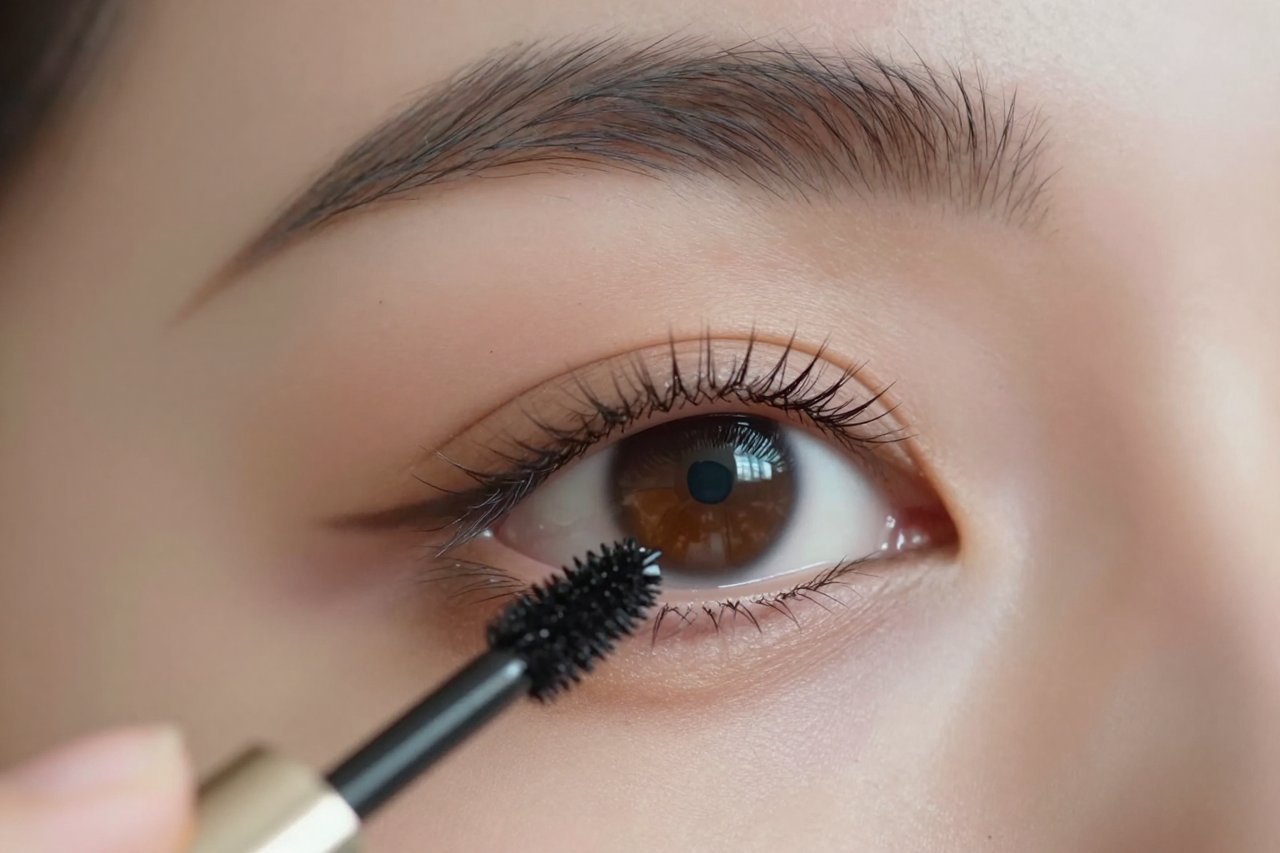
Wiggle the wand at the base of the lash line for a second before sweeping upward. That is where the product does the most work and where lift actually starts. Do not pump the wand in and out of the tube; it pushes air in and dries the formula out weeks early. Two thin coats beat one heavy one almost every time, and if you must layer, let the first coat set for about twenty seconds.
Curl your lashes before mascara, never after. A curler used on dry, coated lashes is the fastest way to snap them.
Getting it off matters more than putting it on
Beginners lose more lashes to removal than to application. Rubbing a waterproof formula off with a tissue pulls hairs out at the root, and those take months to grow back.
Waterproof mascara needs an oil-based cleanser or balm, massaged in and left for thirty seconds before you wipe. Regular formulas come off with warm water and a gentle cleanser. If the whole ritual sounds tedious, tubing mascara might suit you better, since it removes with nothing more than warm water and pressure. These tubing mascaras that remove without the mess are a good place to start if you have sensitive lashes or wear contacts.
What price actually buys you
More money buys nicer packaging, a heavier tube, sometimes a better brush, and often a more refined formula. It does not guarantee a better result on your particular lashes. Plenty of £8 tubes outperform £30 ones, and plenty of expensive ones flake by mid-afternoon. The useful exercise is to look at what has been tested rather than what has been advertised, which is exactly what this roundup of mascara formulas worth your money does.
If you would rather work through your own criteria step by step, from lash type to budget to wear time, there is a solid framework in this step-by-step guide to buying the right tube.
Start with one tube and one rule
Buy one mascara, not three. Use it for three weeks, alternating between a one-coat and a two-coat day, and note the things that annoy you: flaking, smudging, clumps, a brush that pokes your eyelid. By the end of week three you will know exactly which trait to change next time, and that knowledge is worth more than any review.
The best mascara is simply the one that does what you need it to do without demanding your attention. Once you know your lash type and your deal-breakers, the four-foot shelf shrinks to two or three realistic options, and the decision takes about ten seconds.


