
Table of Contents
There’s a bottle of tea tree oil in a lot of bathroom cabinets. Maybe you bought it for a fungal nail, maybe it came in a gift set, maybe a friend swore it cleared her skin in a fortnight. Now there’s a pimple on your chin and you’re standing there wondering whether to dab it on neat or mix it with something first.
The short version: tea tree oil can genuinely help mild acne, and you should never apply it straight from the bottle. The gap between those two facts is where most beginners end up with a red, flaky patch where a single spot used to be. Here’s the ground-floor explanation of what this oil is, what it does to a pimple, and how to use it without making things worse.
What Tea Tree Oil Actually Is
Tea tree oil is an essential oil steam-distilled from the leaves of Melaleuca alternifolia, a scrubby tree that grows in northern New South Wales. It has nothing to do with the tea you drink. The name comes from 18th-century British sailors who brewed the leaves into a drink that was, by most accounts, revolting. Long before that, Aboriginal communities in the region were crushing the leaves for skin complaints and wounds.
The compound that matters for acne is called terpinen-4-ol. In a decent-quality oil it makes up somewhere between 30% and 40% of the bottle, and it’s the main reason tea tree oil behaves differently from, say, lavender or peppermint.

Why It Does Anything to a Pimple
A spot forms when a pore gets plugged with dead skin and oil, and Cutibacterium acnes bacteria multiply in the blockage while your immune system kicks up inflammation around it. Tea tree oil interferes with a couple of those steps at once:
- It’s antibacterial. Terpinen-4-ol breaks down the cell membranes of acne bacteria, which is the same general idea behind benzoyl peroxide, just via a different route.
- It’s anti-inflammatory. This is why a spot can look calmer within a day or two even before the bacteria are gone. Less redness, less swelling.
- It’s relatively gentle. Compared with benzoyl peroxide, it’s far less likely to bleach your pillowcase, sting on application, or leave you with a peeling chin.
What the Research Actually Shows
The study most often quoted put a 5% tea tree oil gel head to head with 5% benzoyl peroxide over three months. Both worked. Benzoyl peroxide worked faster, but it caused noticeably more dryness, itching and stinging. If you want the full breakdown of how it sits alongside salicylic acid, retinoids and the rest, there’s a useful comparison of tea tree oil and other acne treatments worth reading before you commit to a routine.
A separate 45-day trial of 60 people found that a 5% tea tree oil gel reduced both inflamed and non-inflamed lesions meaningfully compared with a placebo gel. Not dramatic, not overnight, but real.
What Tea Tree Oil Won’t Do
It’s worth being blunt about the limits, because the internet isn’t.
Tea tree oil will not shift deep, painful cysts sitting under the skin. It won’t unclog a blackhead that’s been there for six months. It won’t do much for hormonal breakouts along the jawline if the underlying cause is your cycle. And it is not a replacement for prescription treatment if your acne is moderate to severe or leaving scars. Think of it as a good tool for mild, surface-level, occasional spots, not a cure for acne as a condition.
How to Use It as a Beginner
Patch test before anything else
Dilute a drop in a carrier oil, rub it into the inside of your forearm, and leave it 24 to 48 hours. Tea tree oil is one of the more common triggers of allergic contact dermatitis, and you would rather find that out on your arm than your face.
Dilute to around 5%
That works out at roughly one drop of tea tree oil to twenty drops of carrier. Jojoba, rosehip, sweet almond, or an unscented plain moisturiser all work. Water doesn’t, because oil and water won’t mix no matter how hard you shake them.
Apply it to the spot, not the face
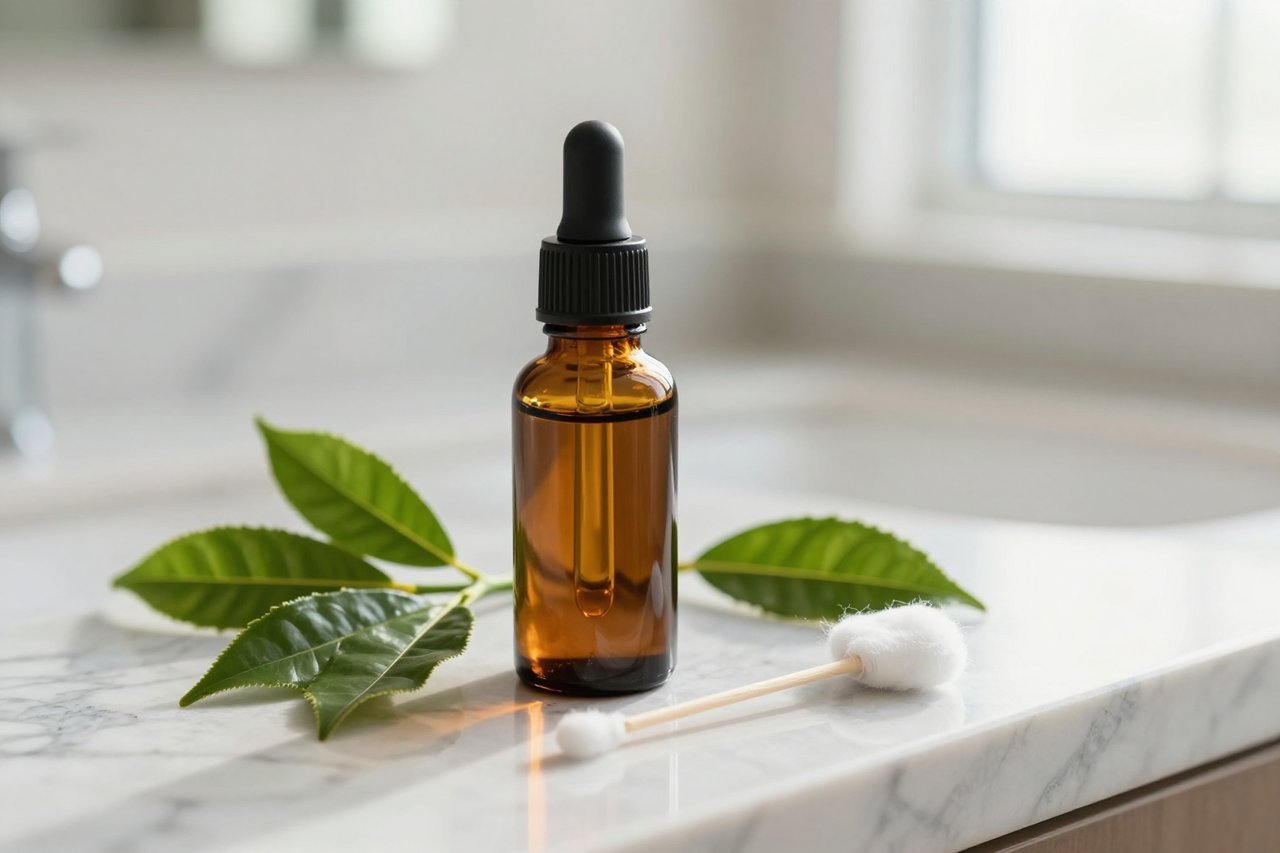
A cotton bud dipped in your diluted blend, dabbed directly on the pimple, is all you need. If you want something a bit more useful than a single dab, this DIY spot treatment and a few other ways to use tea tree oil gives you options that won’t set your skin on fire.
Twice a day maximum
Morning and night is plenty. Doubling up doesn’t speed anything along; it just increases the odds of irritation.
Signs You Should Stop
Pulling the plug early is not failure. It’s good instincts. Stop and reassess if you notice:
- Burning or stinging that doesn’t fade within a few minutes
- Redness spreading well beyond the spot you treated
- Itching, small bumps, or swelling (classic allergic contact dermatitis)
- Flaking, tightness, or that raw feeling around the area
Most irritation comes from going in undiluted, applying it too often, or layering it with something else harsh. Those are among the most common tea tree oil mistakes that slowly wreck your skin without you realising it was the oil doing the damage. One last safety point: never swallow tea tree oil. It’s toxic if ingested, particularly for small children, and a mouthful has sent adults to hospital.
Where It Fits in an Actual Routine
Tea tree oil is a spot treatment, not a cleanser and not a full-face serum. In a simple routine it goes near the end: cleanse, moisturise, then dab the diluted oil on individual spots. Follow with sunscreen in the morning.
Don’t layer it on the same spot on the same night as benzoyl peroxide, a retinoid, or an exfoliating acid. All three already stress the skin barrier in different ways, and stacking them is how people end up with a chemical burn instead of a healed pimple. If you want the full order of operations worked out, this step-by-step tea tree oil routine walks through it properly.
What to Expect, Week by Week
Days 1 to 3: an inflamed spot usually looks less red and feels less tender. That’s the anti-inflammatory effect, not the bacteria being wiped out.
Weeks 1 to 2: new spots may come up less often and fade a bit faster. Don’t judge it yet.
Weeks 4 to 8: this is the realistic window. A 5% gel applied consistently for six weeks is where the studies start showing a difference. If you’re seeing fewer angry spots and your skin isn’t irritated, keep going.
Week 8 onwards: if nothing has changed, tea tree oil probably isn’t the right tool for your skin. That’s useful information, not a failure. And if you’re getting deep, tender lumps, scarring, or breakouts across your back and chest, skip the experimentation phase and see a doctor or dermatologist. Mild acne responds to over-the-counter options; moderate to severe acne usually needs something stronger, and waiting six months to find that out can cost you scarring that’s much harder to treat than the acne itself.


