
Table of Contents
Walk down any pharmacy aisle and you’ll find a wall of little glass bottles promising thicker hair. They cost anywhere from $12 to $90. Most of them smell faintly of alcohol and mint. And nobody behind the counter can tell you which one is worth buying.
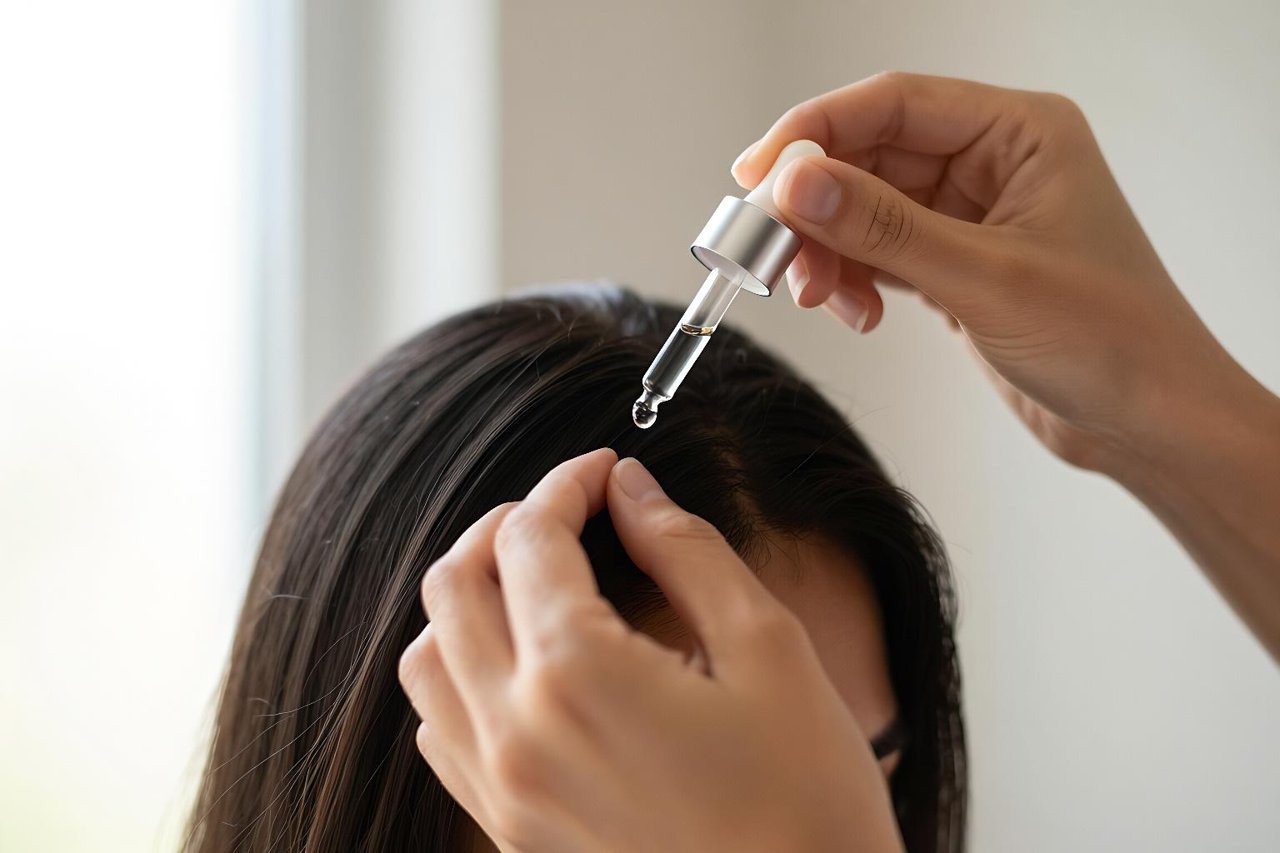
So let’s strip it back to basics. A hair growth serum is a leave-on liquid you dab onto your scalp, usually once or twice a day, and don’t rinse out. That’s it. The whole category comes down to two questions: what’s inside the bottle, and whether you’ll actually use it consistently for six months. Everything else is packaging.
This guide assumes you’ve never used one before and don’t know a peptide from a prostaglandin. By the end you’ll understand what serums can and can’t do, how to read a label without a chemistry degree, and what a realistic first year looks like.
What a serum can and can’t fix
Hair loss isn’t one condition. It’s at least a dozen, and they need different approaches. A serum is genuinely useful for some of them and close to useless for others.

Serums work best on androgenetic alopecia, the gradual thinning that runs in families. It shows up as a widening part, a softer hairline, or a thinner crown. The follicle is still alive there. It’s just shrinking with each growth cycle, and a serum can slow or partly reverse that shrinking.
Serums do very little for shedding caused by iron deficiency, thyroid problems, crash dieting, or a stressful event three months ago. Those follicles aren’t miniaturising, they’re just resting. They typically recover on their own once the trigger resolves. And a serum won’t help at all if the follicle has already scarred over, which is why a dermatologist’s opinion matters more than any product review.
Serums versus shampoos versus supplements
- Shampoo touches your scalp for maybe 60 seconds before it goes down the drain. It can clean the scalp and reduce inflammation, but contact time is too short for most actives to do much.
- Serum stays on for hours. That long contact time is the entire point, and it’s why serums cost more per millilitre than almost any other hair product.
- Supplements work systemically, which means they only help if you’re actually deficient in something. If your ferritin and vitamin D are normal, adding more won’t thicken anything.
If you’re also rethinking your wash routine, our primer on the best shampoo for hair loss for complete beginners covers that side of things in the same plain-English way.
The ingredients that actually have evidence behind them
Ingredient lists are long and mostly decorative. Here’s the short version of what the research supports.
Minoxidil
The only topical ingredient with decades of large trials and regulatory approval for hair regrowth. It extends the growth phase of the follicle and widens the follicle itself over time. Typical strengths are 2% and 5%. Men often use 5% foam once or twice daily; women commonly start at 2% or 5% once daily. Expect a shedding phase in weeks two to six. That’s a good sign, not a bad one, but nobody warns you and plenty of people quit right there.
Rosemary oil
A 2015 trial compared rosemary oil to 2% minoxidil over six months and found similar hair counts. It was a small study, so treat it as promising rather than proven. It’s cheap, gentle, and a reasonable option if minoxidil irritates your scalp.
Caffeine, peptides and ketoconazole
Caffeine has decent lab data and some small human trials. Peptides, including copper peptides, have weaker evidence but a good safety profile. Ketoconazole at 1-2% is an antifungal shampoo that also seems to help androgenetic hair loss slightly, and it’s often paired with a serum rather than used alone.
The honest summary: minoxidil is the workhorse, rosemary oil is the gentle alternative, and everything else is supporting cast. A serum with twelve fancy botanicals and no minoxidil is usually a nice moisturiser.
How to read a label without getting lost
Three things matter more than the marketing copy on the front.
Concentration. Minoxidil at 2% and 5% behave differently. Rosemary oil at 1% in a carrier oil is not the same as a few drops of neat essential oil, which can burn your scalp.
Solvent. Many minoxidil liquids use propylene glycol, which causes itching or flaking for a chunk of users. If that’s you, a foam or a glycerin-based formula is worth trying instead.
Fragrance and alcohol load. High alcohol content makes a serum dry fast and feel weightless, which people love. It also stings on a sensitive scalp. Fragrance is the most common cause of contact irritation in scalp products.
If you want a structured way to compare options rather than guessing, this walkthrough on how to find the best hair growth serum step by step takes you through it in order.
Applying it so it reaches the follicle
Most disappointing results trace back to technique, not the formula.
- Apply to a dry or barely damp scalp. Soaking wet hair dilutes the product and sends it down your neck.
- Part your hair in rows with a comb, about 1cm apart, and dab along each part. One millilitre covers a whole scalp if you’re systematic.
- Use your fingertips or the dropper to spread it, then wash your hands. Minoxidil on your hands then transferred to your face is a real thing.
- Leave it for at least four hours before washing. Overnight application is fine if it doesn’t stain your pillowcase.
- Skip broken or sunburnt skin. It absorbs fast and stings.
The single biggest mistake beginners make is treating application like a suggestion. Missing three days a week roughly halves your exposure over a year, and the follicle notices. Our breakdown of the 8 mistakes that stop the best hair growth serum from working covers the rest, including some you’d never guess.
What the first twelve months actually look like
Set your expectations to a slow burn.
Weeks 1-2: nothing happens. Maybe mild scalp flaking.
Weeks 2-8: possible shedding increase. This is the old hairs cycling out to make room. Annoying, temporary, and a positive sign for minoxidil users.
Months 3-4: fine, fuzzy hairs appear along the hairline or part. They’re thin and pale. Don’t judge them yet.
Months 6-9: those fuzz hairs thicken and darken. This is where photos from day one become genuinely useful.
Month 12: the honest verdict point. If nothing has changed by now, the product isn’t working for you, or the diagnosis was wrong.
Take photos monthly in the same spot, same lighting, hair parted the same way. Memory is unreliable and mirrors lie. If you want to see what other people landed on after a year of trial and error, this roundup of hair growth serums that actually work, without the hype is a useful benchmark.
Drugstore oils and home remedies: where they fit
A lot of beginners start with kitchen cupboard options before spending money, which is fair. Coconut oil won’t regrow hair, but it does reduce protein loss from washing and makes brittle hair feel better, which is covered properly in this beginner’s guide to coconut oil for hair. Treat it as a conditioning step, not a treatment for thinning.
One thing worth avoiding: layering five products at once. If you start minoxidil, rosemary oil, a ketoconazole shampoo and biotin in the same week and your scalp erupts, you have no idea which one did it. Add one thing, wait four weeks, then decide.
When to skip the serum and see a doctor
Serums are a slow, patient tool for a slow, patient problem. Some situations don’t fit that shape at all.
Book an appointment if you notice any of the following:
- Smooth, round bald patches appearing over days rather than years
- Redness, scaling, itching or tenderness alongside the shedding
- Hair coming out in handfuls after illness, surgery, childbirth or a severe crash diet
- Thinning paired with fatigue, feeling cold, or unexplained weight change, which can point to thyroid issues
- Loss that started within weeks of a new medication
Those patterns are usually medical, and no bottle on a shelf fixes them. For everyone else, the plan is unglamorous: pick one evidence-based product, apply it properly, take monthly photos, give it a full year, and don’t panic during the shedding phase. That’s what separates people who see results from people with a cabinet full of half-used bottles.


