
Table of Contents
Most packing lists fail in the same two directions: they carry too many clothes and too few of the small things that actually cost you money or hours when they go missing. A dead phone in a strange city, a blister on day two of a walking holiday, a bank card frozen on a Sunday afternoon. After enough of those, the list shrinks to what earns its place in the bag.
What follows is the version that survives real trips. Not a fantasy list for a perfect itinerary, but the travel essentials that cover the gaps when plans wobble.
Paperwork You Can’t Recreate at the Airport
Before anything gets folded into a suitcase, deal with the documents. Check your passport’s expiry against the six-month rule many countries apply, and check it properly. A passport with four months left can get you turned away at the gate with no refund.
Then build a small paper backup that doesn’t depend on a signal. Printed copies of your passport photo page, your travel insurance policy number, and your accommodation address for the first two nights. One set stays in your bag, one set stays with someone at home. If your phone dies or gets swiped, paper still works.

If you’re travelling internationally and haven’t flown in a while, a proper pre-departure checklist for international travel is worth an hour of your evening. Visas, transit rules, vaccination certificates, and the small admin tasks that are impossible to fix at 30,000 feet.
The Power Kit That Keeps Everything Alive
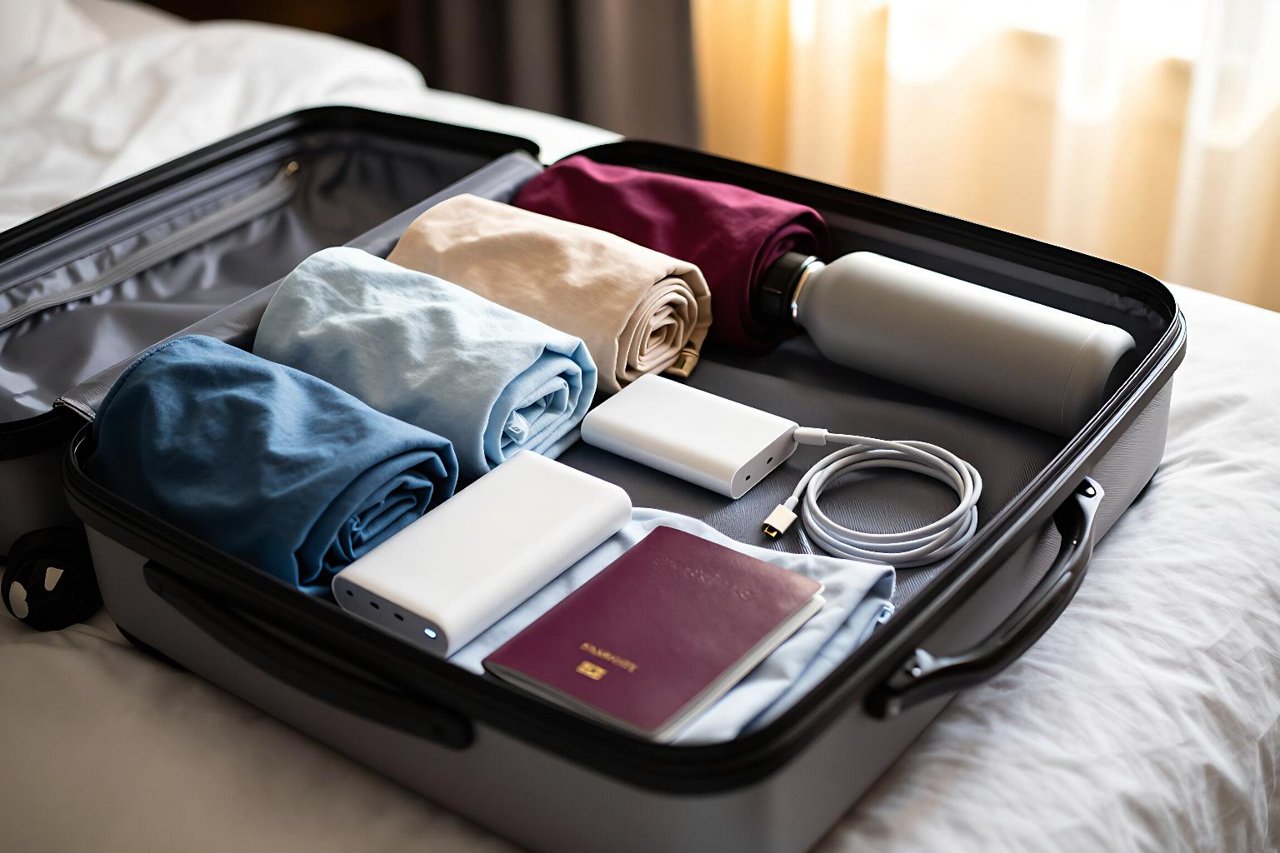
Nothing derails a day faster than a phone at 4%. Build a kit around it:
- A 10,000mAh power bank, charged the night before you fly. Enough for two full phone charges and small enough to forget about.
- A universal adapter with at least two USB ports, so you’re not fighting over the one socket near the hotel bed.
- Two charging cables, not one. Cables fail quietly, usually in the middle of a trip.
- A short extension lead or a four-way adaptor. It weighs almost nothing and turns one plug into four.
Download your offline maps, boarding passes, and translation packs before you leave the airport wifi. The travel apps that are genuinely worth installing do most of the heavy lifting once you’re on the ground, but none of them help if the battery is gone.
Clothes: Dress for the Coldest Hour, Not the Average
Pack for the worst conditions you’re realistically likely to meet, not the brochure weather. A thin merino base layer and a packable rain shell take up less room than a spare jumper and handle far more situations.
For a week, three tops, two pairs of trousers, one warm mid-layer, and one pair of shoes you have already walked five kilometres in. That’s it. Laundry exists almost everywhere, and a sink wash with a travel detergent sheet takes ten minutes. The shoes matter most: new boots on a city break are how blisters happen.
Roll, don’t fold
Rolling clothes genuinely saves space and, more usefully, makes it obvious what you have. Packing cubes take it a step further, particularly when you’re moving hotels every two nights and don’t want to unpack a whole case to find a clean sock.
A First Aid Kit You’ll Actually Open
Most travel first aid kits are full of things nobody uses and missing the three things that matter. Skip the pre-built boxes and assemble your own:
- Blister plasters, the proper hydrocolloid kind. Cheap plasters peel off in an hour.
- Painkillers and an antihistamine, in their original packaging for customs.
- Rehydration sachets, which fix a lost travel day better than almost anything else.
- Any prescription medication in original labelled packaging, plus a copy of the prescription.
- A few sachets of electrolyte powder and a small tube of antiseptic cream.
Add a couple of rapid antigen tests and a thermometer if you’re heading somewhere remote. Knowing what’s wrong beats guessing. A good chunk of preventing and troubleshooting common travel problems is simply having the right small item within arm’s reach instead of hunting for a pharmacy at 9pm.
Money, Cards, and the Backup Plan
Carry two cards from different banks, kept in different places. One in your wallet, one in your wash bag or the hotel safe. Card networks go down, fraud teams freeze accounts without warning, and a single card is a single point of failure.
Take a small amount of local cash for the first day, enough for a taxi and a meal. Tell your bank you’re travelling, and save the emergency contact number for your card provider somewhere offline. The budget travel hacks that seasoned explorers swear by mostly come down to this kind of preparation, not to skipping meals.
The Comfort Items That Pay for Themselves
Long-haul flights and overnight buses are where small kit makes a large difference. An eye mask that actually blocks light, foam earplugs rated around 30dB, and a refillable water bottle with a filter if the tap water is questionable. Compression socks sound like something your GP recommends, and they are, but they also mean you arrive with ankles rather than ankles-plus.
Bring your own snacks for the first leg. Airports charge a premium for a bag of almonds, and the meal service never arrives when you’re hungry.
A pen, and a few ziplock bags
Two of the most underrated items in any bag. Landing cards still exist. Quarantine forms still exist. And a ziplock bag holds a wet swimming costume, a leaking shampoo bottle, or a phone on a rainy boat trip. Take three in different sizes.
Pack for the Trip You’re Actually Taking
A generic list only gets you so far. The specifics change fast. A cabin case with no checked bag means liquids under 100ml and a hard limit on how much you can bring back. A cruise has dress codes, movement-sensitive evenings, and a crew who know exactly what people forget, which is why the things crew members say to pack for a cruise reads so differently to a normal packing list.
Write down your actual itinerary, then ask what breaks it. A hiking day needs a dry bag. A temple visit needs shoulders and knees covered. A work video call needs a shirt that doesn’t look like it lived in a rucksack.
The Things Almost Everyone Forgets
Three items come up again and again, and none of them are glamorous. Nail clippers, because a snagged nail ruins a week of walking and hotels never have them. A spare pair of glasses or contacts, because losing one pair on day one is genuinely trip-ending. And the address of your first hotel written down, spelled correctly, for the taxi driver who doesn’t speak your language and whose phone you can’t use.
Everything else, you can buy. That’s the honest test for any packing list: if it’s cheap and available anywhere, leave it at home. If it’s the thing that turns a bad hour into a ruined day, it goes in the bag every single time.


