
Table of Contents
A 13-hour flight is roughly the length of a full working day. You wouldn’t sit in a 17-inch-wide chair for 13 hours without water, food or a plan, yet most of us board long-haul flights with nothing more than a phone charger and a vague hope. The people who step off looking human aren’t genetically luckier. They’ve just made a few decisions in the week before departure, and a few more at cruising altitude.
Here’s what actually moves the needle.
Pick your seat like you mean it
Seat choice is the cheapest upgrade available to almost every passenger, and most people throw it away at check-in.
Window seats are for sleepers: a wall to lean on and nobody climbing over you. Aisle seats are for people who drink a lot of water and hate asking strangers to move. Middle seats are for nobody, unless it’s a short hop and you’re next to family.

A few rows to think twice about:
- The last five rows. Galley clatter, lavatory queues and, on some aircraft, limited recline.
- Bulkheads. Bags must go overhead for takeoff and landing, the tray table lives in the armrest, and bassinet mounts mean possible crying neighbours.
- Exit rows. Great legroom, but the tray table is built into the armrest, under-seat storage is limited and recline may be locked.
Over-wing seats are worth a look if turbulence bothers you. The wing is the most stable part of the aircraft, and the engine hum covers a surprising amount of cabin noise. It also helps to know what you’re flying on. A Boeing 787 or Airbus A350 pressurises to roughly 6,000 feet; older widebodies cruise at an 8,000-foot equivalent. A lower cabin altitude means less dehydration and a gentler arrival.
If someone else books your travel, like a corporate desk or a business travel platform such as Travelstart+, send them your seat preferences in writing. Requests get lost in email chains.
Dress for the cabin, not the runway
Cabin temperature sits around 22–24°C, but that average hides a lot. The floor near the doors is cold, the vents blast dry air, and the blanket is thinner than a tea towel.
Layers beat one thick jumper. A t-shirt, a light mid-layer and a scarf or compact jacket will handle almost anything. Compression socks in the 15–20 mmHg range are the one piece of gear I’d genuinely argue about: they stop your ankles turning into bread dough, and they help circulation on top of that.
Wear slip-on shoes. Feet can swell up to half a size on a long flight, and unlacing boots in a cramped aisle at 2am is nobody’s idea of fun. Skip the tight waistband and stiff denim. If you want options that look presentable on arrival without feeling like pyjamas, this list of Nordstrom summer travel clothes under $100 covers the basics.
The 24 hours before departure do more than you think
Hydration starts on the ground. Two litres of water the day before beats four tiny plastic cups somewhere over Kazakhstan.
Check in exactly 24 hours out. That’s when the better seats open up and when airlines start asking for volunteers. Charge everything. If you’re carrying a power bank, keep it under 100Wh and in the cabin rather than the hold, because most airlines now enforce that strictly.
Set your watch and phone to destination time before you leave home, and decide roughly when you want to be asleep. A note in your calendar helps more than an alarm.
Build a small, ruthless carry-on kit
The best long-haul bag is boring and small. Mine has barely changed in years:
- A 750ml to 1L refillable bottle, filled after security. Plenty of airports now have bottle-filling stations.
- Moulded-cup eye mask and 32dB foam earplugs: the two items people most often forget and most quickly regret.
- Saline nasal spray and lip balm. Cabin humidity can drop to 10–20%, drier than most deserts.
- A change of socks and a clean t-shirt in a stuff sack.
- Nuts, a protein bar and something with a bit of salt for after landing.
- A pen for arrival forms, plus your boarding pass saved offline.
Seasonal sales are a good time to restock the consumables. Roundups like these Amazon travel essentials deals are worth checking before you pay full price for anything.
Eat and drink with the flight in mind
Cabin air is dry and you lose fluid just breathing. Aim for a glass of water every hour or two and glance at the colour of your urine now and then. Pale straw is the target.
Alcohol hits harder at altitude and wrecks sleep quality even when it knocks you out. One drink is a treat. Three is a guaranteed rough landing. Caffeine needs a cut-off too: work backwards six hours from when you plan to sleep.
Eat a proper meal before boarding rather than a giant one. Cabin pressure makes gas expand, and a heavy, salty airport dinner will make itself known somewhere over the Atlantic.
Move your body before it complains
Blood pools in the legs when you sit still for hours. That’s why ankles swell and why long-haul flights carry a small clot risk. The fix is unglamorous and effective: stand up every hour or two and walk the length of the cabin once.
In your seat, do 20 calf raises, roll your ankles in slow circles, and press your heels into the floor for a five-second hold. Compression socks, water and movement cover most of what you can control. If you have circulation problems or a history of clots, read this guide to preventing DVT while travelling in comfort before you fly, and talk to your doctor.
Have a sleep plan that doesn’t rely on willpower
Decide before boarding when you’ll try to sleep, based on when you land. Flying east into a morning arrival means sleeping early and hard. Flying west into an evening arrival means staying awake as long as you can stand it.
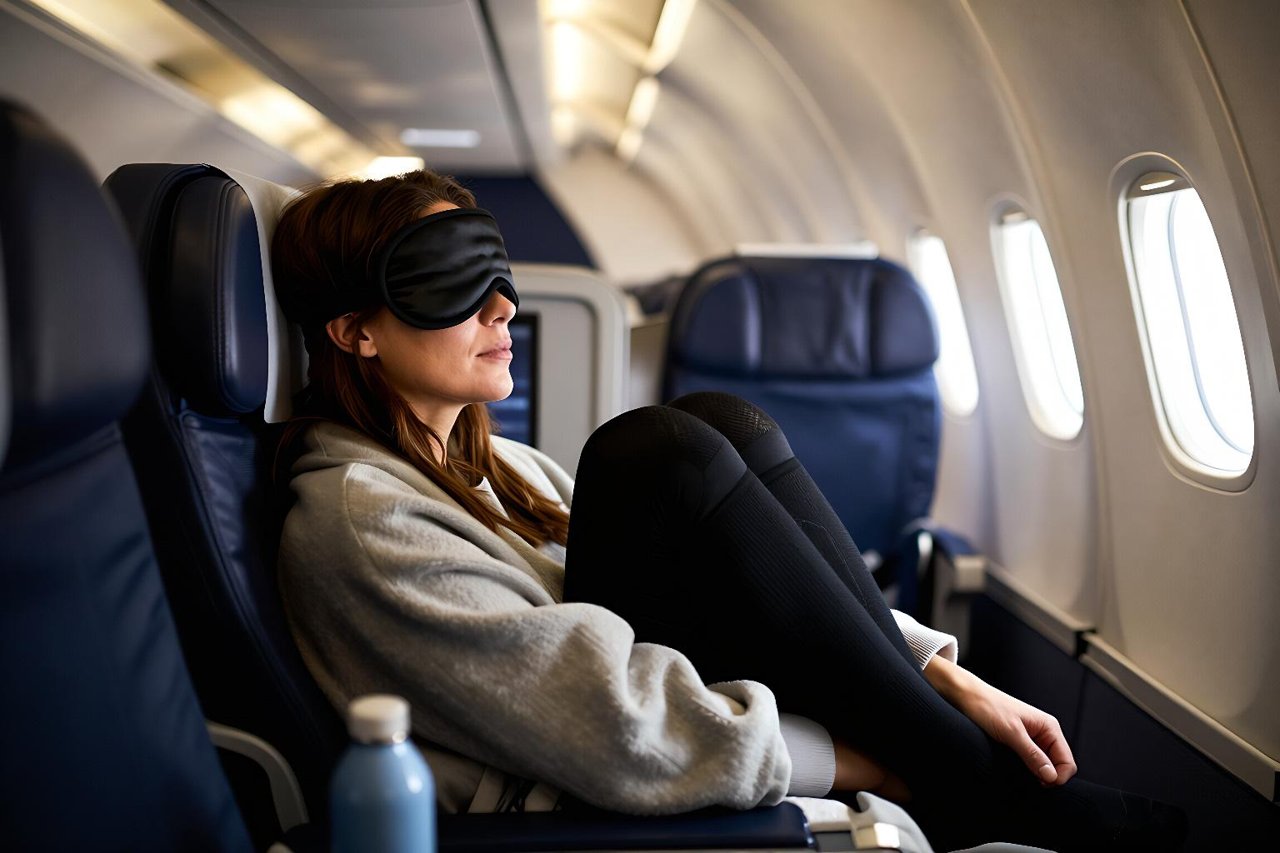
Then make sleep easy. Eye mask on, earplugs in, seat reclined, phone in airplane mode and out of reach. Skip the film you’re half-watching. A neck pillow or a thick scarf wedged against the window does more than a dozen relaxation apps.
Melatonin at 0.5–3mg helps some people shift their body clock. Test it at home first. The last place you want to discover it gives you vivid dreams is seat 43C.
Two flights beat one marathon
A 15-hour nonstop sounds efficient until hour eleven. Splitting the journey into two seven-hour legs with a two-hour connection in Doha, Istanbul or Singapore often leaves you in better shape, and it gives you a chance to walk, eat real food and use a bathroom with a door that closes properly.
If it’s your first long-haul trip, it’s also worth picking a destination where the logistics are forgiving. These countries that make travel easy for first-timers are a sensible place to start.
When the flight goes sideways
Delays happen. When they do, head for the desk before the queue forms. Apps and chat support often rebook faster than standing in line, and if a delay turns into an overnight, ask directly about a hotel voucher. It’s rarely offered unprompted.
Noisy neighbour, dead screen, a seat that won’t recline? Ask the crew once, politely, then let it go. Cabin staff have far more room to help people who aren’t furious.
If turbulence makes you tense, keep your seatbelt fastened over the blanket so you aren’t fumbling for it, and remember the aircraft is built for much worse than you’re feeling. Book over the wing next time and the ride gets noticeably smoother.
And if all else fails, the most underrated comfort item on any long flight costs about $20. A decent pair of noise-cancelling earbuds won’t fix the seat pitch, but it will make thirteen hours feel a good deal shorter.


