
Table of Contents
You land in Lisbon at 7am after a red-eye from Toronto and step out into brilliant sunshine. By 2pm you feel like you’ve been hit by a truck. By 6pm you’re ravenous and strangely wired, and at 2am you’re lying in the dark listening to the same scooter pass for the fortieth time. That isn’t ordinary tiredness. It’s your body clock six time zones out of position.
Jet lag is a timing problem, and timing problems have fixes. They’re just not all equally good, which is why the advice below is sorted roughly by impact. Light and sleep timing do most of the work. Pills, powders and the special tea your aunt swears by do considerably less. Learning how to deal with jet lag is mostly about knowing which levers are worth pulling, and then pulling them at the right hour.
First, understand what you’re actually fighting
Your circadian rhythm runs on a cycle slightly longer than 24 hours, and it takes its cues mainly from light hitting the back of your eye. Bright morning light tells the internal clock to run faster. Evening light tells it to slow down. A flight breaks the system by dropping you somewhere the sun disagrees with your body.
Direction matters more than most people realise. Flying east means advancing your clock, which the body resists. Flying west means delaying it, which is closer to what happens naturally when you stay up too late. A five-hour westward shift tends to cost two rough days; the same shift going east often runs to three.

Sleep researchers use a rough rule of one day per time zone crossed before you feel fully yourself again. Los Angeles to Tokyo is 17 hours of clock shift, which is really a 7-hour jump in the other direction. Expect a week, not a morning.
Start shifting three days before you fly
Move bedtime in small steps
Heading east? Go to bed 30 to 45 minutes earlier each night for the last three nights and set the alarm earlier too. Heading west? Push everything later. Small increments beat one dramatic jump, and you don’t need to be perfect. Arriving even 90 minutes closer to local time takes the edge off.
Meals send a signal as well. The gut has its own clock, so eat your final meals on the ground at destination mealtimes where you reasonably can. It won’t fix anything on its own, but it stacks with everything else.
Pick a flight that lands in daylight
An eastward flight that lands in the evening lets you shower, eat something light and get into bed at a normal local hour. A 6am arrival means surviving fourteen hours before that moment arrives, and that’s exactly when the 3pm collapse hits.
Where you go shapes how brutal the shift will be. Destinations close to your home time zone are forgiving; a two-week trip split between Tokyo and New York is not. If you’re still deciding, look at the best vacation destinations for every travel style with an eye on longitude as much as weather.
On the plane: light, water and skipping the wine
Cabin lighting is scheduled for the crew’s convenience, not your body. Do the opposite of the default if it clashes with what your destination clock needs.
- Set your watch to destination time the moment you sit down.
- Drink a glass of water for every hour in the air, and pass on the alcohol.
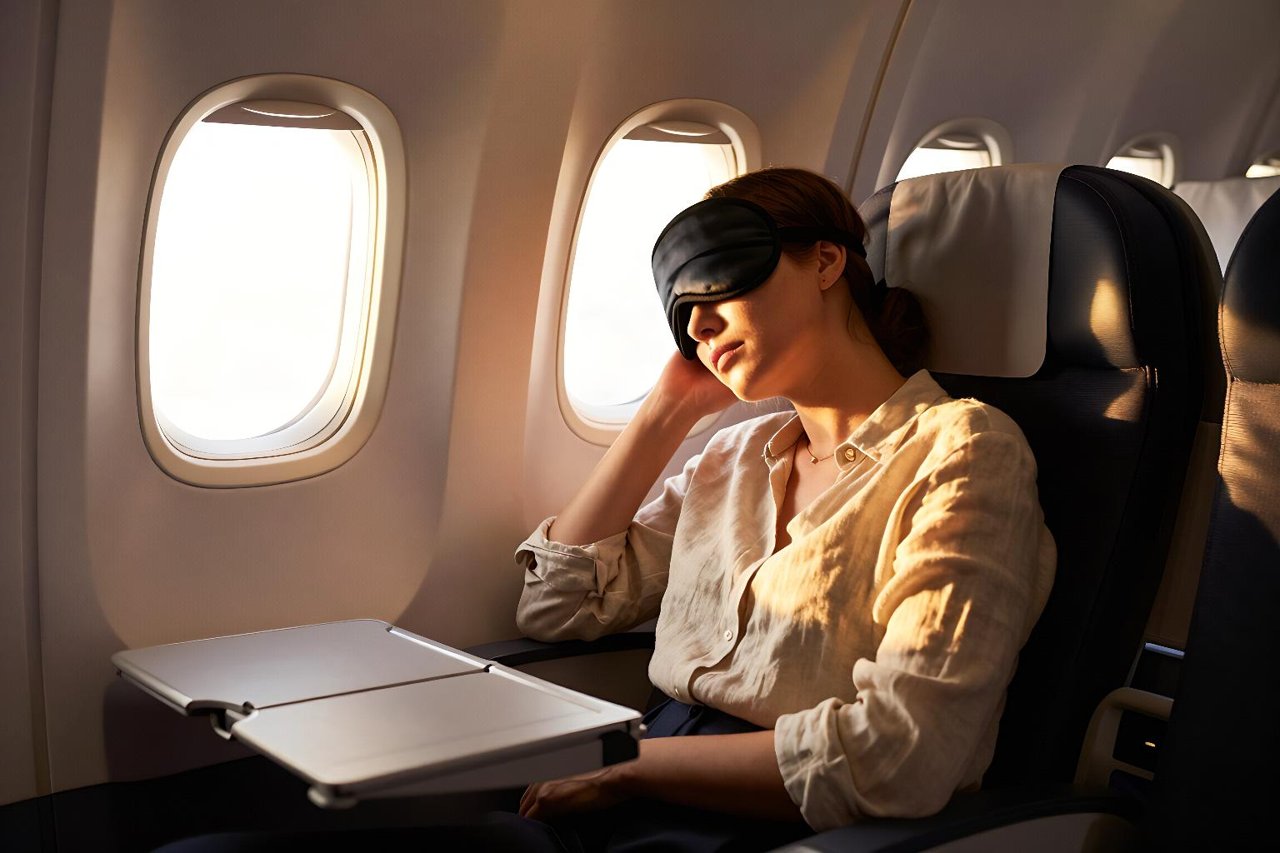
- If it’s night where you’re going, wear an eye mask and sleep. If it’s morning there, stay awake and read.
- Stand up every couple of hours, walk the aisle, do a few calf raises. Compression socks help more than people admit.
- Eat lightly, and eat at destination mealtimes where the service allows.
Nerves can wreck the sleep half of that plan. If your heart rate climbs every time the seatbelt sign pings, the anxiety is the problem to solve first, and there are practical ways to work through a fear of flying that won’t budge.
Daylight is the strongest lever you have
Within an hour of landing, get outside. Not into a hotel lobby or onto a station platform, but properly outdoors. Even under thick cloud, outdoor light is 10 to 100 times brighter than indoor lighting, and that intensity is the signal your clock reads.
Arriving east? Chase bright morning light, so take a walk after breakfast. Arriving west? Save the long stroll for late afternoon and soak up light from 5pm onwards. Twenty to thirty minutes is plenty.
The flip side matters just as much. If you’ve flown east and wake at 3am, don’t switch on every lamp and open the laptop. Lie in the dark or read by a dim bulb. Bright light at 3am tells the brain it’s morning and locks in the wrong schedule for another day.
The first day decides the rest of the trip
Stay awake until a reasonable local bedtime, even if the last three hours feel like wading through wet sand. Two hours of afternoon sleep costs you four hours of staring at the ceiling at midnight.
- Cap naps at 20 minutes and keep them before 2pm. Use an alarm.
- Eat at local times even when you’re not hungry.
- Take a hot shower and a short walk. Movement beats another coffee.
- Be in bed by 10pm, with the room properly dark.
- If you wake at 3am, stay lying down. When it becomes 4am instead, that’s progress.
Group trips scramble this, because everyone’s clock is off by a different amount. One friend wants a nap at 2pm, another is ready for dinner at 4. Agree on a single anchor event each day and let people handle the gaps however they like. It’s the same lesson that makes travelling with friends work in general: fewer fixed plans, more slack.
Eating, drinking and the melatonin question
Heavy meals sit badly at 30,000 feet and worse at 2am local time. Protein and fibre in the morning, carbohydrates at night, and a proper breakfast on day one even if you’d rather not.
What actually helps you sleep
- Melatonin: 0.5mg to 1mg about 30 to 60 minutes before your target bedtime, for the first three or four nights. It’s a timing signal, not a sedative, and higher doses aren’t better. Those 10mg tablets are far more than you need.
- Caffeine: stop eight hours before bed. The after-dinner espresso in Madrid is why you’re awake at midnight.
- Alcohol: it puts you under fast and wakes you at 3am. Skip it on the first night at minimum.
Coming home is usually the harder half
Almost nobody prepares for the return leg. You fly back, go straight into work, and shift six or seven hours the hard way while carrying a holiday’s worth of sleep debt. Book a buffer day if your schedule allows it. Keep running the same light strategy in reverse: eastward homecoming means getting outside in the morning, not hiding in the office until dusk.
When you can design the time change out entirely
Flights aren’t the only way to cross an ocean. A transatlantic cruise moves you one hour at a time across seven or so nights, which is slow enough that most passengers feel essentially nothing. The sea days help too, since nobody is setting an alarm. Picking a departure point close to home makes the first day easier as well, and choosing the right embarkation port is its own small project worth doing properly.
Small things that earn their space in your bag
An eye mask that actually blocks light, not a flimsy airline one. Foam earplugs. A refillable bottle you can fill after security. Sunglasses for the arrival-day walk when the sun is doing its best work on your behalf. A 1mg melatonin pack. Electrolyte tablets, because dehydration on a nine-hour flight feels a lot like jet lag and the two stack.
None of it is glamorous. All of it makes the difference between losing two days of a trip to a darkened hotel room and walking out into the morning on day one, hungry, alert, and ready to find breakfast.


