
Table of Contents
Twenty metres from the Trevi Fountain, a gelato shop charges €9 for a small cone. Four streets east, the same scoop costs €3.50 and tastes better. Nobody in the first queue is being forced to pay. That is exactly what makes a tourist trap so effective: it almost never looks like one at the moment you decide to hand over your card.
The pattern repeats in every city on earth. A restaurant with photographs of every dish. A man selling “skip the line” tickets who has no connection to the attraction. A tuk-tuk driver quoting a price per person rather than per trip. Avoiding all of it does not require a spreadsheet or a local cousin. It requires a handful of habits you can pick up on your first afternoon.
The four tells worth memorising
Most traps survive on the same small set of design choices. Once you know what to look for, you spot them in about four seconds.
- No prices on display. A menu without numbers, a taxi without a meter, a tour without a written rate. If the number arrives only after you have committed, expect it to be inflated.
- A menu in six languages with photos of every dish. Real neighbourhood kitchens do not need to photograph their lasagne. They have regulars who already know what it tastes like.
- Someone physically steering you inside. “Best price, my friend, come look.” Legitimate businesses rarely need a spotter on the pavement at 7pm.
- Location pinned to an exit gate. The shop ten steps from a major landmark’s turnstile is paying landmark rent. You are paying it for them.
None of these guarantees a bad experience. Together, though, they tell you that the business model is foot traffic rather than repeat customers, and that changes how everything is priced.

Walk two streets in any direction
This is the single highest-return move in travel. Step off the main drag, cross one block, then another. Prices in Rome, Lisbon, Marrakech and Bangkok all drop noticeably once you leave the funnel between the station and the cathedral. Coffee in Venice is the clearest illustration: €1.20 standing at a bar two streets behind St Mark’s Square, €12 for the same espresso at a table in the square itself. Same city, same beans, different rent.
Walking is also how you find the streets that never make it into a top-ten list, the bakery with a queue of locals at 8am, the tiny museum with a volunteer at the desk. Treating walking as your main mode of transport rather than something you do between taxis will save you money and hand you better material for the trip.
Use the ten-minute rule
Give yourself ten minutes of walking away from any headline attraction before you sit down, buy anything, or book anything. That buffer alone filters out the majority of overpriced restaurants, souvenir shops and “guided” experiences.
Buy tickets from the attraction, not from the street
Resellers are the most expensive trap in most cities and the easiest to avoid. A Colosseum ticket bought directly costs around €16. The same entry, sold by a third-party kiosk with a “skip the line” sticker, often runs €40 to €55. The line-skipping is real, but it is frequently the official timed-entry slot you could have booked yourself for free.
Before you pay anyone, check three things: does the website belong to the institution itself, is there an official booking link on their own site, and does the price match what the attraction advertises? If a seller refuses to name the operator or hands you a paper voucher with no booking reference, walk away. And buy directly a few weeks ahead for anywhere famous. The reason people pay a 200% markup at the gate is usually that they left it until the morning of.
Eat where the menu is short
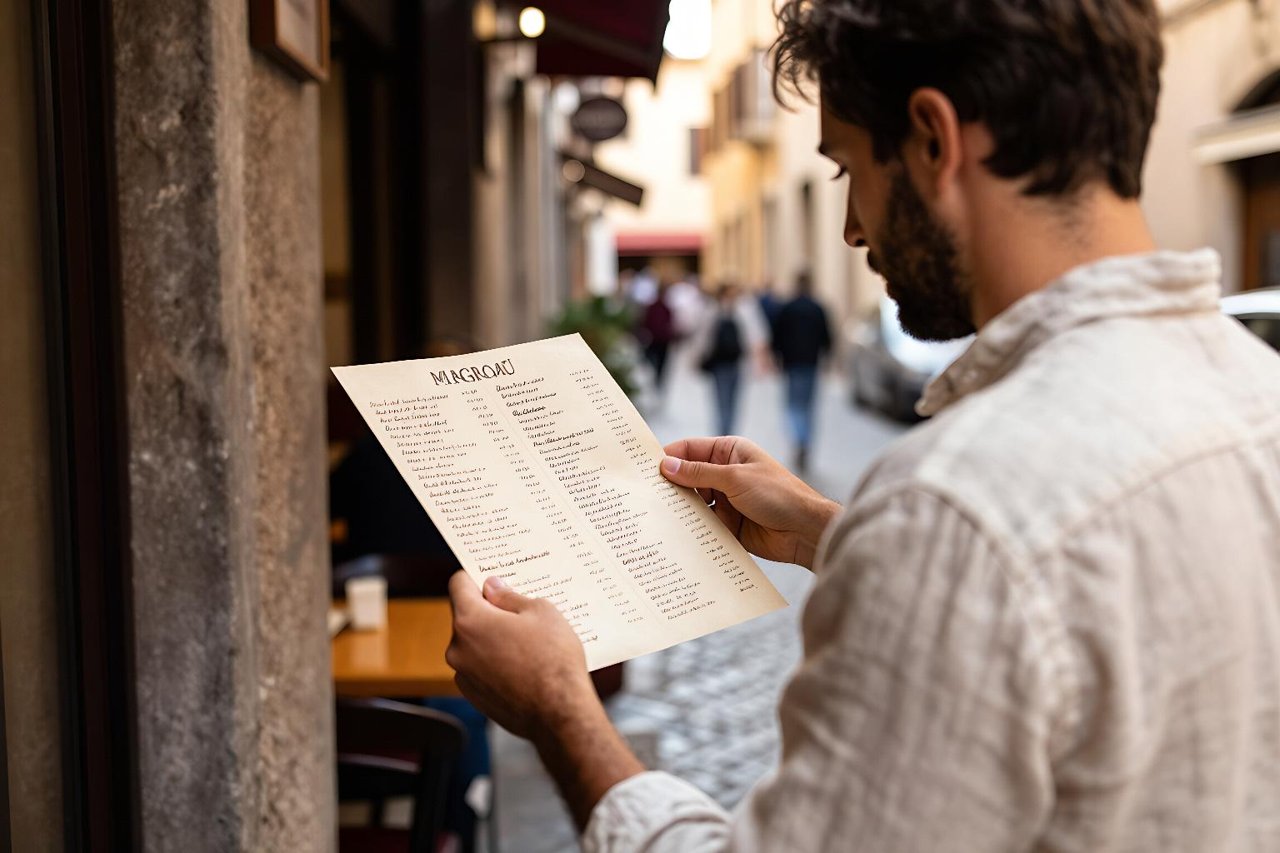
A four-page menu covering pizza, sushi, paella and curry is a warning sign, not variety. Kitchens that do everything well do not exist at scale, and the frozen, reheated version of everything is what you get. Look for a single sheet, handwritten, changed weekly.
Two other habits help. Check whether prices include tax and service before you order, since Italy’s coperto and US sales tax both land on the bill later. And eat your main meal when locals do. In Spain that means a 2pm lunch with a €13 menú del día that costs €30 at 8pm, and in much of southern Europe it means restaurants that are gloriously empty at 6pm because nobody local is hungry yet.
Research in the local language, not just the search bar
English-language results for any destination are dominated by the same affiliate-driven lists, which is how certain mediocre attractions end up with a permanent queue. Search in the local language, even badly, or look for city-specific guides written by residents. A well-made local list of things to do in Marmaris will mention the harbour walk and the Tuesday market; the generic version will mention the same three boat tours sold at every jetty.
Google Maps reviews deserve a specific technique: sort by newest rather than most relevant, and read the two-star and three-star entries first. Five-star reviews tell you someone was happy. Three-star reviews tell you the food was fine but the bill had a mysterious €15 charge for bread.
If you want to build a whole trip around places that have not been optimised for tourists yet, start with a curated list of hidden gems and timeless classics and pick one of each, rather than stacking five bucket-list stops into four days.
Time your day around the crowd machine
Crowds are predictable, and predictability is leverage. Cruise ships typically disembark between 9am and 10am and reboard from 3pm, so the worst window at a port-city attraction is late morning. Major museums empty out in the last two hours before closing. Popular squares are close to bearable at 7am, when you get the photographs and the locals buying bread.
Check whether your visit overlaps a public holiday, a national school break, or a free-entry Sunday. Free-entry days are genuinely free, and genuinely the most crowded hours of the month.
Book two things, leave the rest loose
Pre-book the timed-entry attraction and the one restaurant you actually care about. Leave everything else unplanned. Over-scheduling is its own trap, because it forces you to eat wherever is nearest to your 1pm slot.
Watch the small money leaks
The €9 gelato is annoying, but the quiet losses add up faster. Always choose to be charged in the local currency when a card machine offers you a choice, since “pay in your home currency” adds a 3% to 7% conversion margin. Use bank ATMs rather than the standalone machines in convenience stores, and decline the machine’s suggested withdrawal amount. Confirm taxi meters at the start, or agree a fixed fare in writing before the wheels move.
These habits stretch a budget further than hunting for discounts ever will, which matters most on shorter trips. If you are travelling on a tight number, choosing a cheaper destination outright beats fighting markups in an expensive one, and these realistic budget destinations do more for your money than any haggling trick.
Know when the trap is worth paying for
Here is the part most advice skips. Some famous, overpriced, crowded experiences are worth it, and pretending otherwise is its own kind of snobbery. Standing in the middle of a neon square at night or taking the silly gondola ride can be the memory you keep. The question to ask is not “is this a tourist trap?” but “what am I actually buying?”
If the answer is convenience, a view, or a once-in-a-lifetime moment, pay it deliberately and enjoy it. If the answer is “because it was at the exit of the station and I was hungry”, you have just been sold something. A place like Times Square is a useful test case: nobody goes there for the food or the quiet, and knowing that in advance means you pay for the spectacle on your terms, then eat three blocks west.
Deliberate spending is the whole skill. Choose the two or three expensive, crowded, unmissable things you genuinely want, budget for them without flinching, and apply every habit above to everything else. That is how you come home with the memory and most of your money.


