
Table of Contents
A bag of chia seeds used to sit in my pantry for months because I wasn’t sure what to do with it. It had a bold label, a health claim, and a price that made me treat it like jewelry. That’s the odd thing about the superfood aisle: it makes ordinary plants and fish feel like rare collectibles.
So, what are superfoods? In plain terms, the word describes foods that are unusually rich in nutrients relative to their calories. Blueberries, salmon, kale, oats, lentils, and garlic all get the label. The problem is that “superfood” is a marketing phrase, not a scientific category. No sticker on a package can tell you whether your overall diet is any good.
What Does “Superfood” Actually Mean?
There is no official definition of superfood. The U.S. Food and Drug Administration doesn’t recognize it as a regulated term, and nutrition scientists rarely use it in research papers. The word shows up on smoothie powders, cereal boxes, and $14 juices because it sells. That doesn’t mean the foods are fake. It means the label is doing more advertising than science.
The useful idea underneath the hype is nutrient density. A food earns attention when it packs fiber, protein, vitamins, minerals, healthy fats, or beneficial plant compounds into a reasonable number of calories. One cup of cooked lentils gives you about 18 grams of protein and 15 grams of fiber for roughly 230 calories. A handful of blueberries adds fiber, vitamin C, and anthocyanins, the pigments that give berries their color. Those are concrete reasons to eat them. “Super” is just the marketing wrapper.

The label also gets tangled in bigger arguments about supplements, detoxes, and diet tribalism. Many controversial nutrition topics start with a kernel of truth about a nutrient and balloon into promises no single food can keep.
The Nutrition Behind the Label
Most foods called superfoods share a few practical strengths. They tend to be whole or minimally processed, and they bring something your body can use: fiber for gut bacteria, protein for muscle repair, unsaturated fats for heart health, or antioxidants that help protect cells from damage.
Take salmon. A 3-ounce cooked portion has around 20 grams of protein and 1.5 to 2 grams of omega-3 fats, depending on the type. That matters because most people don’t eat enough omega-3s. Kale and spinach offer vitamin K, vitamin C, folate, and fiber. Oats contain beta-glucan, a soluble fiber linked with lower cholesterol. Garlic contains allicin, a compound with antimicrobial properties in lab studies, though human evidence is more modest. The pattern is consistent: real foods, eaten regularly, support health in unglamorous ways.
Common Superfoods and What They Bring
You don’t need a passport-sized list of exotic berries. Some of the most reliable “superfoods” are already in the grocery store, often in the frozen aisle.
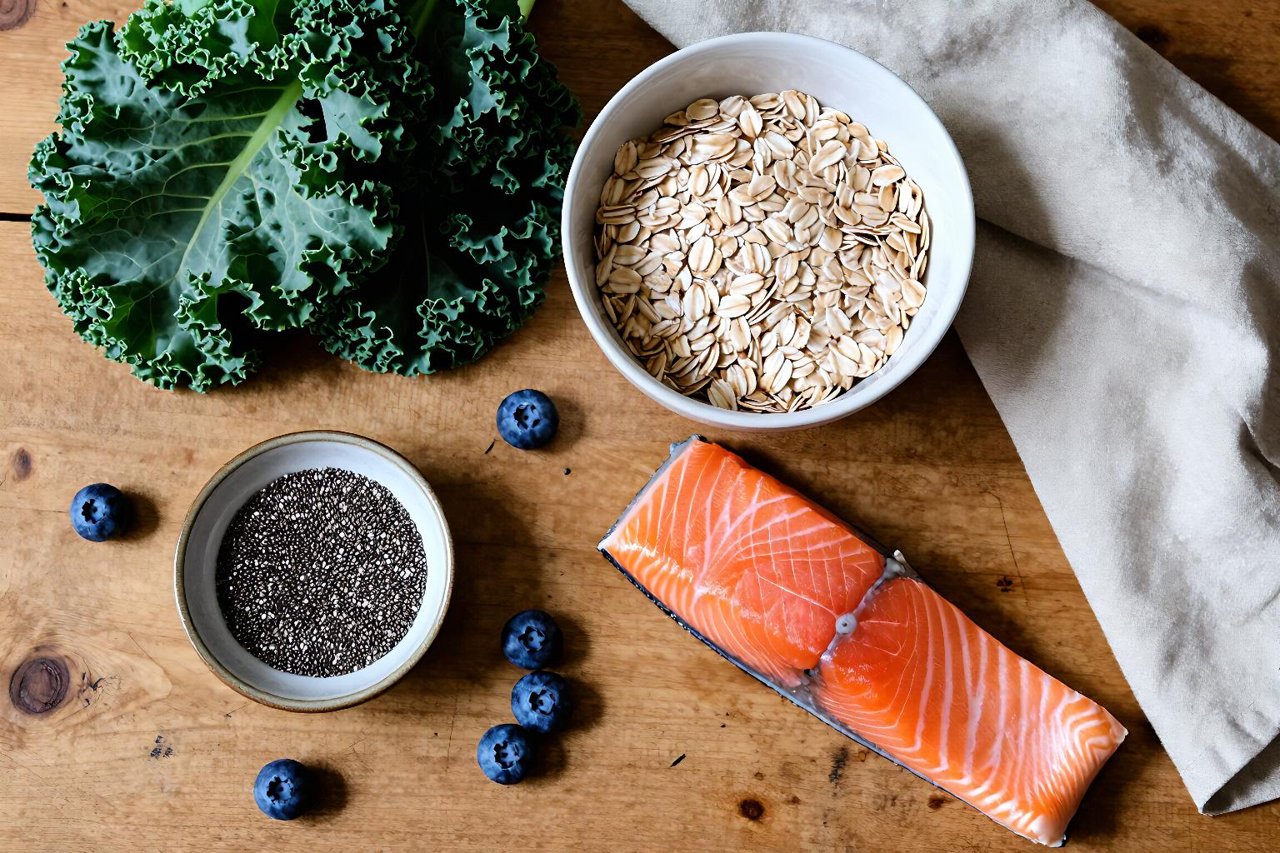
- Leafy greens: Kale, spinach, collards, and Swiss chard deliver vitamin K, folate, and fiber. A cup of raw spinach is only about 7 calories, but it is not a meal. Pair greens with beans, eggs, or salmon.
- Berries: One cup of blueberries has about 84 calories and 3.6 grams of fiber. Frozen berries cost less and keep their nutrients, which makes them a better buy than expensive berry powders.
- Fatty fish: Salmon, sardines, mackerel, and herring provide omega-3 fats. Canned sardines are one of the cheapest sources around, especially if you don’t mind the bones (they add calcium).
- Seeds: One ounce of chia seeds has about 10 grams of fiber, 5 grams of protein, and 5 grams of alpha-linolenic acid, a plant omega-3. Flaxseeds are similar, but grind them so your body can access the nutrients.
- Oats and barley: Both contain beta-glucan. A half-cup of dry oats has about 4 grams of fiber and 5 grams of protein, and it costs pennies per serving.
- Beans and lentils: These are the quiet champions. They are high in fiber and protein, low in cost, and linked with better blood sugar control and heart health.
If you want to move from reading labels to actually eating the stuff, these superfood recipes use familiar ingredients rather than powdered unicorn dust.
Do You Need Superfood Powders?
Usually, no. Powders can be convenient, especially if you hate vegetables or travel a lot, but they are not magic. Drying and milling a food can reduce some heat-sensitive vitamins and remove the fiber-rich structure that makes whole foods filling. A teaspoon of berry powder is not the same as a cup of berries.
Check the price per serving and the actual ingredient list. A greens powder that costs $2 per scoop and contains mostly spinach powder, flavoring, and sweetener is a poor deal next to a $3 bag of frozen spinach. If a product promises detox, immune “boosting,” or rapid weight loss, treat that as a reason to slow down. Your liver and kidneys already handle detoxification. No powder replaces sleep, vegetables, or medical care.
How to Spot a Superfood Worth Buying
A useful superfood is one you will eat again next week. That sounds obvious, but the supplement aisle is full of expensive items people buy once and abandon. Use a short filter before you spend:
- Is it a whole food? Fresh, frozen, canned, or dried beans, fish, fruit, vegetables, and grains usually beat extracts.
- Does it bring fiber or protein? Those two nutrients keep you full and make a food useful in real meals.
- Can you afford it per serving? Frozen berries, canned sardines, oats, lentils, and cabbage often win on cost.
- Do you actually like the taste? A $12 bag of matcha is not a health food if it sits unused in the cupboard.
- Is the claim specific? “Provides 6 grams of fiber per serving” is useful. “Unlocks your best self” is not.
Building a Plate Around Nutrient Density
A practical breakfast can cover a lot of ground without any superfood label. Try a half-cup of dry oats cooked with water, mixed with three-quarters of a cup of plain Greek yogurt, one cup of frozen blueberries, and a tablespoon of chia seeds. That bowl lands around 25 grams of protein and 13 grams of fiber, and it costs less than most bottled smoothies.
Lunch could be a lentil salad with spinach, tomatoes, cucumber, and olive oil. Dinner might be salmon with roasted broccoli and barley. None of those meals is trendy. All of them are nutrient-dense. You can also rotate in superfood recipe ideas when you get bored, as long as the base is real food rather than a supplement stack.
The Real-World Rule: Variety Beats a Shortlist
There is no shortlist of ten foods that guarantees good health. Nutrition research keeps pointing back to patterns: plenty of plants, enough protein, healthy fats, and fiber, plus less ultra-processed food and sugar-sweetened drinks. A person can eat kale every day and still feel terrible if the rest of their diet is low in calories, protein, or sleep.
Use superfoods as a nudge, not a rulebook. Aim for color and variety across the week: berries on Monday, lentils on Tuesday, sardines on Wednesday, roasted sweet potato on Thursday. Keep frozen vegetables and canned beans in the cupboard. Add a handful of nuts or seeds to meals you already like. Those small, repeatable choices do more than chasing the newest expensive powder. The best superfood is the one that lands on your plate often enough to matter.


