
Table of Contents
Raisins and grapes come from the same vine, yet a 30g box of raisins packs roughly the sugar of a cup of grapes into a fraction of the volume. That one fact explains most of the dried-versus-fresh debate. Drying removes water, and water is heavy. What remains is a smaller, denser package of fiber, minerals, natural sugars, and calories. So are dried fruits as nutritious as fresh fruits? They are differently nutritious, and the comparison only makes sense when you compare realistic portions rather than 100g against 100g.
The drying process: water out, nutrients concentrated
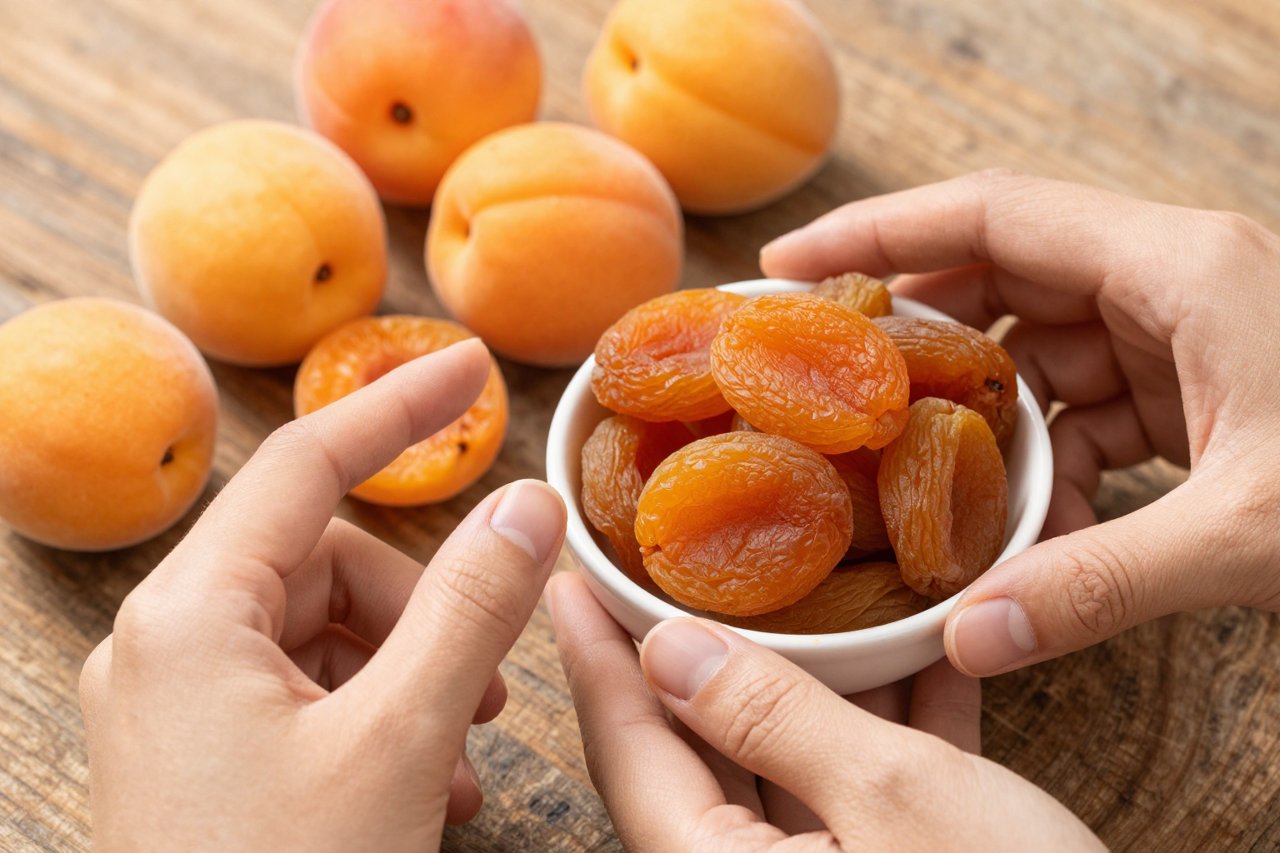
Fresh apricots are about 86% water. Dry them and water drops to roughly 15% to 20%. Fiber, potassium, iron, and plant compounds stay, but they are packed into far less weight. A 100g portion of fresh apricots has around 48 calories, 2g fiber, and 259mg potassium. The same weight of dried apricots has about 241 calories, 7g fiber, and more than 1,100mg potassium. Dried fruit is not better. It is concentrated.
That cuts both ways. You get more fiber and minerals per bite, plus more sugar and calories per bite. A handful of dried apricots can equal several fresh ones. Eat dried fruit by the bowl and the calorie load climbs fast. Use it as a compact topping or trail snack and the density works for you. For people trying to gain weight, dried fruit is an efficient tool, and so are certain fresh fruits; this guide to high-calorie fruits that help gain weight is a useful companion.
Why 100g is a misleading comparison
Compare 100g of grapes with 100g of raisins and raisins look like a sugar bomb. Compare a normal serving instead. One cup of grapes, about 150g, has around 104 calories and 23g sugar. A quarter cup of raisins, about 40g, has around 120 calories and 25g sugar. The numbers are close because you are eating a similar amount of fruit solids. The raisin portion just looks smaller. Weigh or measure dried fruit once or twice and portion size becomes obvious.

Which nutrients survive and which fade
Drying is gentler on some nutrients than others. Fiber, potassium, iron, magnesium, and most polyphenols remain. Vitamin C is heat-sensitive and water-soluble, so it drops sharply. Fresh apricots have about 10mg vitamin C per 100g; dried apricots have around 1mg. If vitamin C is your main reason for eating fruit, fresh citrus, berries, kiwi, and peppers are stronger choices.
Drying method matters. Sun-drying and hot-air drying use heat, which reduces vitamin C. Freeze-drying removes water at low temperature and keeps more heat-sensitive vitamins, though it costs more. Sulfur dioxide is sometimes used to preserve bright color and some vitamin C in golden raisins and light apricots. People with asthma or sulfite sensitivity should check labels and choose unsulfured versions.
Added sugar is the real wild card
Plain dried fruit contains only the sugar naturally present in the fruit. Sweetened dried cranberries, crystallized ginger, and some dried mango strips are different products. They are often infused with sugar syrup or coated with sugar, which adds calories without adding nutrients. Read the ingredient list. Dried cranberries should list cranberries, and maybe a little sunflower oil to prevent clumping. If sugar, glucose syrup, or fruit juice concentrate appears before the fruit, treat it as a candy-adjacent snack.
Fiber, sugar, and blood sugar
Dried fruit has a higher glycemic index than fresh fruit in many cases because the sugar is more concentrated and the water that would dilute it is gone. That does not make it off-limits. Fiber slows digestion, especially when paired with protein or fat. Three prunes with a spoon of Greek yogurt will affect blood sugar differently than three prunes eaten alone on an empty stomach.
Portion size still rules. For diabetes, a sensible starting point is 15g to 20g of carbohydrates from dried fruit, roughly 2 tablespoons of raisins or 2 small dried figs. Check your glucose response and work with a dietitian if you use insulin. For most healthy adults, a small handful of unsweetened dried fruit is a reasonable snack.
Fresh fruit’s quiet advantages
Fresh fruit brings water, volume, and chew. Those qualities matter for fullness. A whole orange and a handful of dried apricots can have similar calories, but the orange takes longer to eat, contains more water, and provides vitamin C. Fresh fruit also has a lower calorie density, so you can eat a larger portion for the same energy. That helps anyone managing appetite.
Dried fruit has dental downsides too. Sticky raisins and dates cling to teeth and feed oral bacteria. Rinsing with water or brushing after a sticky snack helps. Fresh crunchy fruit like apples has a slight mechanical cleaning effect, though it is not a substitute for brushing.
How to pick dried fruit that earns its place
Not all bags in the snack aisle are equal. Use this checklist:
- Read the ingredient list. The best dried fruit lists the fruit and nothing else. Sunflower oil is acceptable in raisins and cranberries to prevent sticking.
- Skip sweetened varieties. Dried cranberries, mango, pineapple, and banana chips are often sugar-coated. Banana chips may also be fried in coconut oil.
- Choose unsulfured if you are sensitive. Sulfites can trigger asthma symptoms in a small group of people. Otherwise, they mainly preserve color.
- Try freeze-dried for crunch. Freeze-dried berries and apples keep more vitamin C and make a lightweight snack, though they are pricey.
- Portion before you snack. Put 30g to 40g in a small bowl or bag. Eating straight from a large bag makes overeating easy.
- Pair with protein or fat. Nuts, yogurt, cottage cheese, or a hard-boiled egg turns dried fruit into a balanced snack.
Who benefits from dried fruit, and who should be careful
Dried fruit is practical for hikers, cyclists, and anyone who needs shelf-stable energy. A 40g box of raisins has about 120 calories and 1.2g fiber, and it fits in a pocket. Prunes are a well-studied option for constipation; 50g to 100g per day helps some people. Raisins provide iron, though the amount is modest. Dried figs add calcium and fiber.
Some people should moderate. If you have kidney disease, the high potassium in dried apricots, raisins, and prunes may be a concern. If you have diabetes, watch portions and pair with protein. If you wear dentures or have trouble chewing, softer dried fruit can be easier than crunchy fresh fruit, but sticky textures still need attention. People with sulfite-sensitive asthma should choose unsulfured products.
A practical way to use both
Keep fresh fruit where you will see it: a bowl on the counter, berries in the fridge, apples in a drawer. Store dried fruit in small jars or pre-portioned bags so it stays a condiment and a snack, not a bottomless pit. Use dried fruit in oatmeal, trail mix, grain salads, and tagines. Use fresh fruit for volume, hydration, and vitamin C. A sliced orange with a few dates, or yogurt with fresh berries and a tablespoon of raisins, gets you the best of both.
Dried fruit is not a lesser version of fresh fruit. It is a concentrated version with a different job. Fresh fruit wins on water, vitamin C, and volume. Dried fruit wins on shelf life, portability, and concentrated fiber and minerals. Stock both, measure the dense one, and let the rest of your diet fill the gaps.


