
Table of Contents
You cleanse twice, change your pillowcase, and still wake up with a cluster of bumps along your jaw. That is frustrating. Makeup is rarely the only cause of acne, but the way you apply, wear, and remove it can turn a slightly congested pore into an angry spot. Dermatologists even have a name for product-related congestion: acne cosmetica. The good news is that most fixes are cheap, quick, and boring in the best way. These are the top 7 makeup mistakes that can contribute to breakouts, with practical swaps you can make this week.
1. Sleeping in makeup, even for one night
An eight-hour sleep in foundation gives sebum, sweat, and dead skin cells plenty of time to mix with pigment and powder. One late night will not wreck your skin forever. Repeat it three times a week and you are giving bacteria a warm, occlusive blanket. If you get home at 1 a.m., keep a cleansing balm by the sink. Massage it over dry skin for 30 seconds, rinse, then follow with a gentle cleanser. That two-minute routine beats a makeup wipe alone, which often pushes product around instead of lifting it.
2. Using dirty brushes and sponges
A damp beauty sponge can harbor bacteria and yeast after a few uses, especially if you store it in a closed bathroom cabinet. Brushes collect oil, dead skin, and old foundation in the bristles. Then you press all of that back onto your cheeks. Set a recurring reminder on your phone and follow a simple schedule:
- Beauty sponges: wash after every 2 to 3 uses with a gentle soap, squeeze out the water, and dry in an open, ventilated spot.
- Foundation and concealer brushes: wash weekly with baby shampoo or a brush cleanser. Keep water out of the ferrule, the metal part, so the glue does not break down.
- Powder and eyeshadow brushes: every two weeks is usually enough. Wash sooner if you have oily lids or an active breakout.
Replace sponges every one to three months. If yours has dark spots, a sour smell, or tears, it is done.

3. Choosing pore-clogging formulas for your skin type
Not every rich cream is a problem. Dry skin can handle heavier textures. If you break out mostly on your T-zone and cheeks, check where occlusive ingredients sit on the label. Coconut oil, wheat germ oil, isopropyl myristate, and some heavy waxes are common triggers for acne-prone skin. The term non-comedogenic is not tightly regulated, so treat it as a hint rather than a guarantee. Patch test a new foundation along your jaw for five days before wearing it on your whole face.
- Coconut oil and coconut-derived formulas: great for body care, often too heavy for breakout-prone faces.
- Thick silicone primers: they can smooth texture, but a heavy layer traps sweat and oil. Use a thin layer or skip primer in your T-zone.
- Fragrance and strong essential oils: they do not clog pores directly, but irritation can make existing acne look redder and more inflamed.
4. Layering foundation like spackle
Coverage is seductive. Three pumps of foundation, a color-correcting concealer, and a baking powder can create a seal over your pores. Sweat and oil have nowhere to go. Try one pump for the whole face, then spot-conceal only where you need it. Use a damp sponge and press the product in; do not swipe. If your foundation has a dewy finish, set only the center of your face with a light powder. If you need more coverage at 4 p.m., blot first and add a thin layer of powder. Thin layers cause less friction and leave less product behind in your pores.
5. Missing the hairline and jaw
The most common place for makeup residue is the edge of your face. Foundation blends into the hairline, and cleansing often stops at the chin. That leftover product can clog pores and cause small bumps that look like a rash. Use a cleansing balm first, then a water-based cleanser. Spend 30 seconds on your jaw, hairline, and around the nostrils. A soft microfiber cloth can help remove residue without scrubbing. If you wear long-wear foundation and SPF, double cleansing at night is not optional.
The 30-second edge check
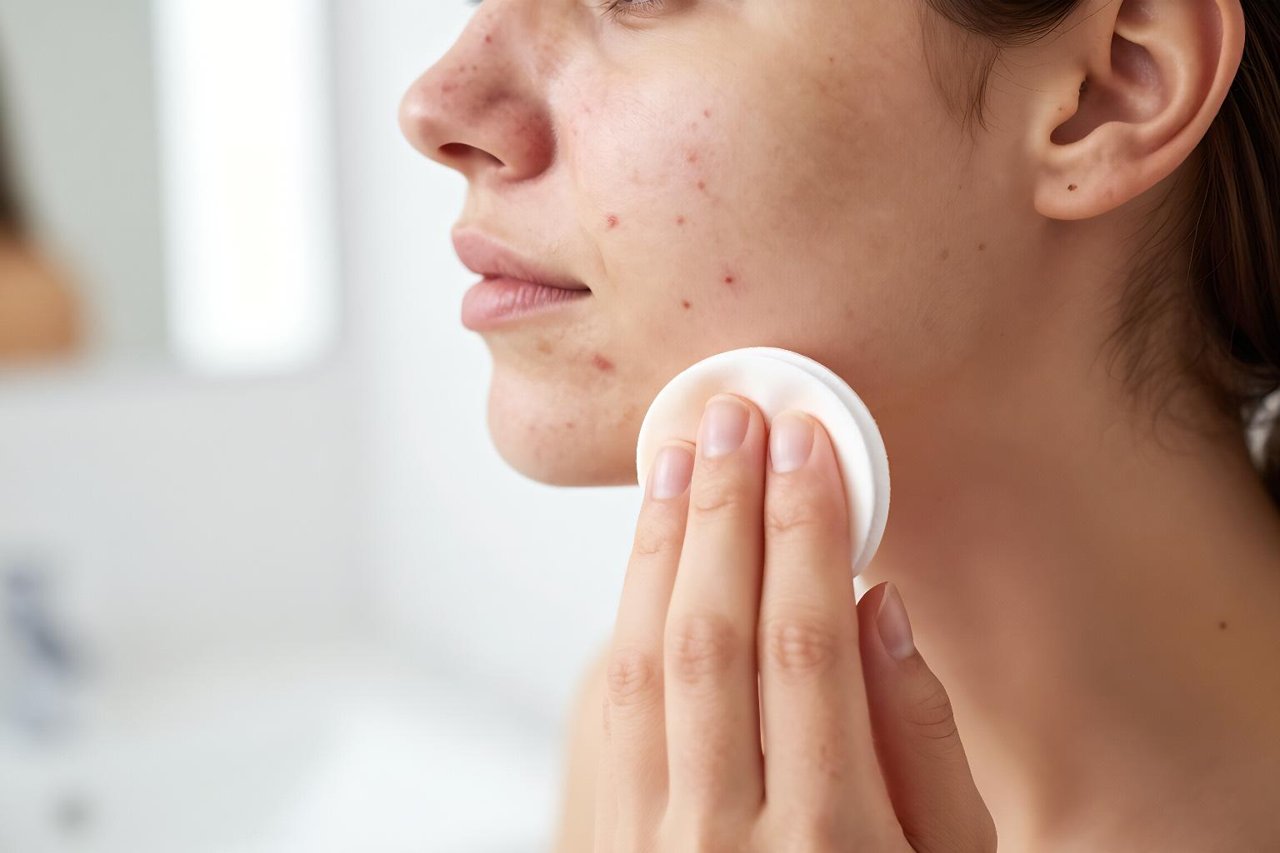
After cleansing, swipe a cotton pad with micellar water along your jaw and hairline. If it comes away tinted, your cleanser is not doing the full job. Adjust your technique before buying another acne treatment.
6. Using expired or borrowed makeup
Liquid products degrade. Mascara should be replaced every three months; liquid foundation and concealer every six to twelve months; lipstick can last up to two years. If a product smells different, separates, or starts to sting, toss it. Store makeup away from steamy bathrooms and hot windowsills, since heat can speed up separation. Sharing makeup with friends is another easy way to transfer bacteria. At makeup counters, ask for a clean disposable applicator and avoid testers that have been sitting open. Never double-dip a wand into a shared product.
7. Touching up with fingers all day
Your fingers pick up bacteria from door handles, phones, and your own face. A midday touch-up can undo your morning hygiene. Keep blotting papers in your bag and use them before powder. Wash your hands before applying makeup, and clean your phone screen weekly. If you use a concealer pen, wipe the tip with alcohol after a cold sore or a breakout. Pumping a mascara wand in and out of the tube also pushes air and bacteria inside, so twist it out gently instead.
A 14-day makeup reset
Pick two changes, not seven. Trying everything at once makes it impossible to know what helped. Start with the cheapest fixes: clean tools and thorough removal.
- Days 1 to 3: wash every sponge and brush, then replace your mascara if it is older than three months.
- Days 4 to 7: double cleanse every night and pay extra attention to your jaw and hairline. Take a photo in natural light on day one and day seven.
- Week 2: switch to a lighter foundation or tinted moisturizer for three days. Patch test any new product along your jaw for five days before a full-face trial.
If you still get deep, painful cysts or dozens of new spots after two weeks, see a dermatologist. Makeup habits can reduce congestion, but hormonal acne and rosacea need proper treatment. Keep the routine boring and consistent. Your skin will tell you more than any label.


