
Table of Contents
Walk down the hair care aisle and you’ll lose count of the bottles before you reach the end of it. Almost every one promises shine, volume, and repair. Almost every one is doing one of about seven jobs.
Once you can name those jobs, shopping gets cheaper and your bathroom shelf gets smaller. Here’s what each product category actually does to the hair, how often you need it, and how to spot the ones that are perfume in a fancy bottle.
1. Clarifying Shampoo: The Reset Button
A clarifying shampoo uses stronger surfactants and skips the heavy silicones, so it lifts off what regular washing leaves behind: styling spray, dry shampoo powder, sebum, hard-water minerals, and chlorine.
Signs you need one: roots go flat by lunchtime, ends feel coated even after washing, or your usual products stop performing. Every two to four weeks is plenty for most people. If you colour your hair, keep it closer to once a month and follow with a mask, because a strong clarifier pulls a little dye out along with the buildup.

2. Moisturizing Shampoo and Conditioner: The Daily Baseline
These two do different jobs and both matter. Shampoo handles scalp hygiene. Conditioner smooths the cuticle, which naturally sits at a pH of about 4.5 to 5.5, and restores enough slip that a comb glides instead of snagging.
Skip the sulfate panic
Sulfate-free is not automatically gentler or better. If your scalp runs oily, a mild sulfate shampoo used twice a week beats a sulfate-free one used daily that never quite gets the roots clean. Scalp is skin, and the logic that works on your face works up top too: a short, consistent routine beats a complicated one. The thinking behind a minimal routine for breakout-prone skin applies just as well if your scalp gets itchy, flaky, or congested.
3. Deep Conditioning Mask: The Weekly Top-Up
A mask is conditioner with the dial turned up: more fatty alcohols, more glycerin, shea or murumuru butter, sometimes hydrolysed protein. It sits on the hair for 10 to 20 minutes rather than 30 seconds, which is long enough for the cuticle to actually take something in.
Use one weekly if your hair is dry, coarse, or colour-treated. Fine hair usually gets by on every 10 to 14 days. Warmth helps, so a cheap plastic cap plus your own shower steam does the job of a heated conditioning cap.
4. Leave-In Conditioner: The One That Stays
Rinse-out conditioner is gone in a minute. Leave-in stays put. It’s a lighter formula built with film-formers and light silicones that keep the cuticle smooth for hours, which is why it’s the single most useful product for detangling and for cutting the friction that snaps hair at the ends.
Fine hair should reach for a spray and aim from the mid-lengths down. Curly and coily hair can take a cream, worked through soaking-wet hair section by section. Overdo it and you’ll get limp roots or a greasy film, so start with a coin-sized amount and add more only if the hair still feels rough.
5. Bond Builders and Protein Treatments: The Structural Fix
Bleach, dye, and repeated heat break the disulfide bonds inside the hair shaft. Bond builders are small molecules that reconnect some of those links. Protein treatments fill gaps in the cortex with hydrolysed keratin, silk, or rice protein.
These are repair tools, not maintenance. If your hair feels mushy when wet and stretches like chewing gum without snapping back, you’ve lost protein. If it feels stiff, straw-like, and snaps with almost no stretch, you’ve overdone the protein. Alternate with moisture and use a bond builder every two to four weeks rather than every wash.
6. Hair Oil and Serum: The Finishing Layer
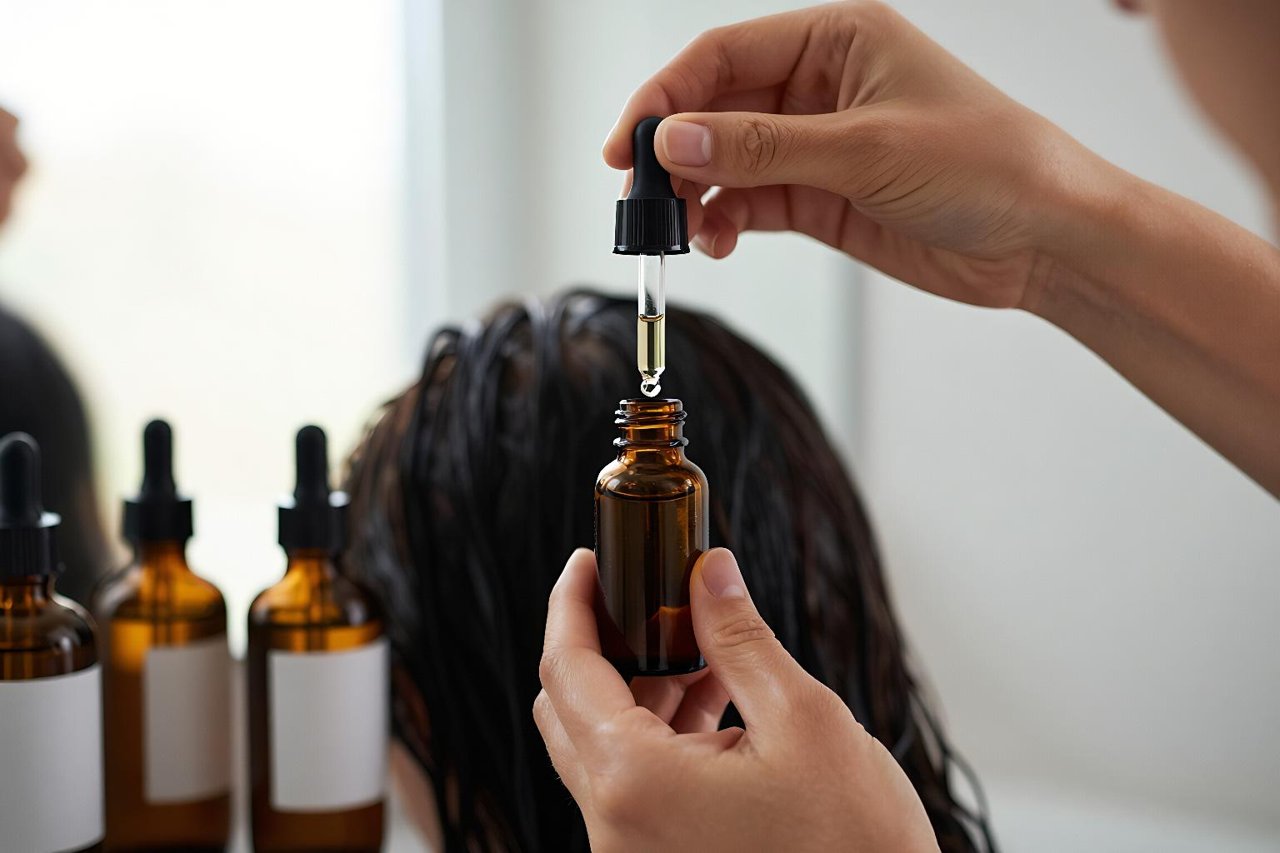
Oil doesn’t moisturise hair. It seals whatever water is already inside and adds shine by smoothing the surface, which is why the order matters: oil goes on damp hair, after your leave-in, not instead of it.
Two or three drops warmed between the palms is enough for mid-lengths and ends. Argan and squalane are light and settle in reasonably fast. Coconut is the odd one out because it penetrates the shaft, which makes it handy as a pre-wash treatment and a buildup risk for some hair types. If you want the honest version of what it can and can’t do, this breakdown of coconut oil in beauty products is worth five minutes before you buy another jar.
7. Heat Protectant: The Insurance Policy
Above roughly 180°C (350°F), the water inside the hair shaft turns to steam and the cuticle cracks. A heat protectant is a polymer or silicone film that slows how quickly the hair heats and spreads that heat more evenly, buying a few extra seconds of safety.
Spray it in sections and comb through. One quick pass over the top layer leaves the underside unprotected, and that’s where the damage shows up first. Choose a mist for blow-drying and a lighter thermal spray for straighteners used on already-dry hair.
Sun is the other damage source people forget. UV fades colour and scorches a exposed parting, and fine or thinning hair leaves a lot of scalp on show. A hat, a leave-in with UV filters, and the everyday sunscreen habits you already use on your face cover the gap.
How many of these do you actually need?
Fewer than you think. Most people can run a workable shelf off four products, with the other three swapped in as the situation calls for them.
- Fine, oily hair: a mild shampoo, a lightweight conditioner, a spray leave-in, and heat protectant. Add a clarifying shampoo every two or three weeks.
- Dry or colour-treated hair: moisturising shampoo, conditioner, a weekly mask, leave-in, and oil on the ends.
- Curly or coily hair: a low-lather shampoo or conditioning cleanser, a leave-in cream, and a sealing oil. Heat protectant still counts if you diffuse.
- Bleached, over-processed, or heat-damaged hair: a bond builder, a protein treatment used sparingly, a mask, and heat protectant every single time you style.
Change one product at a time and give it two weeks before you judge it. Hair grows around 1 cm a month, so the ends you’re treating today were last cut six months ago. The condition you see in the mirror is the result of a few months of habits, not the bottle you bought on Saturday.


