
Table of Contents
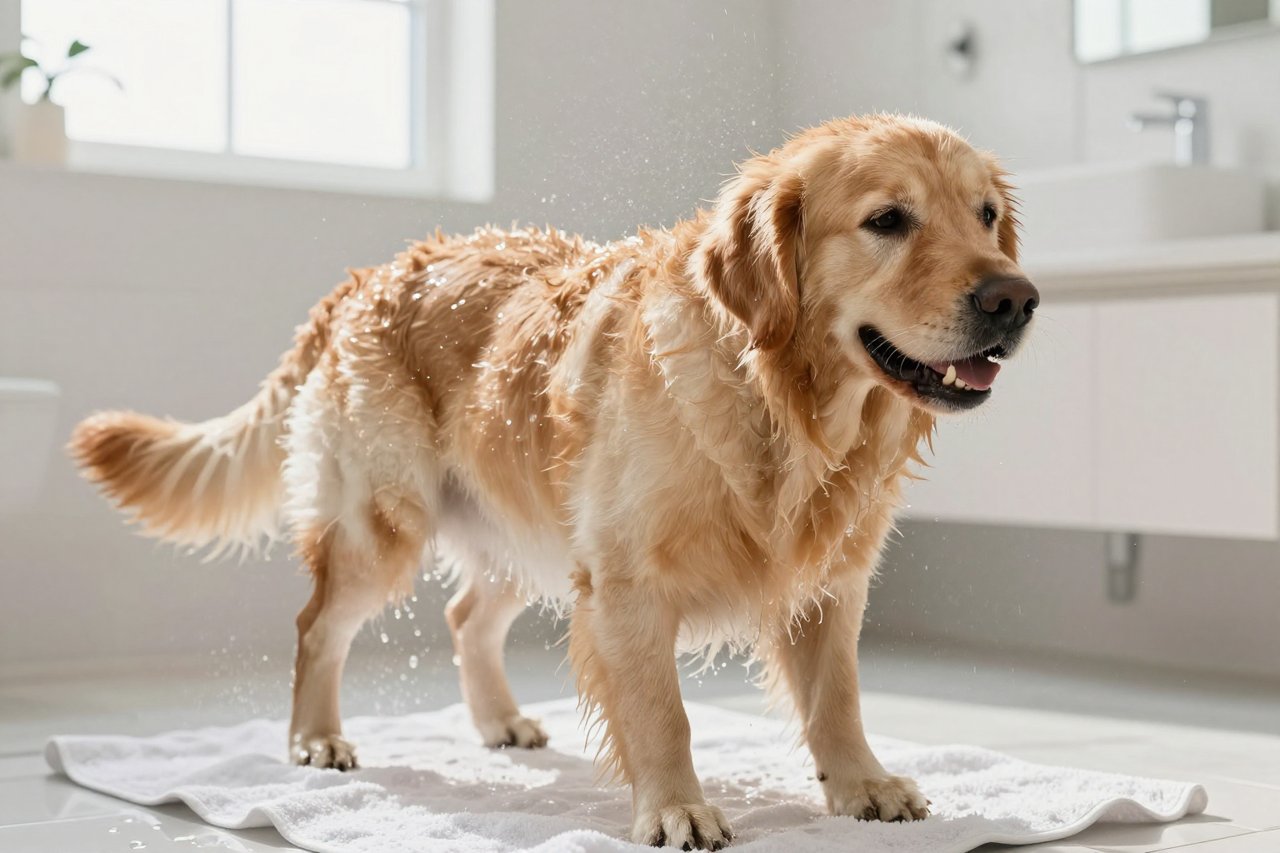
A dog can go from calm to a full-body blur in less than a second. One moment he’s standing in the bathroom, dripping after a bath; the next his skin, ears, and collar are whipping side to side with a wet slap that sprays the mirror. It looks goofy. It’s also one of the most efficient drying mechanisms in the animal kingdom. The short answer to why dogs shake their bodies is water, stress, temperature, and sometimes pain. The long answer is more interesting.
The wet-dog shake is a 4-second engineering trick
A wet dog doesn’t just flap around. He shakes at a speed that would make a paint mixer jealous. A 2012 study from Georgia Tech found that dogs shake their bodies at roughly 10 to 20 cycles per second, and in about four seconds they can fling off around 70% of the water trapped in their fur. That’s not random. The loose skin along the neck and back whips like a wet towel, and the motion travels from head to tail in a wave.
Size matters. A small terrier has to shake faster than a big Labrador to get the same drying effect, because the water droplets have less distance to travel before they fly off. Next time your dog gets out of the bath and turns the bathroom into a splash zone, you’re watching physics, not mischief.
Drying matters for more than your floor. Water left sitting in the ear canal creates a warm, damp pocket that yeast and bacteria love. Let your dog shake two or three times on a towel, then dry the outside of the ears with a soft cloth. Don’t push cotton swabs down the canal. If your dog has floppy ears or a history of infections, ask your vet about a dog-safe ear cleaner.

The “shake-off” is a canine reset button
Dogs also shake when there’s no water anywhere. Trainers call it a shake-off. It often shows up after a tense moment: a stranger leans over, another dog stares too long, or the vet lifts a tail. The shake starts around the head and neck, then ripples down the spine to the tail. It looks like a shiver and a shimmy had a brief argument.
That full-body shake seems to help a dog discharge a burst of arousal and move on. It can mean “I’m done with that” or “I’m okay now.” Context is everything. A dog who shakes off after a greeting and then approaches again is probably regulating. A dog who shakes and then hides behind your legs is telling you the stress isn’t over.
After stress or conflict
One shake-off after a startling noise is normal. A dog who shakes repeatedly, paces, pants, lip-licks, and yawns through the evening is not just being dramatic. Chronic stress affects digestion, sleep, and immune function. Owners carry stress too, and it can leak into the household. Humans have their own damaging stories about bodies and food, as this look at how diet culture steals health and sanity makes clear. A dog can’t tell you he’s overwhelmed, but a cluster of stress signals can.
During play and greetings
Watch two dogs wrestling. One pins the other, the pair pauses, and one or both shake their bodies like they’re resetting a game. Then they go back to play. That shake is a pause button. It says the last round is over. It can also be an invitation: “Let’s switch modes.”
Head shaking is a different conversation
A quick head shake after a nap or a swim is ordinary. Repeated head shaking is not. If your dog stops mid-walk to shake his head every few minutes, or paws at one ear, the odds are good that something is irritating the canal.
Ears, grass seeds, and allergies
Dog ear canals are L-shaped, which makes them good at trapping debris and water. A grass awn can slide down and keep moving, causing pain and infection. Yeast infections often smell sweet or musty. Allergies cause redness and itching. A dog with a painful ear may shake, tilt his head, whine when touched, or hold one ear lower.
Don’t dig around blindly with a cotton bud. You can pack debris deeper. A vet can look inside with an otoscope and prescribe the right treatment. If your dog has been swimming, dry the outer ear and let him shake; if the shaking continues the next day, book an appointment.
When shaking is really shivering or trembling
Not every body quake is a shake. Shivering is usually about temperature or fear. Tremors are rhythmic and can happen during rest. Seizures are a different event altogether. A dog in a seizure may paddle his legs, lose consciousness, stiffen, drool, or void his bladder. Most seizures last under two minutes, but a seizure that runs longer than five minutes, or clusters of seizures, is an emergency.
Cold is a common culprit. Small breeds, short-coated dogs, puppies, and seniors lose heat fast, especially when wet. Dry the dog, wrap him in a towel, and offer a warm bed. If he keeps shivering in a warm room, look for another cause.
Medical reasons a dog might shake
Shaking can be the body’s version of a check-engine light. Common medical triggers include:
- Ear infections or foreign bodies, especially grass seeds in summer.
- Pain from arthritis, dental disease, back problems, or abdominal discomfort.
- Nausea and digestive upset, which often comes with lip licking, drooling, and restlessness.
- Low blood sugar in tiny puppies or diabetic dogs on insulin.
- Toxins such as chocolate, xylitol, certain plants, or human medications.
- Neurological problems including vestibular disease, tremors, and seizures.
Digestive trouble is worth taking seriously because gut discomfort can make a dog feel miserable all over. If you’ve ever had a stomach bug, you know how much the gut can hijack the body. This podcast on better bathroom habits is a human reminder that basic bodily functions deserve attention, not embarrassment. In dogs, vomiting, diarrhea, and shaking together warrant a call to the vet.
Organ disease can also cause weakness, tremors, or collapse. Liver and kidney problems, heart disease, and other internal issues may show up as vague shaking before anything else. Access to advanced care is rarely simple. Even human organ transplant waiting lists have been described as chaotic, and veterinary specialists have their own triage systems, costs, and wait times. If your dog’s shaking comes with lethargy, appetite loss, or abnormal drinking and urination, don’t wait for it to sort itself out.
How to tell a normal shake from a worrying one
A normal shake usually has a clear trigger and a quick finish. Worrying shaking tends to repeat, last longer, or arrive with other symptoms.
- Normal: happens after a bath, swim, nap, play, or tense moment; lasts a few seconds; the dog returns to normal behavior.
- Normal: a quick head shake after waking, with no ear scratching or odor.
- Call the vet: repeated head shaking, ear scratching, head tilt, or discharge.
- Call the vet: shaking with vomiting, diarrhea, refusal to eat, or unusual lethargy.
- Emergency: tremors at rest, collapse, seizure, suspected toxin exposure, or shaking after a fall.
What to do next time your dog shakes
After a bath, put a towel on the floor and let your dog do his thing. Two or three shakes will do more than five minutes of rubbing. Then dry the ears and reward him for standing still. After a stressful event, give him space and watch whether the shake-off is followed by relaxed behavior or more tension.
If the shaking is new, frequent, or paired with any other sign, take a 30-second video. A clip of the episode is more useful to your vet than a vague description like “he was shaking weird.” Note when it happens, how long it lasts, and what happened just before. A dog who shakes after every bath is easy to explain. A dog who starts shaking in his sleep, or after every meal, is asking for a closer look.


