
Table of Contents
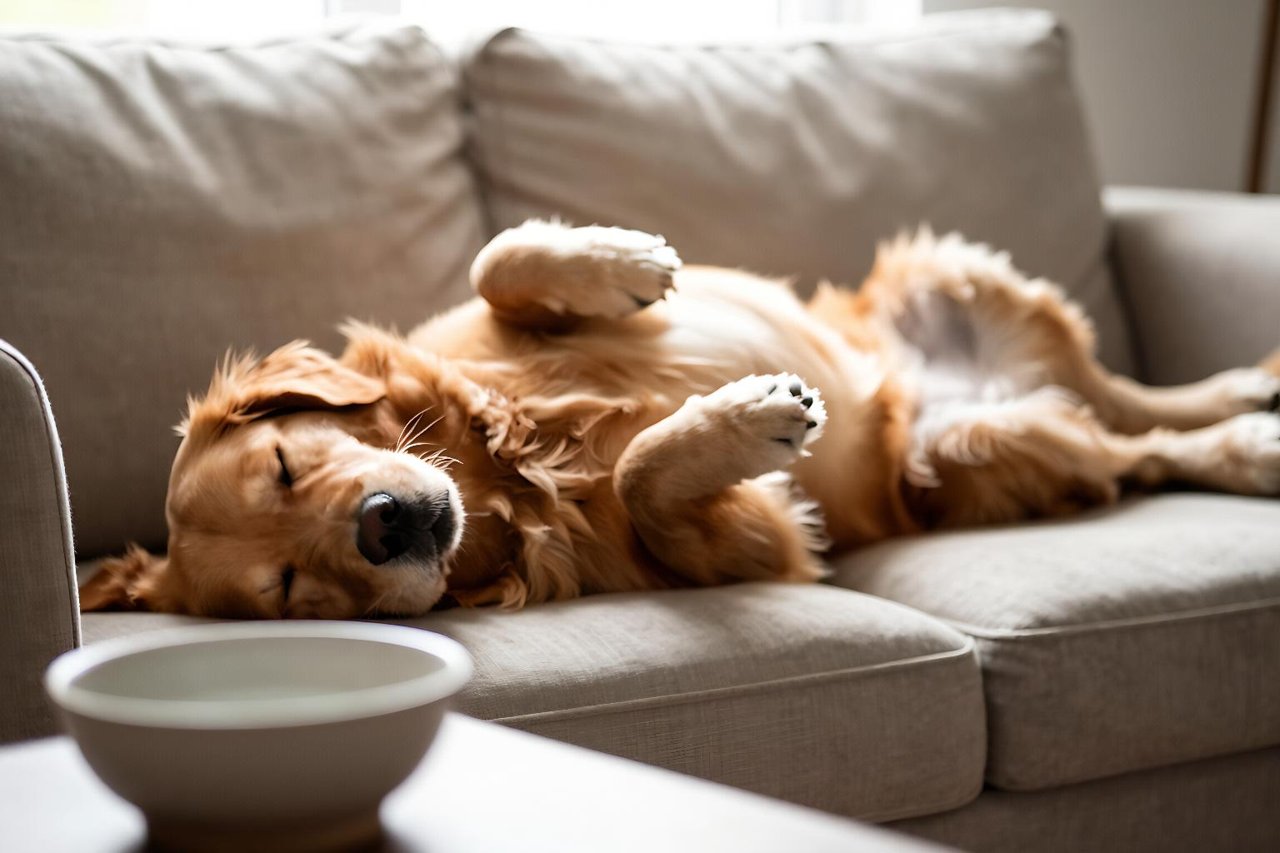
A dog sprawled upside down on the sofa at eleven in the morning, legs twitching through a dream, can look like the laziest creature alive. Then the doorbell rings and he’s airborne. That contrast is the whole story: dogs sleep a great deal, but they sleep light, and their sleep is doing hard work behind the scenes.
Most healthy adult dogs clock up somewhere between 12 and 14 hours of sleep in a 24-hour period. Some get closer to 16. Puppies and senior dogs go well beyond that. If you’ve ever wondered why dogs sleep so much, the answer sits at the meeting point of biology, breed history, and the simple fact that most of them spend their day waiting for us to finish work.
How much sleep is actually normal?
Vets work with a range rather than a fixed number, because age, size and lifestyle all shift the dial.
- Puppies under 6 months: 18 to 20 hours a day. Growth plates, immune development and a brain absorbing an enormous amount of new information all demand it.
- Adult dogs: 12 to 14 hours, usually split between a long overnight stretch and several daytime naps.
- Senior dogs: 14 to 18 hours. Most breeds count as senior from about seven, giant breeds from five.
- Giant and working breeds: frequently at the top of every range. A Great Dane conserving energy isn’t being lazy; that’s a big body running a big engine.
Set that against the seven to nine hours humans need and the gap explains a lot of owner anxiety. Your dog is not depressed because he sleeps through your afternoon calls.

Dogs sleep in shifts, not blocks
Wild canines never slept in one long stretch. They hunted, ate, rested, patrolled, rested again. Domestic dogs kept the same pattern, which is why sleep researchers describe them as polyphasic sleepers. A typical day contains a long overnight sleep plus four to six shorter naps of anywhere from ten minutes to two hours.
Their sleep architecture differs from ours as well. Dogs drop into REM sleep quickly, often within 20 minutes, and cycle through it much faster than we do. That’s why you can see running legs, muffled woofs and whisker twitches so soon after they lie down. It’s also why they surface so easily. A dog asleep in a hallway can be fully awake in under a second, which is exactly the trait you’d want if you were guarding a camp.
Age is the single biggest factor
Puppies sleep for the same reason human babies do: they’re building. Growth hormone release, tissue repair and the wiring of a nervous system happen disproportionately during sleep. A puppy that’s overtired and hasn’t napped properly turns bitey, frantic and impossible to settle, much like a toddler at six in the evening.
At the other end, older dogs sleep more but sleep differently. Deep sleep decreases, so they wake more often at night, and hearing loss means they startle awake more easily. If your nine-year-old Labrador suddenly starts pacing at 2am, that deserves a vet conversation rather than an assumption that he’s simply slowing down.
Size and breed history matter more than the tape measure
Heavy bodies cost more to run, so giant breeds out-sleep terriers. Breed purpose matters just as much. Livestock guardians like the Great Pyrenees were bred to lie with a flock for hours, alert but still. Sighthounds sprint for thirty seconds and then collapse for the rest of the day. A Border Collie with a real job may sleep less during the working day and then crash hard for ten hours straight.
Driven dogs are their own category. As our look at the most intelligent dog breeds (and why the smartest ones aren’t always the easiest) points out, a highly capable dog without enough to do can end up restless and overtired rather than genuinely sleepy.
If you’re weighing up a bigger companion, remember that size and sleep needs come as a package. Our guide to the best large dog breeds for families is a useful reality check on how much space, rest and settling time these dogs actually need.
Exercise changes the maths, in both directions
A dog that’s had a proper run sleeps more deeply. A dog that hasn’t often sleeps more fitfully and more often, because boredom naps aren’t the same as tired naps. The distinction matters. Twenty minutes of sniff-heavy walking does more for a dog’s rest than an hour of chasing a ball, because scent work drains the brain rather than just the legs.
Getting the daily target roughly right is the easiest lever you have. The real-world numbers in how much exercise a dog needs, with daily targets by age, breed and energy level are worth checking against your own routine, particularly for adolescents who seem to sleep either far too much or far too little.
Boredom naps are real
Pet dogs sleep more than working dogs partly because they spend long stretches waiting. If the day is a walk at seven, then eight hours of an empty house, then dinner and the sofa, a big chunk of that sleeping is simply the only activity on offer.
You can spot the difference in quality. A genuinely tired dog sleeps flat out and wakes up bright. A bored dog dozes watchfully, gets up every time a car passes, and is restless by evening. Puzzle feeders, a scatter of kibble across the lawn, or a chew at the same time each afternoon can cut an hour or two of aimless napping and improve the sleep that follows.
Heat, weather and the afternoon shutdown
Dogs are crepuscular by inclination, most active around dawn and dusk. On a hot day the middle hours are a write-off, and a dog will find tile or shade and stay there. You’ll see the same on very cold winter mornings. Seasonal shifts are normal, so a dog sleeping 16 hours during a July heatwave is usually just managing its temperature.
When sleeping more is a warning sign
There’s a line between a sleepy dog and a sick one, and it’s almost always about change. A dog who has always slept 14 hours and still greets you at the door is fine. A dog who moves from 12 to 18 hours over a fortnight is not.
Signs that deserve a vet call
- Sleeping much more than usual, especially with less interest in walks or food
- Sleeping more but still seeming tired when awake, or slow to rise
- Restlessness at night paired with heavy daytime sleeping
- Weight gain, which often travels with low activity and can point to thyroid problems
- Collapsing, weakness or unusual stumbling, which is never just laziness
- Increased thirst alongside the extra sleep
Pain is the most under-diagnosed cause. Dogs with arthritis or a sore tooth often sleep more because moving hurts, and they are famously good at hiding it.
Build a rest space that actually works
Quality matters as much as quantity. Dogs like options: a soft bed in the busy part of the house and a cooler, darker spot away from foot traffic. A crate with a blanket draped over the top is often the difference between a dog who naps in twenty-minute fragments and one who sinks into proper deep sleep.
If you use one, size and placement do most of the work. Our guide to choosing and using kennels for dogs covers the details owners typically get wrong, from crate dimensions to which corner of which room it belongs in. Try not to wake a sleeping dog, especially a puppy or a senior. A dog disturbed every time someone walks past never completes a full cycle.
Routine, records and the one question worth asking
Dogs anticipate brilliantly. Feed, walk and settle at roughly the same times and their sleep consolidates into predictable windows, which makes any deviation far easier to catch. If you already run a GPS collar or activity tracker, the rest data is more useful than the map. Two weeks of baseline records turns “he seems sleepier” into something a vet can actually work with, though it’s worth knowing that not every tracker logs rest reliably. Our breakdown of why GPRS trackers for dogs keep failing explains the common blind spots before you put too much faith in a graph.
Here’s the question that cuts through most of the worry: has the sleep changed, or has the dog changed? Sixteen hours of rest is completely normal for a healthy dog who still wants his dinner and still drags you to the door for a walk. Sixteen hours of rest from a dog who has quietly withdrawn from both is a message, and it’s worth listening to sooner rather than later.


