
Table of Contents
Ancient Mesopotamia explained in a sentence is easy: it was the land between the Tigris and Euphrates rivers, home to the first cities and the first writing systems. The reality is richer and messier. For roughly 3,000 years, from the rise of Uruk around 4000 BCE to the fall of Babylon to Alexander the Great in 331 BCE, this region hosted competing city-states, empires, and cultures. Sumerians, Akkadians, Babylonians, and Assyrians all left their mark. Their inventions still structure daily life, from the 60-minute hour to the legal idea that a ruler should publish his rules.
Where Was Ancient Mesopotamia?
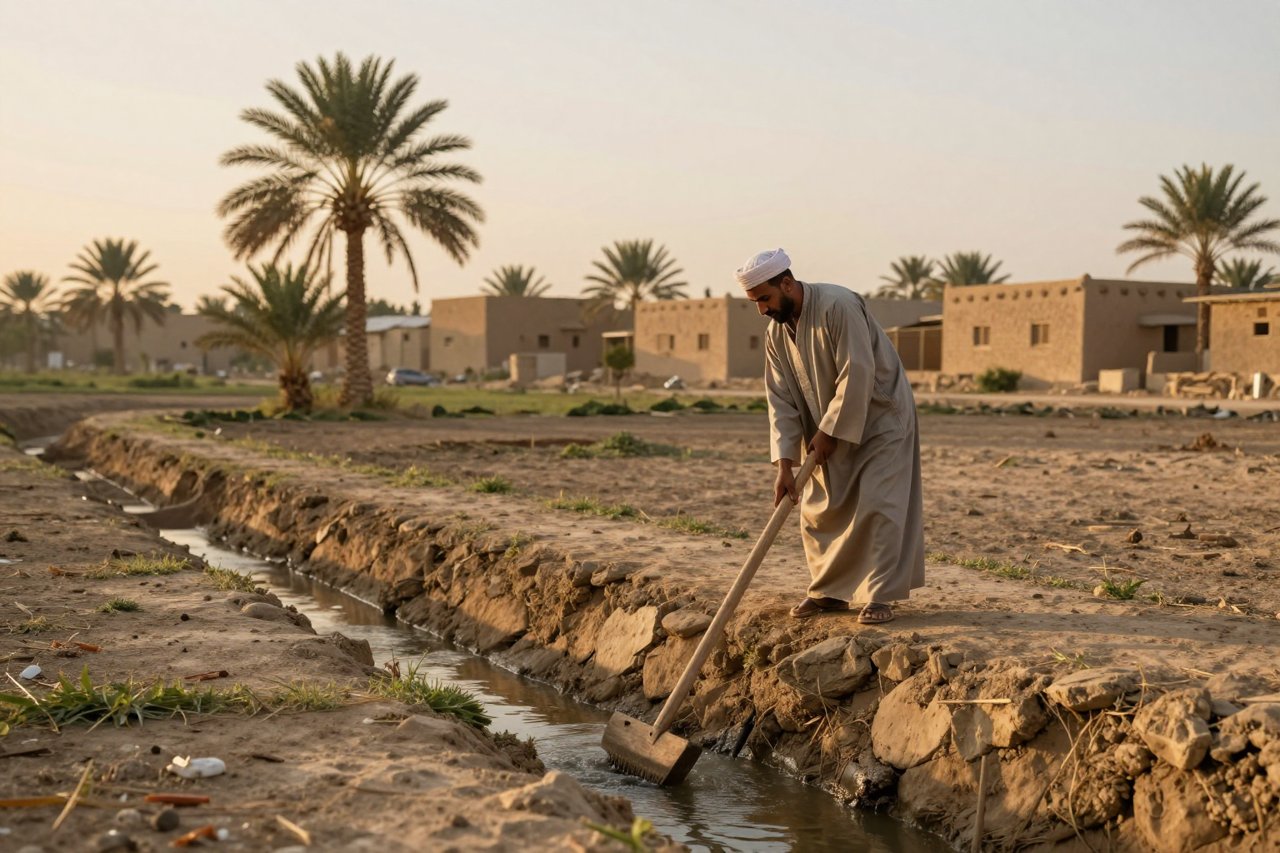
Mesopotamia means “between rivers” in Greek. The heartland lay in modern Iraq, with extensions into eastern Syria, southeastern Turkey, and southwestern Iran. It was not a single country. Southern Mesopotamia, Sumer, was a flat, marshy plain with poor rainfall and rich alluvial soil. Northern Mesopotamia, Assyria, had rolling hills, more rain, and stone. The rivers flooded unpredictably in spring, so farmers built levees, canals, and reservoirs. Irrigation made barley, wheat, dates, and wool profitable. It also required cooperation, record-keeping, and maintenance, the kind of civic work that helped cities grow.
Its eastern edges touched the Iranian plateau, and the political geography of that frontier still matters. The modern tensions around Iran’s borders, oil, and regional influence have deep roots in the same landscape, as a look at Iran’s global issues shows.
The First Cities and the Uruk Phenomenon
Uruk, in southern Iraq, was probably the largest city in the world by 3200 BCE, with tens of thousands of residents. It had a massive temple complex, workshops, and a wall later credited to Gilgamesh. Cities like Ur, Lagash, and Nippur followed. They were not just clusters of houses. They had planned streets, granaries, canals, and monumental buildings. A temple economy collected grain and wool, paid workers in rations, and stored surplus. That accounting pressure produced the world’s first known writing.

Writing: From Ration Lists to Epic Poetry
Cuneiform began around 3200 BCE as a way to record quantities: so many sheep, so much barley, so many days of labor. Scribes pressed a cut reed into wet clay, making wedge-shaped marks. Over centuries the system grew to represent syllables and abstract ideas. It was used for tax receipts, marriage contracts, court records, letters, and literature. The Epic of Gilgamesh, one of the oldest long poems, includes a flood story that predates the biblical version. Ashurbanipal’s library at Nineveh held tens of thousands of tablets. Writing was never democratic, though. Only a small percentage of people could read, and scribes trained for years in schools called edubba.
Kings, Laws, and the State
Mesopotamian politics swung between city-state independence and imperial control. Kings claimed divine favor. They built temples, dug canals, led armies, and issued laws. The most famous legal text is the Code of Hammurabi, carved on a stone stele around 1754 BCE. It contains 282 case laws covering wages, divorce, debt, property, and assault. Hammurabi was not the first lawgiver. Ur-Nammu of Ur issued an earlier code around 2100 BCE. The penalties were harsh and unequal: a crime against a free person cost more than the same crime against a slave. Still, the public display of written law was a new political idea. Rulers could be judged against rules they had published.
Gods, Temples, and Everyday Life
Religion saturated daily life. People worshipped a large pantheon: Anu of the sky, Enki of fresh water, Inanna/Ishtar of love and war, Marduk of Babylon. Each city had a patron deity. The ziggurat, a stepped temple platform, was the god’s house and the city’s ritual center. Priests read omens in sheep livers, smoke, and the movements of planets. Astronomy grew from that religious observation. Ordinary people lived in mud-brick houses and worked in fields, workshops, or temples. Women’s lives varied by class and period. Some owned property, ran businesses, or served as priestesses; others worked in textile workshops. Slavery existed and was common, often arising from debt or war.
What Did People Eat and Drink?
- Barley was the staple. It went into bread, porridge, and beer, the everyday drink that was safer than many water sources.
- Dates, onions, lentils, and chickpeas filled out meals, along with fish from the rivers and canals.
- Beer was brewed in large quantities. Records list different strengths and grades, and workers received it as part of their rations.
- Meat was mostly for festivals and wealthier tables, though temple offerings included sheep, goats, and cattle.
Science, Math, and the 60-Minute Hour
Mesopotamian scribes used a base-60 number system. That choice gave us 60 minutes in an hour, 60 seconds in a minute, and 360 degrees in a circle. They solved quadratic equations, calculated areas, and kept detailed astronomical records. A tablet known as Plimpton 322 lists Pythagorean triples more than a thousand years before Pythagoras. Their calendar followed the moon, with months added to keep it aligned with the seasons. Medical texts list symptoms, diagnoses, and treatments, mixing practical remedies with incantations. These were not modern scientists, but they were careful recorders and pattern-finders.
Trade, Networks, and Connections
Mesopotamia lacked stone, timber, and metal ores. Its cities depended on long-distance trade. Merchants imported lapis lazuli from Afghanistan, copper from Oman, cedar from Lebanon, and tin likely from Central Asia. They exported textiles, grain, and dates. Donkey caravans and river boats linked cities. Clay tablets record contracts, loans, and merchant partnerships. Indus Valley seals and beads found at Ur show how far goods traveled. This was a connected world, not an isolated civilization. Goods, gods, and technologies moved along the same routes.
Collapse, Continuity, and Why Mesopotamia Still Matters
Mesopotamia did not end in a single crash. Empires rose and fell. The Assyrian Empire collapsed around 612 BCE when Babylonians and Medes sacked Nineveh. The Neo-Babylonian Empire followed, then the Persian Empire, then Alexander. Babylon remained a great city for centuries. Cuneiform died out by the first century CE, but the underlying innovations survived: cities, courts, contracts, libraries, and mathematical astronomy. Modern Iraq sits on top of these ruins. Archaeological sites face looting, war damage, and climate stress. The Mosul Museum attack in 2015 destroyed or damaged priceless Assyrian objects. Excavations continue, and satellite imagery now reveals ancient canals and settlements. The past here is not buried neatly. It is part of the present argument over land, water, and identity.


