
Table of Contents
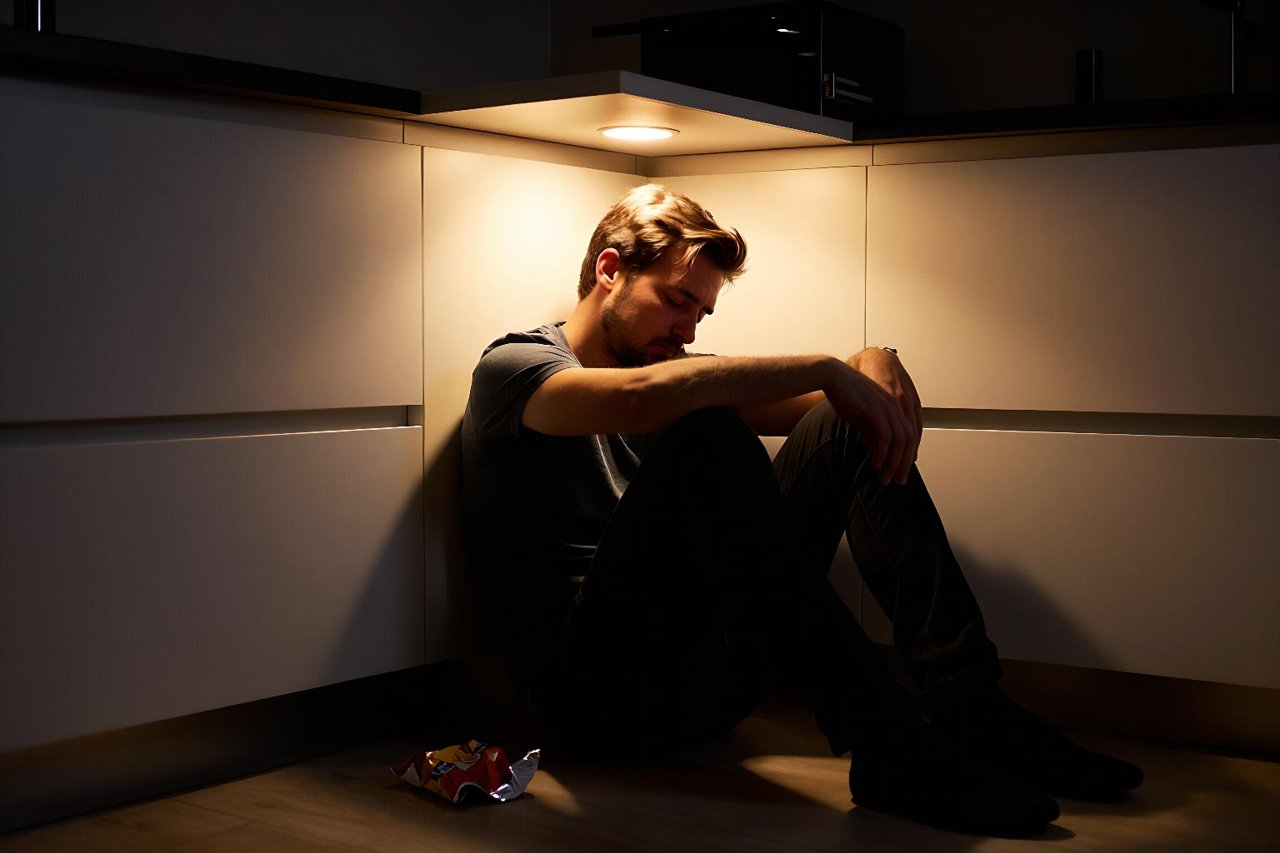
It’s 9:40 on a Tuesday night. Dinner was fine. You’re not hungry in any way you could defend in court, yet there you are at the cupboard with the door open, scanning for something crunchy. Nothing happened in the last three hours to make you want a bag of crisps. Something happened in the last three nights.
Appetite isn’t a personality flaw. It’s a hormonal report on how much sleep you got and how much pressure your body thinks it’s under. Those two inputs can shift your daily calorie intake by several hundred calories without you noticing, and they change what you reach for as reliably as any diet plan ever has. Understanding how sleep and stress can affect eating habits makes the 9:40pm cupboard raid look a lot less mysterious.
A Short Night Rewires Your Appetite by Lunchtime
Sleep and hunger share the same chemical real estate. Two hormones do most of the talking: ghrelin, which the stomach releases to say “feed me”, and leptin, which fat cells release to say “we’re fine in here”. Restrict sleep and ghrelin climbs while leptin drops. You end up hungrier with a weaker brake.
The effect shows up fast. In a well-cited study published in the European Journal of Clinical Nutrition, men who slept four hours ate roughly 22% more calories the next day than they did after eight hours. Across the wider research, short sleep tends to add somewhere between 250 and 350 extra calories a day, weighted towards fat and refined carbs and away from protein and vegetables.

Your blood sugar gets twitchy too
Even one night of four to five hours can drop insulin sensitivity by around 20%. That means the same bowl of cereal produces a bigger glucose spike and a sharper crash two hours later. The result feels like a 3pm emergency, so you grab something sweet, spike again, and ride the wave into dinner.
The morning after
Most people don’t wake up from a bad night starving. They wake up flat, drink coffee instead of breakfast, and then get ambushed mid-afternoon. That pattern isn’t a fast metabolism or a small appetite. It’s a delayed hunger signal that arrives with interest.
Stress Sends the Same Signals, Just Faster
Acute stress usually kills appetite. That’s the adrenaline-and-nausea kind, and it’s short-lived. Chronic stress works the opposite way. Cortisol stays elevated, the body keeps releasing glucose it doesn’t need, and the brain starts treating calorie-dense food as a reward worth pursuing.
There’s a neurological reason the boundary collapses at night. Under sustained stress and tiredness, the prefrontal cortex, the part that handles planning and restraint, dials down, while habit and reward circuits stay loud. If you want the fuller picture of what fatigue does to decision-making, this piece on what actually supports brain health and sharp thinking covers it well. The practical version: you can hold a food boundary all day and lose it at 9pm, and that’s physiology, not weakness.
Stress Changes What You Eat, Not Only How Much
Watch your own plate on a rough week. Stressed eaters tend to skip proper meals, snack more often, and drift towards high-fat, high-sugar options. Vegetables quietly disappear. Studies tracking eating under real-world pressure find exactly this: fewer sit-down meals, more grazing, and a narrowing of food variety.
Restrained eating makes the rebound sharper
If your coping strategy is to ban foods outright, you’re stacking the deck against yourself. Restriction raises how appealing the banned food looks, and tiredness weakens the inhibition that’s holding the ban in place. On day four of bad sleep, the biscuit wins. It always does.
Signs Your Appetite Is Running on Fumes
- You skip breakfast easily but are ravenous at 4pm and again at 10pm.
- You want something specific (salty, crunchy, sweet) rather than food in general.
- Cravings hit hardest on days after fewer than six hours of sleep.
- You eat past fullness mainly when you’re alone and tired.
- Coffee is doing the job that breakfast should be doing.
- You feel hungover without having drunk anything.
The Fix Order Matters
Most people try to fix their eating first. That’s backwards. Food rules are the weakest lever when sleep and stress are broken, because you’re asking a depleted brain to out-argue a hormonal signal. Work in this order: sleep, then stress, then food.
Concretely, that means a fixed wake time even on weekends, ten minutes of daylight within an hour of waking, and caffeine cut off eight to ten hours before bed (its half-life is around five to six hours, so a 4pm coffee still has a quarter of its punch at midnight). None of this is exotic. It’s the same set of core health and wellness habits that actually move the needle, applied in the right sequence.
What to Eat When You’re Running on Fumes
On a tired day, aim for steadiness rather than perfection. A breakfast with 25 to 30 grams of protein (three eggs, or Greek yoghurt with nuts, or last night’s leftovers) does more for afternoon cravings than any snack strategy. Fibre at every meal slows the glucose curve. Front-loading your calories earlier in the day tends to reduce evening grazing simply because you’re not arriving at dinner in a deficit.
Keep the shopping trip away from your hungry, stressed self, and keep the easy option in the house a good one. A bag of pre-washed spinach gets used; a bag of crisps gets used faster. If you want a template for meals worth building around, this guide to eating for a longer, healthier life is a sensible starting point rather than a set of rules to fail at.
When Appetite Changes Are a Symptom, Not a Habit
Sometimes the cupboard isn’t the problem. Sleep apnoea, an underactive thyroid, perimenopause, depression, and several common medications (steroids and some antidepressants among them) all shift appetite and energy in ways lifestyle tweaks won’t touch. If you’re sleeping eight hours and still exhausted, or your appetite has changed sharply in a few months, get it checked. There’s a useful distinction between treating a health condition and optimising your wellness, and confusing the two wastes months.
Supplements are the same story. Magnesium isn’t going to fix a five-hour night, and no capsule replaces protein at breakfast. If you’re unsure what’s worth the money, this straightforward guide to vitamins that actually matter will save you a drawer full of half-empty bottles.
The Hour Before Bed Does More Than Any Diet
Here’s the lever most people ignore. What you do between 9pm and 10pm sets up tomorrow’s appetite. Alcohol fragments sleep in the second half of the night, even when it knocks you out fast. A large late meal sits in the stomach and raises core temperature right when your body needs to cool by about a degree to fall asleep properly. Scrolling keeps the brain in a low-grade alert state that delays melatonin.
Try one change for a week: nothing but water after 9pm, kitchen lights dimmed, and your phone charging in another room. Then notice how you feel at 3pm the next day. Most people find the afternoon biscuit loses its grip without a single act of willpower, because the craving was never really about the biscuit.


