
Table of Contents
A dog who vomits bile at 3am, turns his nose up at breakfast, then produces a loose stool on the morning walk isn’t being difficult. Something in the bowl isn’t agreeing with him. And unlike a torn cruciate or a bad tooth, a sensitive stomach is one problem you can influence every single day, three times a day, with a spoon.
The best foods for dogs with sensitive stomachs tend to share three traits: a single, named protein, a moderate fat level, and a short ingredient list you can actually read. Everything else is detail. Here’s how to work out what’s upsetting your dog and what to put in front of him instead.
Rule Out the Obvious Before You Change the Food
Loose stools and occasional vomiting have a long list of possible causes, and food is only one of them. Before you spend £60 on a bag of hydrolysed kibble, get a stool sample checked for worms, giardia and other parasites. Ask your vet about a 5-day course of a bland diet to see whether the gut simply needs a rest.
Some flags mean stop guessing and book an appointment today: blood in the stool, vomiting that lasts more than 48 hours, weight loss, a distended abdomen, or a dog who stops drinking. Those are not sensitive-stomach problems. They’re medical ones.

If the tests come back clean and the upset keeps returning every few weeks, you’re almost certainly dealing with either a food intolerance (the gut can’t handle an ingredient) or a true allergy (the immune system reacts to a protein, usually one the dog has eaten for years). Roughly 60–70% of canine food allergies trace back to beef, dairy or chicken, which is why so many sensitive-stomach formulas lean on fish, duck or venison.
The Three Things That Usually Cause the Trouble
Fat content
Fat is the most common trigger for a dog with a delicate gut. A kibble sitting at 20% fat is a rich meal, and rich meals cause soft stools and pancreatic irritation. Dropping to a formula in the 10–14% fat range fixes a surprising number of cases within a fortnight.
The protein source
Chicken and beef are in everything, which means most dogs have been exposed to them for years. Swapping to a protein your dog has genuinely never eaten, such as white fish, salmon, duck or insect, gives an inflamed gut a clean slate.
Fibre and fermentable carbs
Some dogs do better on more fibre, some on less. A dog with colitis-type symptoms (mucus, urgency, straining) often improves on a moderately fibre-rich diet. A dog who produces large volumes of soft stool usually improves when the fibre drops and the food becomes more digestible.
Whole Foods That Genuinely Help
You don’t need a prescription to start. Several kitchen staples are gentle enough to use as a topper on any complete food, and they add moisture and palatability at the same time. A spoonful of the right thing can turn a refused bowl into an empty one.
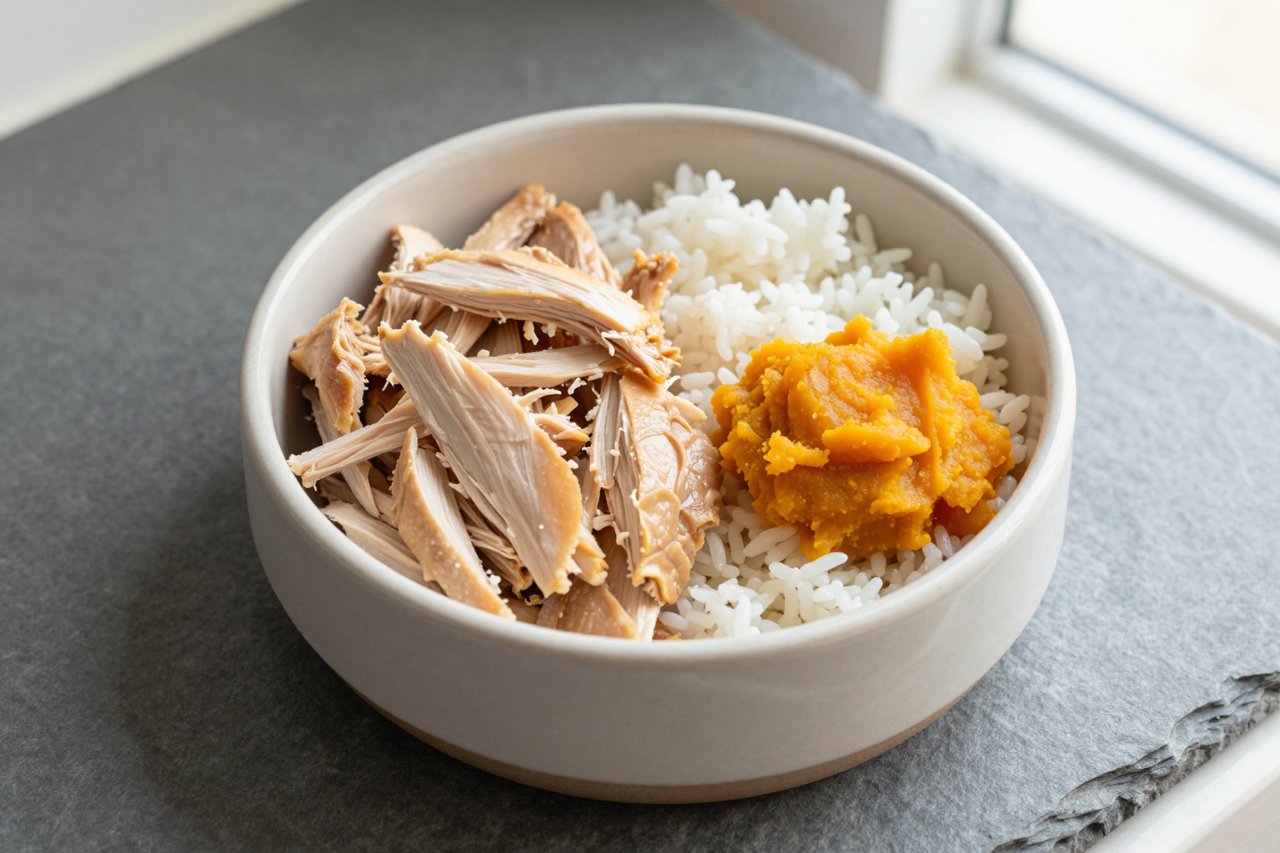
- Plain cooked pumpkin (not pie filling): 1–2 tablespoons per 10kg of body weight. Soluble fibre that firms up loose stool without constipating.
- Skinless chicken breast or white fish, poached or boiled: the classic bland base, best paired with rice for 3–5 days during a flare-up.
- White rice or overcooked pasta: easy starch that gives the gut something simple to work with. Skip if your dog is diabetic.
- Plain scrambled egg: cooked in a dry pan, no butter, no salt. Highly digestible protein, useful for a dog who’s gone off kibble.
- Bone broth: 2–3 tablespoons poured over food. Adds moisture and scent, and most dogs will eat a bowl they’d otherwise ignore.
- Sweet potato, mashed: gentle fibre and a bit of natural sweetness that picky dogs respond to.
Several of these appear in our roundup of human foods dogs can safely eat, along with the ones that should never reach the bowl. Onions, garlic, grapes, xylitol and anything fried or heavily spiced will turn a mild upset into a vet visit.
Choosing a Commercial Food That Suits a Sensitive Gut
If you’d rather not cook, look for a limited-ingredient diet with a named meat as the first component and one carbohydrate source. “Meat and animal derivatives” tells you nothing, and a formula with eleven ingredients gives you eleven chances of a reaction.
Fat around 12–15%, protein in the mid-20s, and added prebiotics such as FOS or beet pulp are good signs. Artificial colours, high salt and added sugars are not. If your dog is also fussy, the job doubles, so it’s worth reading a guide to dog food for picky eaters alongside this one. A food that never gets eaten helps nobody.
For a shortlist of formulas that hold up in practice, this breakdown of top picks and feeding tips for sensitive stomachs covers the wet and dry options worth trying first. And if you want the ingredient-level reasoning, there’s a fuller walk-through of what to feed and what to avoid.
How to Switch Foods Without Causing Another Flare-Up
Most “the new food made it worse” stories are actually too-fast transition stories. A sensitive gut needs 7–10 days minimum, and 14 is safer for a dog with a history of trouble.
Start with 25% new food to 75% old for three days. Move to 50/50 for three days. Then 75/25 for three days. Keep a simple note on your phone: stool score, appetite, any wind or vomiting. Patterns you can’t remember are patterns you can’t act on.
Two other changes make a real difference. Split the daily ration into three smaller meals instead of two, which reduces the load on the gut at any one time. And warm wet food slightly to body temperature; it releases aroma and is easier to digest than cold food straight from the tin.
When Food Alone Isn’t Enough
If you’ve done the transition properly, kept fat low and still see soft stool every few days, the gut bacteria themselves may need support. A vet-formulated probiotic for dogs containing documented strains such as Lactobacillus acidophilus or Enterococcus faecium can reduce stool frequency and improve consistency over a 4–6 week course. It isn’t a magic bullet, but it’s low-risk and often the missing piece.
Beyond that, ask about a hydrolysed protein diet. These break the protein into fragments too small for the immune system to recognise, and around 70% of dogs with confirmed food allergies improve within eight weeks on one. They’re prescription-only and expensive, which is why you try the simpler routes first.
Putting Together a Bowl That Works
A practical feeding day for a 15kg dog with a touchy gut looks roughly like this: 80g of a low-fat fish-based complete food, 1 tablespoon of plain pumpkin, and a splash of bone broth at breakfast. The same again at midday. At dinner, the complete food plus a poached egg instead of pumpkin. Total: three small meals, one protein source, nothing rich, nothing new.
Hold that steady for three weeks before you judge it. Sensitive stomachs respond to consistency far more than they respond to cleverness. The food that works is usually the boring one you keep buying.


