
Table of Contents
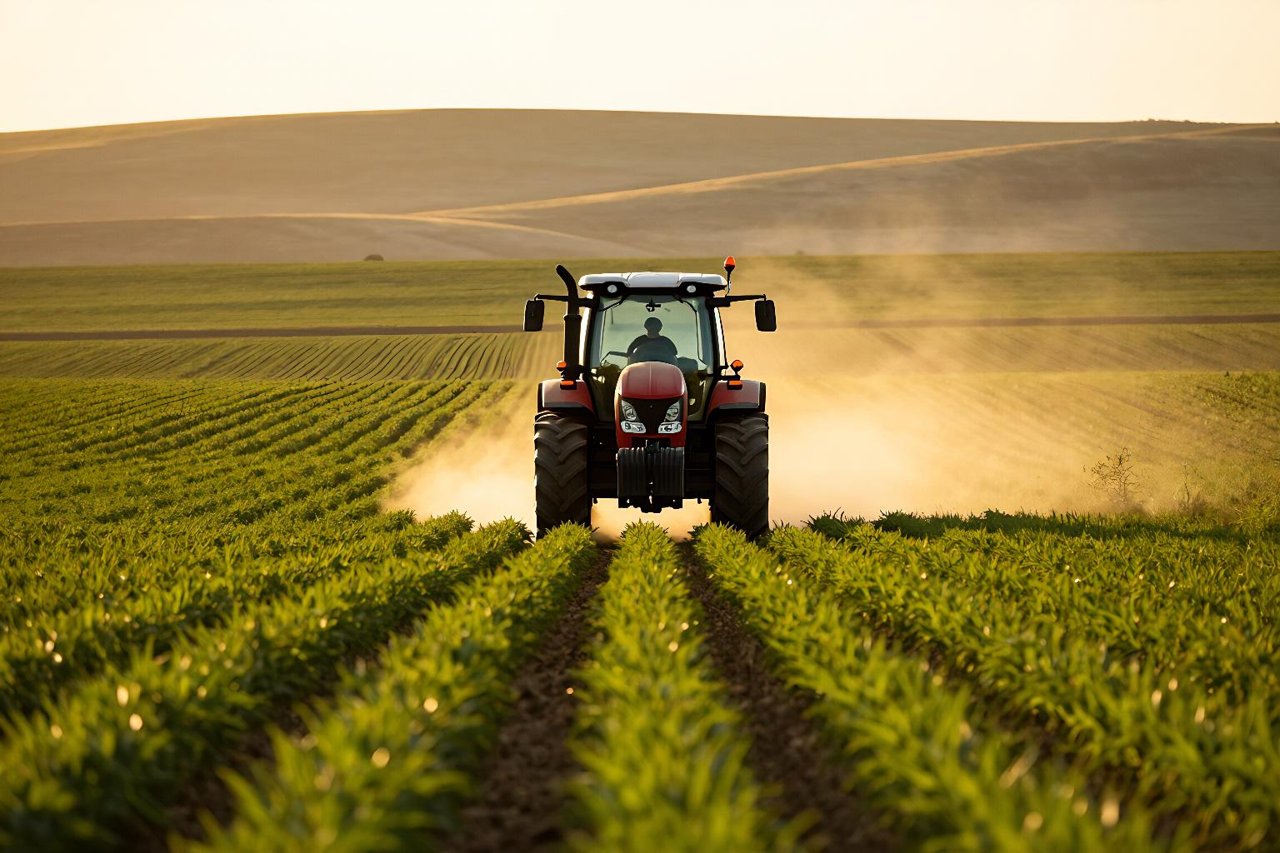
A 12-tonne tractor crosses a field near Salinas with nobody in the cab. It holds a straight line to within an inch, turns at the headland, and stops when a person walks in front of it. Fifteen kilometres away, a machine the size of a shipping container rolls slowly down a row of onions, firing 30 carbon-dioxide lasers at weeds at a rate of roughly 100,000 plants an hour. Neither machine needs a driver, and neither is a demo.
Agriculture has been quietly automating for decades. Auto-steer and GPS guidance arrived in the late 1990s and are now standard on new combines and tractors. What has changed in the last five years is that machines are starting to make decisions about individual plants, individual animals and individual square metres of soil. That shift is the real story behind how robots are used in agriculture.
Why farms are buying robots in the first place
The driver is money, and mostly it is labour money. Hand weeding a field of organic lettuce can cost well over $1,000 an acre in California, and crews have to come back two or three times a season. Strawberry harvest is worse: pickers must return to the same field every three or four days for months, selecting only ripe fruit.
Meanwhile the H-2A visa programme, which supplies much of the US seasonal workforce, has seen wage rates climb year after year, and growers in Europe face similar pressure. A machine that costs six figures but replaces twenty seasonal workers over five seasons starts to look reasonable. Robots also do not mind night shifts, which matters enormously for weeding and spraying, when cooler, calmer air gives better results.

Autonomous tractors and field work
The biggest machines are the least glamorous. John Deere’s autonomous 8R, shown publicly in 2022, is a standard tractor with a sensor stack that lets a farmer set a boundary on a tablet and walk away. Monarch’s MK-V is a smaller electric unit aimed at vineyards and specialty crops, and Fendt has been testing the Xaver, a swarm of shoebox-sized planting robots that work as a team rather than one giant machine.
What autonomy actually buys you
- Longer working windows, because a second machine can keep going after the operator goes home
- Less overlap and skips, since the machine follows the same path every pass
- Fewer passes overall when tillage, seeding and spraying are combined into one run
- Lower soil compaction from lighter, swarming equipment instead of one heavy tractor
Weeding is where the returns are clearest
If you want to see agricultural robotics working commercially rather than in a pilot, look at weed control. John Deere’s See & Spray technology, built on camera systems from Blue River Technology, identifies weeds in a growing crop and fires herbicide only at those plants. The company reports herbicide reductions of 50% to 70% on some crops compared with a blanket spray.
Carbon Robotics takes the opposite approach: no chemical at all. Its LaserWeeder uses high-resolution cameras and a trained model to distinguish crop from weed, then burns the weed at the growing point with a laser. It runs at night, when the machine’s own lighting gives the cleanest images. For organic growers, who have few effective post-emergence options, that is close to a miracle product. Expect to pay a serious six-figure sum for one, which is why many farms lease or hire contractors instead.
In Europe, Naïo Technologies sells lighter electric robots with mechanical hoes for vineyards and market gardens, and a handful of startups offer weeding as a service, arriving with the machine and charging per hectare. For more on which automation projects actually recover their cost, this breakdown of where robotics and automation pay off is worth reading.
Harvesting: the hard problem
Picking is where robotics has struggled most, and the failures are instructive. Abundant Robotics raised millions to build an apple harvester with a vacuum arm and shut down in 2021, undone by the sheer variability of real orchards: branches in the way, fruit in clusters, leaves hiding stems.
Strawberries have proved more tractable because the fruit hangs at a predictable height and bruises visibly if handled badly. Companies including advanced.farm and Tortuga AgTech now run commercial harvesters in California and Florida that pick a portion of the crop, usually the night shift, while human crews handle the rest. Lettuce and leafy greens are also being machine-harvested at scale, partly because the crop is uniform and the robot only has to cut, not select.
Why orchards are different
Trees grow. Canopies thicken. A machine tuned in May is looking at a different orchard in August. Until perception systems can handle that variability without a technician on site, tree fruit will stay mostly human-picked, with robots doing thinning, pruning and spraying instead.
Drones, sensors and the data layer
Not every field robot moves on wheels. Agricultural drones now spray rice paddies across Asia and scout vineyards in Europe, and multispectral cameras on drones or fixed masts can flag water stress, nitrogen deficiency and disease days before it is visible from the road. Plant scientists are getting better at reading these signals directly from the crop itself, an area covered well in how plants signal stress before damage shows. A robot that can see stress early can also act on it precisely, which is where spot-spraying and variable-rate fertilising become genuinely useful rather than marketing claims.
Livestock: the most mature market of all
Robotic milking is the quiet success story. Lely’s Astronaut and DeLaval’s VMS have been in barns since the 1990s, and tens of thousands of units now operate worldwide. Cows walk in when they choose, a laser-guided arm cleans the teats, attaches cups and records yield and somatic cell counts per quarter. Most herds settle at three milkings a day instead of two, which typically lifts production by 10% to 15% and removes one of the least pleasant jobs on the farm.
Other barn robots handle feed pushing, manure scraping and bedding. Some dairy farms run ground drones that nudge cattle between paddocks. The appeal is the same in every case: animals get more consistent treatment, and the farmer gets an alert on a phone instead of a job at 4 a.m.
Greenhouses and vertical farms
Controlled environments are the easiest place to make robotics work. No rain, no mud, no slopes, uniform rows. Iron Ox built a system where a mobile platform lifts hydroponic grow trays and carries them to a robotic arm for transplanting and inspection, and several vertical farming operations use similar gantries with cameras that grade every plant. The catch is that these businesses live or die on energy costs and crop selection, not on the sophistication of the robot.
What still does not work
Dust destroys bearings and camera lenses. Mud swallows wheels. Field conditions change weekly. A robot that performs beautifully in a trial can fail badly when a grower’s rows are 5 centimetres off the pattern the machine expects. Small farms also struggle with the economics: most of these machines are priced for operations with hundreds or thousands of hectares, and a 40-hectare market garden cannot justify one.
For context on how far agricultural automation has come relative to other sectors, it is worth seeing which industries have actually deployed robots at scale. Farming sits somewhere in the middle: far ahead of construction, behind automotive manufacturing. The wider race to industrialise AI and robotics is also shaping farm policy and investment, a subject explored in how the US and China are pursuing different AI futures, because the two countries are backing very different models of agricultural technology, from China’s shared drone-spraying services to America’s large-farm equipment dealers.
Where the next few seasons will be decided
Three things will determine whether the robot on the field next year is a demo or a permanent hire. First, service and repair networks. A broken robot in June is a lost season, and growers will not buy machines that require an engineer to fly in. Second, smaller, cheaper units. Swarms of light robots that cost less than a pickup truck make more sense on a 200-hectare farm than one enormous machine, and they are gentler on soil. Third, the shift from selling hardware to selling outcomes: weeding per hectare, milk per cow, spray per acre.
Watch the specialty crop belts of California and the dairy regions of northern Europe. Those are the places where labour costs, crop value and technical support line up. If autonomous weeders and night-shift harvesters can make money there, the machinery will spread to row crops next, and the tractor with nobody in the cab will stop being worth a second glance.


