
Table of Contents
Rosemary is the herb that refuses to be background music. One sprig tucked under chicken skin or a pinch chopped into shortbread and the whole kitchen knows it is there. The needle-like leaves carry a piney, citrusy punch that survives heat better than delicate herbs like basil, which is why rosemary turns up in Sunday lamb, focaccia, and gin cocktails alike.
It is also easy to misuse. Too much and a dish tastes like a Christmas tree. Stored badly, a bunch turns into dry, dusty needles in three days. What follows is a practical guide to rosemary’s culinary uses and storage tips, with amounts, temperatures, and methods that work in a normal home kitchen.
What Rosemary Brings to a Dish
Fresh rosemary has a bright, resinous flavor with notes of pine, lemon peel, and black pepper. Dried rosemary is more concentrated and a little mustier. It needs fat and heat to soften, so it performs best in braises, roasts, and long-simmered sauces rather than quick sautés.
Buying fresh: look for flexible, green needles. If leaves fall off when you run a thumb down the stem, leave it. A tablespoon of finely chopped fresh rosemary is roughly equal to a teaspoon of dried. That ratio matters because dried rosemary can overwhelm a pot in a hurry.

Culinary Uses: From Roasts to Desserts
Roasts, Grills, and Braises
Rosemary and lamb are a classic pairing for good reason. The herb’s resin cuts through rich meat. Rub a 2-pound leg of lamb with olive oil, two minced garlic cloves, a tablespoon of chopped rosemary, salt, and pepper. Roast at 425°F for 20 minutes, then drop to 350°F until the internal temperature hits 135°F for medium-rare, about 50 to 60 minutes more. Rest it for 15 minutes.
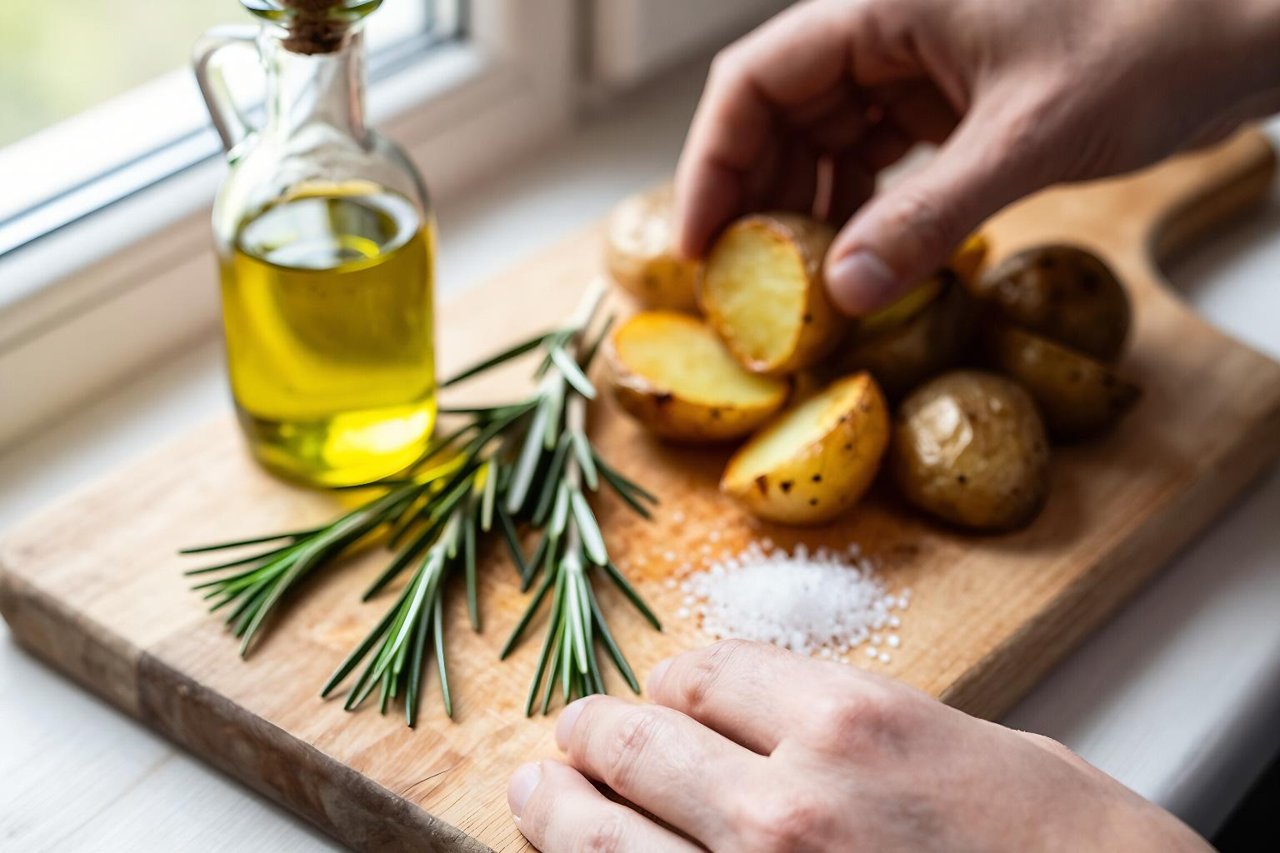
For chicken, loosen the skin over each breast and slide in two 3-inch sprigs plus a few lemon slices. The fat under the skin carries the rosemary flavor into the meat. Potatoes are another reliable vehicle: toss 1.5 pounds of quartered Yukon Golds with two tablespoons olive oil, a tablespoon of chopped rosemary, and a heavy pinch of salt. Roast at 425°F for 35 to 40 minutes, turning once.
Bread, Focaccia, and Savory Baking
Rosemary is sturdy enough to bake without turning bitter. Use about a tablespoon of chopped rosemary per 500 grams of flour in focaccia or rustic white bread. For a more intense flavor, bloom the rosemary first: warm half a cup of olive oil with three sprigs over low heat for 10 minutes, then cool and use that oil in the dough. Press whole sprigs and flaky salt into the top before baking.
Infused Oils, Vinegars, and Salts
Rosemary oil is simple if you keep the heat low. Warm one cup of olive oil and four sprigs in a saucepan until the oil reaches 140°F, hold it there for 20 minutes, then cool and strain. Store it in the fridge and use it within two weeks. Skip raw garlic in the oil unless you plan to use it within four days; garlic in oil can harbor botulism risk at room temperature.
Rosemary salt is even easier. Pulse half a cup of coarse sea salt with two tablespoons of chopped rosemary in a food processor, spread the mixture on a tray, and let it dry for two hours before jarring. It wakes up roast chicken, popcorn, and sliced tomatoes. For vinegar, steep three sprigs in two cups of white wine vinegar for a week, then strain.
Sweet Uses: Shortbread, Honey, and Citrus
Rosemary works in sweet dishes when used sparingly. Add one teaspoon of very finely chopped rosemary to shortbread dough or a lemon cake batter. Infuse honey by warming one cup of honey with two sprigs over low heat for 10 minutes, then strain; drizzle it over yogurt or pears. Rosemary simple syrup is another keeper: simmer one cup of sugar, one cup of water, and three sprigs for five minutes, then steep for 20 minutes off the heat.
Drinks and Cocktails
That syrup makes a sharp gin and grapefruit cocktail. Add half an ounce to two ounces of gin, three ounces of grapefruit juice, and ice. Slap a fresh sprig against your palm before garnishing; it releases the oils and smells like a walk through a Mediterranean garden.
How Much Rosemary Is Too Much?
A little goes a long way. For a dish serving four, start with one teaspoon of finely chopped fresh rosemary or one 3-inch sprig for infusing. Whole needles can be unpleasant to chew, so chop them fine or strain them out before serving. Dried rosemary is easy to overdo because it does not break down during cooking. Crush it between your fingers or grind it first. If you are unsure, add half the amount, taste, and adjust.
Storing Fresh Rosemary: The Methods That Work
Fresh rosemary has a woody stem that holds moisture well, but the needles rot quickly if they stay wet. Do not rinse until you are ready to use it. If you do rinse, dry the sprigs thoroughly with a clean towel.
- Refrigerator wrap: Wrap dry sprigs in a barely damp paper towel, place them in a loosely closed zip-top bag, and store in the crisper drawer. They last two to three weeks.
- Jar of water: Stand stems in an inch of water like flowers, cover loosely with a plastic bag, and change the water every two days. This keeps rosemary fresh for about two weeks and looks good on the counter.
- Freezer: Seal whole sprigs in a freezer bag with the air pressed out, or chop the needles and freeze them in ice cube trays with olive oil or water. Frozen rosemary lasts six months. The texture softens, so use it in cooked dishes rather than as a raw garnish.
Drying Rosemary at Home
Drying is the easiest long-term storage method. Bundle six to eight sprigs, tie them with string, and hang them in a dark, dry spot with good air circulation. A pantry or spare room at 65°F to 75°F works well. They are ready in one to two weeks, when the leaves crumble easily between your fingers.
If you are in a hurry, spread the sprigs on a sheet pan and dry them in a 150°F oven with the door cracked for one to two hours. Strip the needles from the stems, store them in an airtight glass jar away from light, and label the date. Dried rosemary keeps its punch for six to twelve months. When the color fades and the scent weakens, replace it.
Keeping a Rosemary Plant Alive on a Windowsill
A potted rosemary plant can supply a kitchen for years if you respect its Mediterranean roots. Give it six to eight hours of direct sun, plant it in a terracotta pot with drainage holes, and use a gritty, well-draining mix. Water when the top inch of soil is dry, then let it drain completely. Overwatering kills more rosemary plants than cold weather.
Harvest no more than one-third of the plant at a time. Snip stems just above a leaf node. Regular pruning keeps the plant bushy instead of leggy. In hardiness zones 8 and warmer, rosemary grows into a large evergreen shrub outdoors; in colder climates, bring the pot inside before the first frost.
Four Mistakes That Cost Flavor
- Using whole needles in quick dishes. They stay tough and woody. Chop finely or remove the sprig before serving.
- Adding dried rosemary at the end. It needs time in fat and heat to soften. Add it early in braises and stews.
- Storing wet sprigs in a sealed bag. Condensation turns needles slimy. Dry them first and keep the bag loose.
- Pairing rosemary with delicate ingredients. It overpowers scallops, mild white fish, and tender lettuce. Save it for lamb, beef, potatoes, mushrooms, and beans.
Put a Sprig to Work Tonight
Heat two tablespoons of olive oil in a skillet, add one 3-inch rosemary sprig and a smashed garlic clove, and cook for 60 seconds until the oil smells fragrant. Add sliced mushrooms or a can of white beans, salt, and a squeeze of lemon. Remove the sprig before serving. Or chop a teaspoon of rosemary into softened butter with lemon zest and slather it on corn on the cob. Fresh rosemary rewards a light hand with quantity and a heavy hand with heat.


