
Table of Contents
Moringa powder has moved from the back shelf of the health food shop to the supermarket aisle, and the claims have grown along with it. Leaf powder gets sold as a cure for tiredness, a protein source, and a beauty ingredient all at once. Some of that holds up under scrutiny. Some of it is pure marketing. Here is a clear look at what is actually in the powder, how people use it day to day, and which of the many product types on sale are worth your money.
What Moringa Powder Actually Is
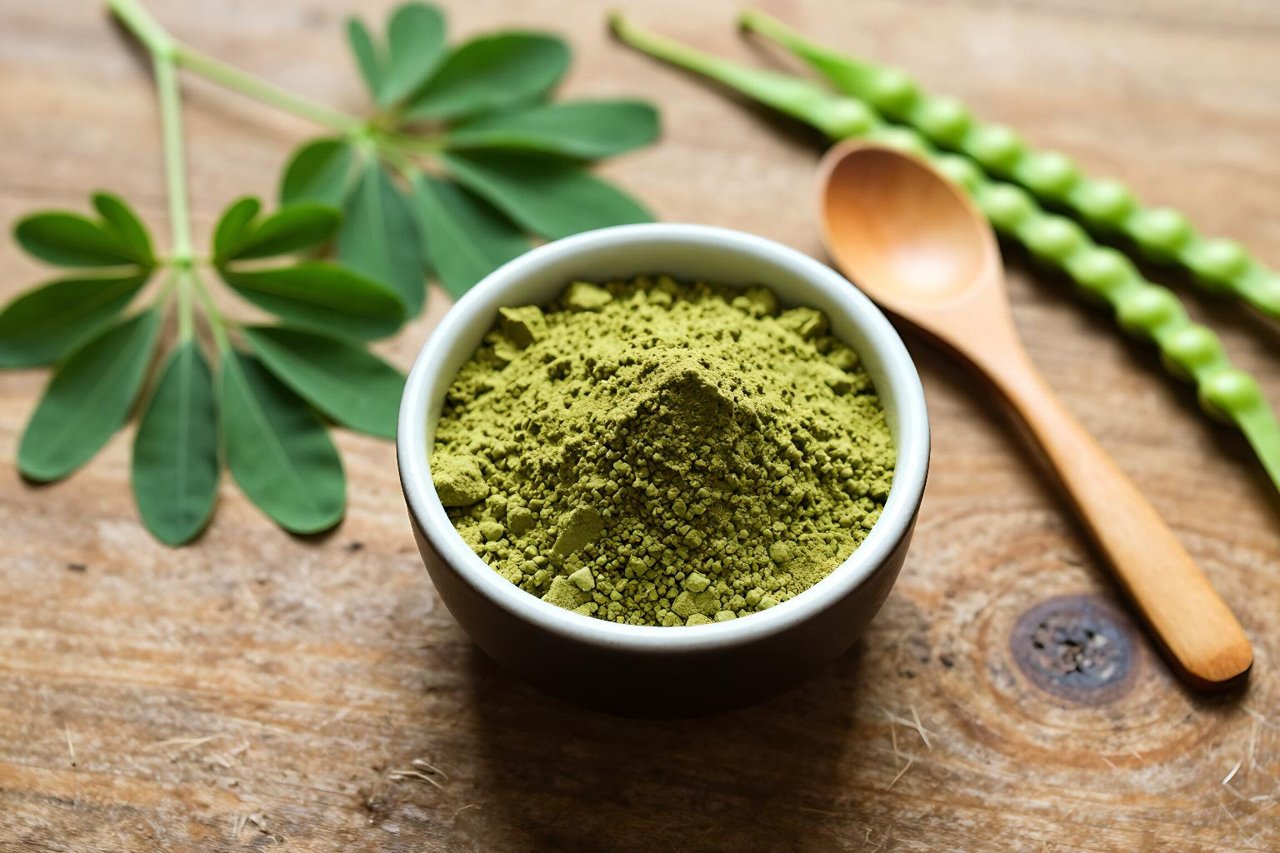
The powder comes from the leaves of Moringa oleifera, a fast-growing tree native to the foothills of the Himalayas. Growers strip the small oval leaflets, dry them, then mill them into a fine green flour. Shade drying is the better method because it preserves more colour and more of the sensitive vitamins than leaving leaves out in direct sun.
Yield is the reason real moringa is not cheap. Roughly 10 kilos of fresh leaves produce about 2 kilos of dried powder once the stems are removed, so a bargain bag at a rock-bottom price usually contains a lot of stem and very little leaf.
Two different products share the name. Leaf powder is the food item. Seed powder, ground from the round winged seeds, is used in water purification research and cosmetics, not as a smoothie ingredient. Check the pack if you are not certain which one you picked up.

The Nutrition, With Actual Numbers
Dried moringa leaf is genuinely nutrient-dense by weight. A 100 g portion carries around 25 to 30 g of protein, 19 g of fibre, close to 2,000 mg of calcium, about 25 mg of iron, plus a solid dose of beta-carotene and magnesium. Impressive figures, until you remember that nobody eats 100 g. A normal serving is one to two teaspoons, which is 2 to 5 g. Here is what that really delivers:
- About 1.4 g of protein, so it will not replace your lentils
- Roughly 90 mg of calcium, or a third of a glass of milk
- Around 1.2 mg of plant-based iron, absorbed better alongside vitamin C
- Useful amounts of beta-carotene, magnesium, and potassium
- About 1 g of fibre per teaspoon
Treat it as a top-up rather than a multivitamin replacement. The vitamin C claim printed on many packets is also shaky. Fresh leaves are rich in it, but drying and months of storage destroy much of the ascorbic acid, so the powder is a poor source by the time it reaches your kitchen.
How People Use It
The flavour is earthy and slightly bitter, a bit like strong spinach crossed with matcha and a faint whisper of horseradish. That profile explains why most people hide it rather than showcase it.
In Drinks
Smoothies are the easiest entry point. One teaspoon disappears into a blend of overripe banana, mango, or pineapple, especially with a squeeze of lime and a knob of ginger. Moringa tea works too: half a teaspoon in hot but not boiling water, steeped three to four minutes. Boiling water pulls out the bitterness and turns the drink harsh.
In Cooking
Stir a spoonful into dal, soup, or stew at the very end of cooking rather than the start, so the colour stays green instead of turning olive brown. One tablespoon per two cups of flour works in pancake batter, chapati dough, or banana bread. It also mixes well into plain yogurt with honey, or sprinkled over roasted sweet potato.
On Skin and Hair
Leaf powder whisked with water or yogurt into a paste is a common DIY face mask. Evidence is thin, but it is a cheap, gentle exfoliant and does no harm on most skin types.
The Product Types on the Shelf
Walk into any large health food store and you will meet at least six versions of the same plant. They are not interchangeable.
Leaf Powder Versus Seed Powder
Leaf powder is for eating and drinking. Seed powder is pressed for oil or used in water treatment, and it tastes unpleasant. Buying the wrong one is a common and disappointing mistake.
Raw Versus Steamed
Some producers steam or lightly irradiate the leaves before drying to cut the microbial load. Raw powders often taste brighter and fresher but carry a higher contamination risk, which matters with any imported green leaf. Reputable brands state clearly which process they use, usually on the back of the pouch.
Pure Versus Blended
Plenty of so-called moringa blends contain 5% moringa and 95% wheatgrass, spirulina, and maltodextrin. Read the ingredient order. If moringa is not first on the list, it is a garnish, not the product.
Capsules and Tea Bags
Capsules suit travellers and people who cannot stand the taste, though you pay far more per gram. Tea bags usually contain broken leaf and stem dust, fine for a light brew but weaker than loose powder.
Picking a Bag That Is Worth It
- Colour: bright olive green. Khaki or grey-brown means old stock or too much stem.
- Smell: fresh cut grass or green tea. A musty hay smell is a red flag.
- Traceability: named country of origin, lot code, and a harvest or best-before date.
- Testing: leafy greens absorb lead and cadmium from soil, so ask for third-party heavy metal results.
- Packaging: opaque and resealable. Clear bags let light degrade the powder on the shelf.
Storage and Daily Amounts
Keep the pouch sealed in a dark cupboard and it will hold quality for around 12 months. In hot, humid climates, store it in the fridge; for long-term keeping, the freezer works well and does not harm the powder.
Most people settle on one to two teaspoons a day, roughly 2 to 5 g. Clinical studies have used up to 7 g without problems. Start with half a teaspoon for the first week, since the fibre can cause gas if you jump straight to a heaped tablespoon.
Who Should Be Cautious
Moringa root and root bark are best avoided during pregnancy, and concentrated leaf supplements should be cleared with a clinician first. The leaf in food amounts is generally considered fine, but the root is a different story.
Because the leaf may lower blood sugar and blood pressure, anyone on diabetes or hypertension medication should monitor their readings rather than stack the two blindly. High doses can interfere with thyroid medication absorption, so leave a two-hour gap. People prone to kidney stones should also go easy, as the leaves contain moderate oxalates.
Building It Into a Normal Week
A workable routine looks unglamorous: a teaspoon in a banana smoothie on Monday and Thursday, a spoonful stirred into lentil soup midweek, a batch of pancakes at the weekend with a tablespoon folded into the batter. That is around 15 g a week, enough to notice whether it suits you without turning mealtimes into a supplement ritual.
Buy the smallest bag first. A 250 g pouch holds roughly 50 teaspoons, which is plenty of chances to work out whether you like the taste and whether your digestion agrees with it, long before you commit to a kilo.


