
Table of Contents
Last spring I cleared out my crisper drawer and found three plastic bags of herbs that had given up entirely. The basil was black. The cilantro had liquefied into something I chose not to investigate. The rosemary, at least, was honest about being dead. That was the week I stopped buying herbs by mood and started buying them by job.
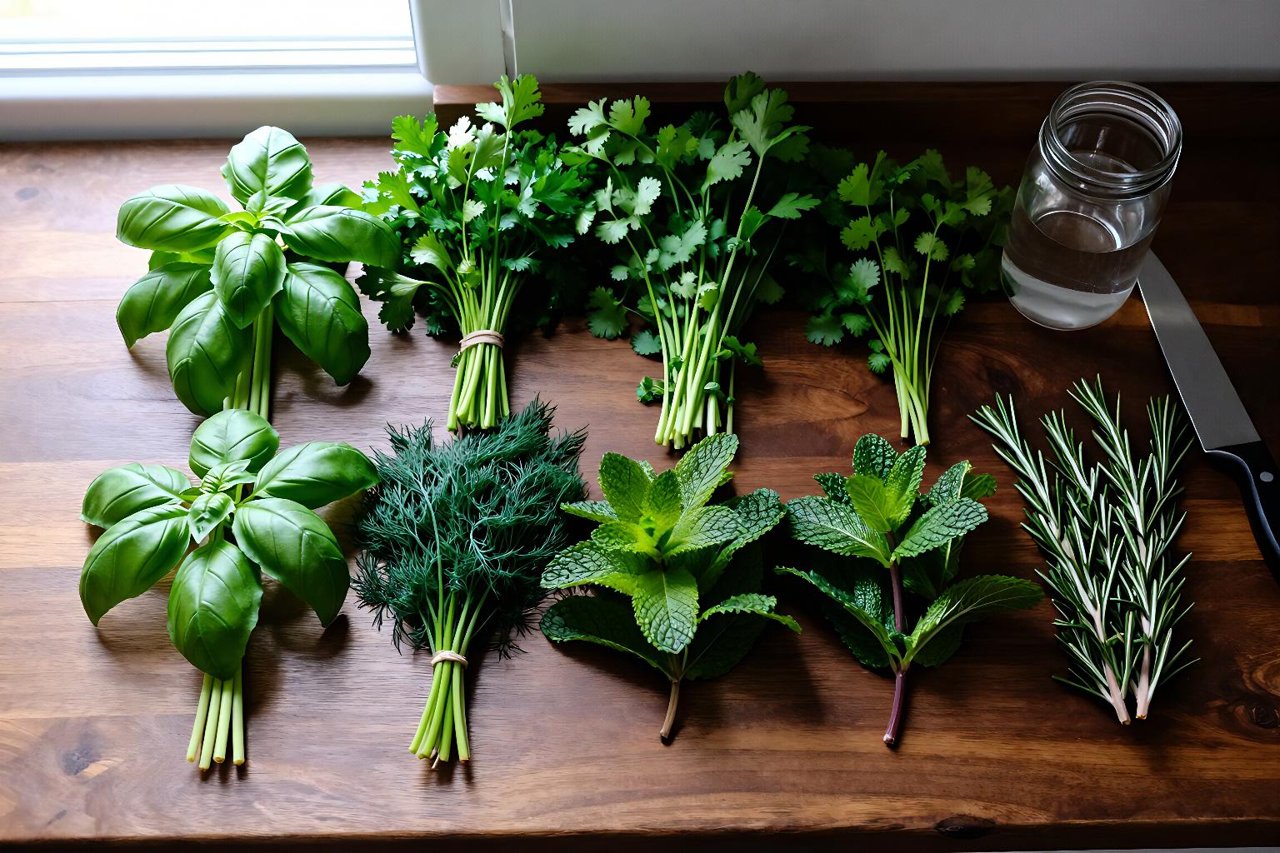
Most kitchens can run on seven: basil, parsley, cilantro, mint, dill, thyme and rosemary. Not because they’re the only good ones — tarragon and chervil deserve far better than they get — but because those seven cover almost everything a home cook makes in a normal week, from a bowl of pasta to a roast chicken to a jug of iced tea. Here’s what each one is actually for, and how to stop throwing half of it away.
Basil: the one that refuses to be refrigerated
Basil is a tropical plant and it behaves like one. Two days in a cold fridge and the leaves bruise, darken and turn limp. Leave it on the counter instead, stems in a glass of water like cut flowers, and it will hold for four or five days. Change the water every other day and pinch off any leaf that starts to brown.
Flavour-wise, basil is a finisher, not a base. Tearing leaves into tomato sauce and then simmering for twenty minutes gets you green confetti and nothing else. Stir it in after the heat is off, or don’t cook it at all. About a packed cup of leaves is right for a pound of pasta or a batch of pesto — pulse it with oil, pine nuts and a little salt, and skip the stove entirely.

Two kinds are worth knowing. Genovese, the big sweet Italian leaf, for anything Mediterranean. Thai basil for curries and stir-fries, where its faint anise note survives heat that would wreck the sweet kind.
Parsley: the workhorse nobody respects
Flat-leaf parsley does more quiet work than any other herb in the drawer. A handful chopped into a pot of beans, a grain salad or a breadcrumb topping makes food taste finished rather than flat, and a bunch costs less than a coffee. The curly stuff is fine for garnish and not much else.
Use the stems. They carry more flavour than the leaves do and they’re perfectly good chopped fine into stock, braises and a pot of rice. If you want one fast trick, make gremolata: the zest of a lemon, a third of a cup of chopped parsley and one minced garlic clove, stirred together and spooned over braised meat or roasted cauliflower. It takes ninety seconds and tastes like you tried harder than you did.
Cilantro: use the whole bunch, stems included
Cilantro is the only herb here that some people genuinely cannot eat. A genetic quirk makes it read as soap or crushed bugs to roughly one person in ten, and no amount of lime juice will fix that. If you’re one of them, skip ahead without guilt.
For everyone else it’s a cooling herb, added at the end of cooking rather than during it. The stems are as tender as the leaves and just as flavourful, so chop them along with everything else — you lose nothing and waste less. A squeeze of lime, a chopped green chilli, a fistful of cilantro and a pinch of salt is a complete sauce for grilled fish. Herb habits travel well, and the more global your cooking gets, the more cilantro you’ll buy; the food world’s current obsession with the stuff is one of the culinary travel trends reshaping how we eat at home.
Mint: sweeter than you think, tougher than it looks
Buy spearmint for cooking. Peppermint belongs in tea and toothpaste, and it will overpower almost anything you put it near. Spearmint is softer, and it works in places people forget: crushed into yogurt with cucumber, torn over peas with butter, chopped into lamb meatballs, or steeped in hot water with a spoon of honey.
It’s also the most forgiving herb in the bunch. A stem dropped in a glass of water roots in about a week, and a pot on a windowsill will keep producing for months as long as you keep cutting it. Eight to ten leaves is enough to perfume a whole litre of drinking water.
Dill: delicate, so add it late
Dill is feather-light and cooks in about thirty seconds, which means it belongs off the heat. Stir a tablespoon of chopped dill through a cup of plain yogurt with lemon and salt and you have a sauce for salmon, potatoes or anything fried. Boiled new potatoes with butter and a fistful of dill is a better dish than it has any right to be — and if you’re doing a vegetable side by steaming, the right steaming method makes all the difference to the texture.
One practical note: dill bruises if you chop it hard. A few quick passes with the knife is plenty.
Thyme: the one that survives neglect
Thyme is a woody herb you can forget about for a week and still use. Three or four sprigs go into a braise, a roast chicken or a pot of lentils at the start, not the end, and they give up their flavour slowly over the first twenty minutes. To strip the leaves, hold the sprig at the top and run your thumb and forefinger down the stem against the growth — they come off in one go.
Lemon thyme is worth a separate purchase if you cook fish. It’s brighter and more floral than common thyme and tastes like someone already added the zest for you.
Rosemary: powerful, so use one sprig at a time
Rosemary is closer to a pine needle than a leaf, and that’s the whole point and the whole risk. Chopped fine, it perfumes roast potatoes and lamb beautifully. Left in big pieces, it gives people something to fish out of their mouths. One sprig is enough for two pounds of potatoes; two is too many.
Fresh rosemary stems also make excellent skewers for chicken or halloumi. Soak them in water for twenty minutes first so they don’t burn.
How to keep a bunch alive past Thursday
- Soft-stemmed herbs (basil, parsley, cilantro, mint): trim the cut ends, stand them in an inch of water, and drape a loose plastic bag over the leaves. Change the water every couple of days.
- Woody herbs (thyme, rosemary): wrap in a barely damp paper towel, drop in a bag, and store in the fridge door where it’s least cold.
- Dill: treat it like a soft herb but expect three or four days at most. Buy it the day you plan to use it.
- Wash at the last minute. Wet leaves rot faster than dry ones, so rinse only what you’re about to chop.
- Freeze what’s about to turn. Chop it, pack it into an ice cube tray with olive oil or water, and drop the cubes straight into a pan later.
None of this needs special equipment. A herb stripper, a five-blade herb scissors or a dedicated chopper are solutions to problems that a knife and thirty seconds already solve, as a group of working chefs pointed out when listing the kitchen tools they find completely useless.
Fresh or dried? Test it with your nose
Drying concentrates some herbs and destroys others. Thyme, rosemary, oregano and sage keep most of their character and can go straight into a braise from the jar. Basil, cilantro, mint and dill lose nearly everything in the process — dried basil tastes like tea leaves and dried cilantro tastes like hay. Those four are worth buying fresh or not at all.
Your nose beats any label. Crumble a pinch between your fingers and smell it: if it’s dusty and faint, it will taste dusty and faint, and no amount of it will help. The same buying and storage rules that apply to your spice rack apply here, and this guide to buying, storing and timing your herbs and spices is a useful reference when you’re restocking.
Buy in the quantities you’ll realistically use inside four days. Two bunches of parsley for a recipe that calls for two tablespoons is just a slower way of throwing one bunch away — and once you know which herb does which job, you’ll stop guessing at the shop and start cooking with what’s already in the drawer.


