
Table of Contents
Acai berries have a reputation that runs ahead of the facts. The small, dark purple fruit comes from a palm that grows in the Amazon basin, and it has been part of local diets in Brazil for generations. Outside the region, it usually shows up as frozen pulp, powder, or a thick smoothie bowl topped with banana and granola. Fresh acai is hard to find because it spoils quickly, and its flavor is earthy rather than candy-sweet. That matters for anyone trying to judge the fruit by the label on a bottle.
What acai berries actually are
Acai (pronounced ah-sigh-EE) is the fruit of Euterpe oleracea, a palm native to floodplain forests. Each berry is small and round, with a thin layer of edible pulp around a large seed. The pulp is what gets frozen, freeze-dried, or pressed into juice. Because the fruit is perishable, most commercial acai is processed close to harvest. A frozen pulp packet may contain water, and a powder is a concentrated version of the same pulp. Those differences explain why two products with the same front label can have very different nutrition panels.
Acai berries: nutritional profile at a glance
A 100 g serving of plain, unsweetened frozen acai pulp usually lands in this range:
- Calories: about 60 to 70 kcal
- Fat: 3 to 5 g, mostly unsaturated, including oleic acid
- Carbohydrate: 4 to 6 g
- Fiber: 2 to 3 g
- Protein: about 1 g
- Micronutrients: small amounts of calcium, iron, and vitamin A precursors
Brands vary, and sweetened pulp or blends can add several grams of sugar per serving. The fruit is not a protein food, and it is not a meal in itself. Its strengths are the purple pigment compounds, some fiber, and a fat profile that is closer to olive oil than to butter.

Anthocyanins and the antioxidant story
The deep color comes from anthocyanins, a group of plant pigments also found in blackberries, cherries, and red cabbage. Acai pulp contains several phenolic compounds, and freeze-drying tends to preserve many of them. Test-tube and animal studies have looked at acai for oxidative stress and inflammation. Human trials are smaller and less consistent. A realistic view is that acai is a colorful, antioxidant-rich fruit, not a treatment. It does not replace vegetables, sleep, or a varied diet.
Fiber, fat, and sugar in real servings
Unsweetened acai pulp has little sugar on its own. The sugar usually arrives in the bowl. A cafe acai bowl can carry 30 g or more of added sugar between the base, juice, granola, and honey. The fiber in acai is modest, around 2 to 3 g per 100 g of pulp, so it will not fix a low-fiber diet by itself. The fat content is worth knowing if you are counting calories. Acai is rich for a fruit, which is one reason a small serving feels filling.
Common acai products and what you are really buying
The freezer aisle and supplement shelf use acai in very different ways. Here is what to expect.
- Frozen pulp packets: The closest thing to the fruit. Check whether the packet is unsweetened or blended with guarana, banana, or syrup. A 100 g packet is a useful starting point for a smoothie.
- Smoothie packs and purees: Convenient, but often mixed with apple juice, banana, or added sugar. Read the ingredient list before assuming the purple color means a high acai content.
- Freeze-dried powder: Concentrated and easy to stir into oatmeal or yogurt. Serving sizes are small, often 3 to 10 g, so compare cost per serving rather than cost per bag. Look for 100% acai if that is what you want.
- Capsules, gummies, and softgels: Supplement products with little standardization. Potency and anthocyanin content can vary widely. They are not a shortcut to a balanced diet.
- Juice blends and energy drinks: Often mostly other juices, water, and sweetener. Acai may be a small fraction of the recipe. Some products add guarana, which brings caffeine.
- Acai bowls and ready-made blends: Useful on a busy morning, but treat them like a smoothie or dessert. Ask what is in the base and whether the toppings are included in the calorie count.
How to read an acai label without getting fooled
Start with the ingredient list, not the front of the package. A product labeled acai flavored may contain very little fruit. Ingredients are listed by weight, so acai should appear first if it is the main event. Watch for sugar under other names: cane syrup, fruit juice concentrate, agave, and maltodextrin. If the label mentions guarana, check the caffeine content, especially if you are sensitive or drinking the product late in the day. For powder, compare the serving size and the grams of acai per serving. Ten grams of acai powder in a large scoop is not the same as ten grams of pure freeze-dried acai in a small one.
A practical way to use acai at home
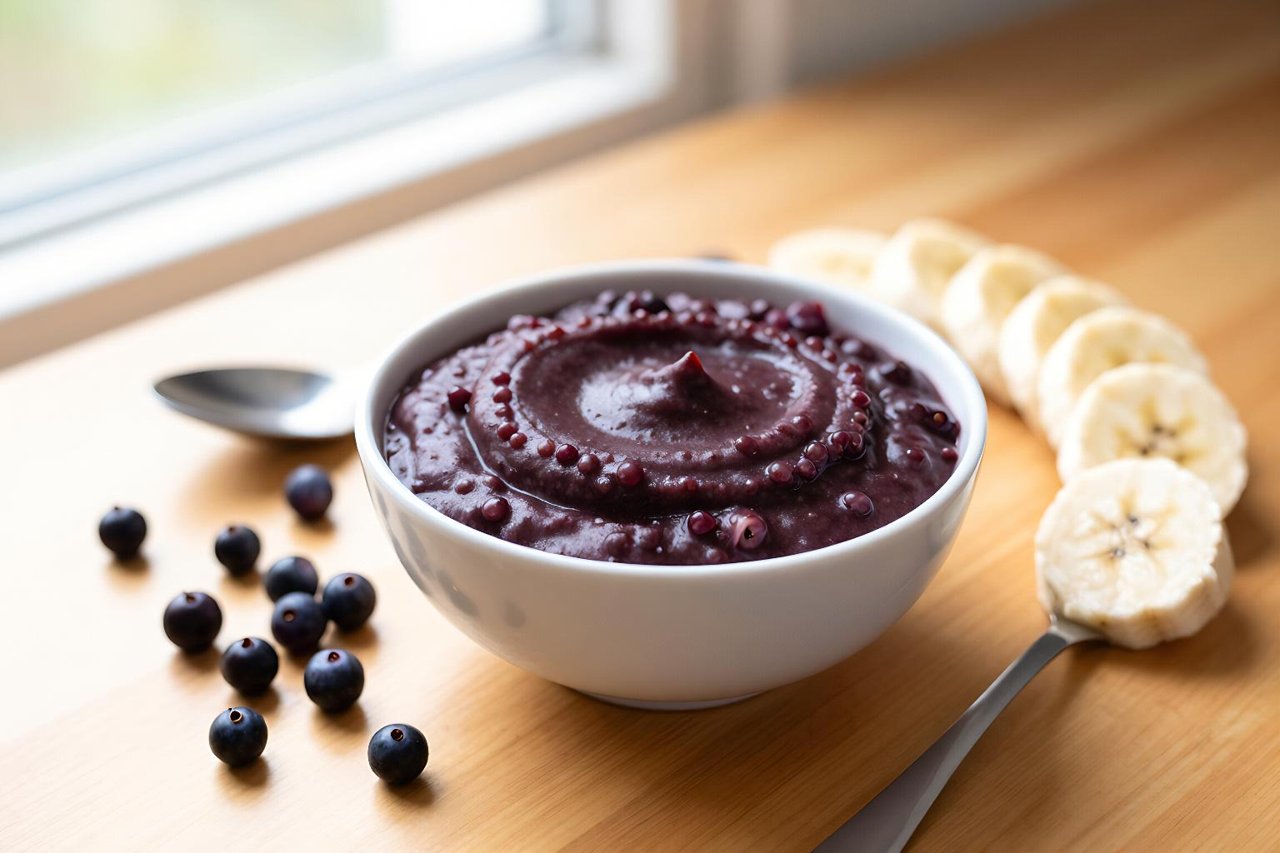
Blend 100 g of unsweetened frozen pulp with half a banana, 150 g of plain yogurt, and a splash of milk. The result is thick enough to eat with a spoon and gives you protein from the yogurt without a river of juice. Add a tablespoon of granola or coconut for texture, not a handful. If you prefer powder, stir a teaspoon into overnight oats or a plain smoothie. Acai pairs well with tart fruit, cocoa, and nut butter. It does not need honey to taste good.
Who should be careful with acai products
Plain acai fruit is generally well tolerated. The bigger issues are formulation and quantity. Sweetened bowls and juices can add a lot of sugar. Guarana blends can deliver caffeine, which may affect sleep or anxiety. Fiber supplements and powders can cause bloating if you increase them quickly. If you take prescription medication, are pregnant, or are managing a health condition, talk to a clinician before using concentrated supplements. Food first is usually the simpler path.
What a good acai habit looks like
Buy unsweetened frozen pulp or plain freeze-dried powder, use a measured serving, and build the rest of the meal from yogurt, fruit, nuts, or oats. Keep acai as one colorful component rather than the whole point of the plate. A 100 g packet a few times a week is a reasonable amount for most people, and it costs less than a daily cafe bowl. The nutritional profile is respectable, but the products around acai are where the sugar, caffeine, and marketing tend to hide.


