
Table of Contents
Most kitchens keep two thymes: a dusty jar at the back of the spice rack and, if you’re lucky, a woody little plant on the windowsill that is half dead. Both deserve better. Thyme is one of the few herbs that tastes like the place it grows. Dry, resinous, faintly medicinal, with a citrus edge that sharpens the moment you bruise the leaves. It is also one of the most forgiving things you can cook with, which is why it turns up in everything from a Sunday beef joint to a Tuesday plate of buttered carrots.
What follows is a working cook’s look at the thyme varieties worth knowing and the everyday cooking applications where each one earns its keep.
The thyme varieties worth growing or buying
There are more than 300 named thymes in cultivation, and most of them were bred for rock gardens rather than roasting tins. The culinary shortlist is far shorter.
Common garden thyme (Thymus vulgaris)
This is the one in every supermarket punnet, sold as common, garden, English, French or summer thyme depending on the nursery’s mood. The leaves are small, grey-green and slightly fuzzy, the stems woody. The flavour is the benchmark: resinous, peppery, with a pine-and-clove edge that lingers.

French thyme tends to have narrower leaves and a slightly finer, less aggressive flavour. English broadleaf is bushier and a touch more camphor-like. In practice the difference is mostly cosmetic, so buy whichever looks healthier.
Lemon thyme (Thymus × citriodorus)
Glossier, brighter green leaves and a genuine lemon smell when you rub a sprig between your fingers. It is a hybrid, which is why you’ll see that multiplication sign on the label. The lemon note fades faster in the pan than the base thyme flavour survives, so add it late or use it raw. Variegated forms such as ‘Silver Queen’ and ‘Golden King’ are handsome enough for a flower border and cook just fine.
Caraway thyme and the oddballs
Caraway thyme (Thymus herba-barona) tastes of caraway and cumin. Corsican cooks traditionally rubbed beef with it, and a teaspoon chopped into braised cabbage or a pork rub will show you why. Creeping or wild thyme (Thymus serpyllum) is milder and sweeter, good thrown onto hot coals or into a light marinade. Woolly thyme is ornamental. Leave it in the garden.
- Common or French thyme: the default. Roasts, stocks, stews, tomato sauces, mushrooms.
- Lemon thyme: fish, chicken, peas, compound butter, shortbread, lemonade.
- Caraway thyme: beef, pork, cabbage, root vegetables.
- Wild or creeping thyme: grilling, mild marinades, coal-fired lamb.
- Woolly thyme: ornamental only, not for eating.
Choosing without overthinking it
If you keep one plant, keep common thyme. If you keep two, add lemon thyme and you’ll cover almost every recipe that calls for the herb. For the spice rack, buy plain dried common thyme in small quantities and replace it once a year, because dried thyme goes dusty and hay-like long before the use-by date.
Everyday cooking applications
Thyme’s high essential-oil content and tough stems mean it holds up to long heat better than basil or parsley ever will. That single fact explains most of the ways it gets used.
Roasts and braises
Tuck four or five sprigs under the skin of a chicken before roasting, or scatter them across the base of the tin under a leg of lamb so the fat drips through them. For braises, tie thyme, bay and parsley stalks into a bundle and fish it out at the end. A teaspoon of dried thyme goes into a beef stew at the start; fresh sprigs go in for the last ten minutes.
Compound butter, oil and marinades
Let 100g of soft butter sit with the leaves from six or seven sprigs for an hour, mash, then roll in cling film and chill. Slice it cold over steak, new potatoes or grilled bread. The same trick works with oil: warm 200ml olive oil with a handful of thyme, two garlic cloves and a strip of lemon peel at about 70°C for 20 minutes, then strain. It keeps in the fridge for a fortnight.
Eggs, toast and other fast things
Melt butter with a pinch of thyme leaves and a little salt, then spoon it over a soft omelette. Fry 250g of sliced mushrooms hard in a dry pan, add butter and a tablespoon of stripped thyme, and finish with a splash of sherry on toast. Both take under ten minutes and taste like considerably more effort.
Vegetables and potatoes
Parboil potatoes, shake them rough in the pan, then toss with semolina, salt and a tablespoon of thyme before roasting at 200°C. Carrots benefit from thyme and honey. Peas want lemon thyme and butter, added off the heat. Dried thyme is genuinely better than fresh in a tray of roasted root vegetables, because it doesn’t scorch.
Fish and shellfish
Lemon thyme suits trout, sea bass and prawns in garlic butter. Common thyme belongs with mussels in white wine, and with a whole fish stuffed and baked in foil.
Sweet things and drinks
Lemon thyme shortbread: 200g butter, 80g caster sugar, 250g plain flour, the zest of a lemon and the leaves from four sprigs, baked at 170°C for 20 to 25 minutes. For a syrup, simmer 100g sugar and 100ml water with a big handful of lemon thyme for three minutes, then cool and strain. Drizzle it over peaches, or stir a spoonful into a gin and tonic.
Fresh versus dried: the ratio that matters
By volume, dried thyme is roughly three times as potent as fresh, because the water has gone. One teaspoon of dried leaves replaces about one tablespoon of stripped fresh leaves. Dried thyme is the better choice in anything that simmers for more than half an hour, where fresh leaves turn dark and slightly bitter. Save the fresh for dry-heat cooking and finishing. Crush dried thyme between your palms before adding it; the aroma compounds sit on the surface and need the friction.
Prepping and storing without waste
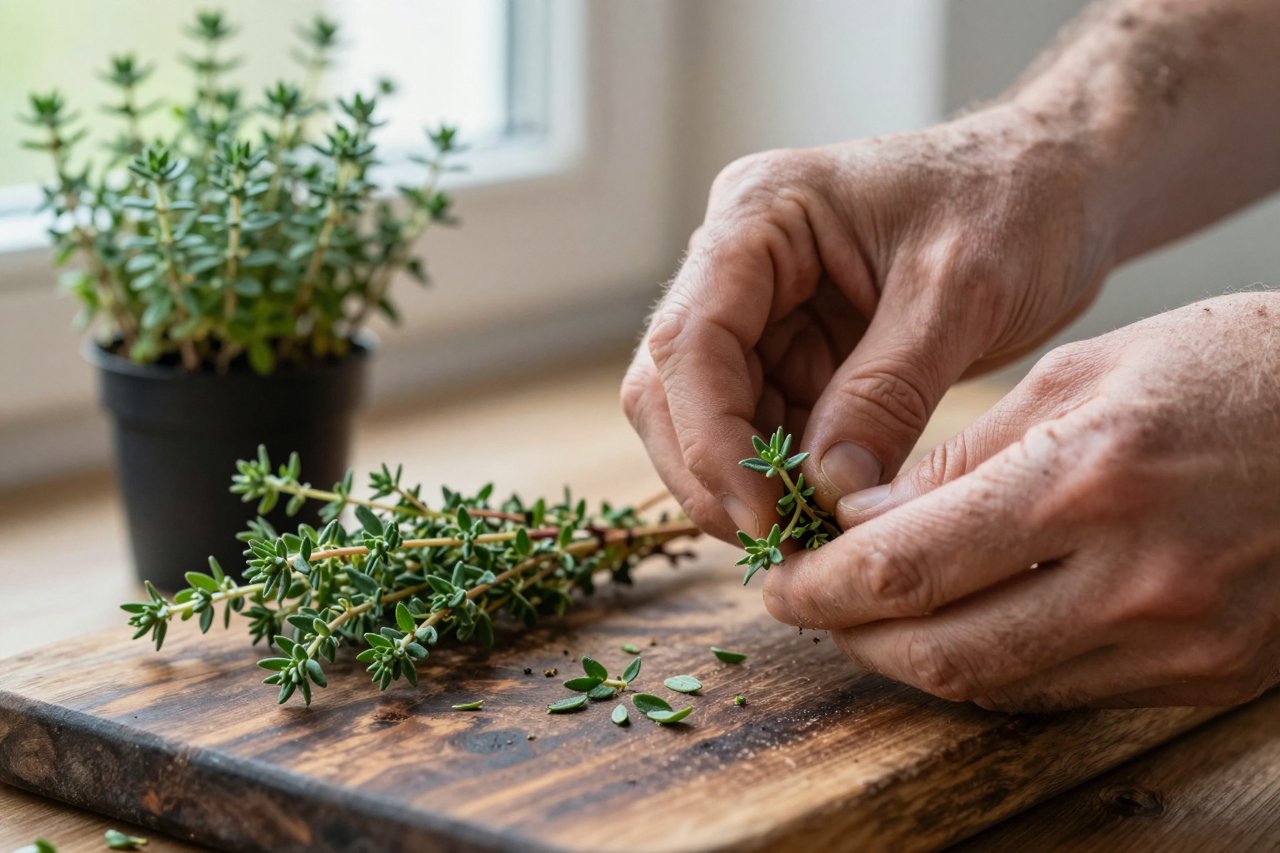
To strip leaves, hold the top of the sprig and run your thumb and forefinger down the stem against the direction of growth. It takes about ten seconds per sprig once you get the motion right. Keep the stripped woody stems in a bag in the freezer for stocks and roasting tins. A bunch will last ten days wrapped in damp kitchen paper in the fridge drawer, or standing stems-down in 2cm of water on the counter. Chop fresh thyme finely only if you don’t want the little leaves visible; otherwise leave them whole, because they hold their shape and their flavour better.
Five uses for one supermarket bunch
A 30g bunch is roughly 20 sprigs, which is enough for all of the following:
- A roast chicken: five sprigs in the cavity, three more under the skin.
- A tray of potatoes: one tablespoon of stripped leaves tossed through before roasting.
- 100g of butter: leaves from six sprigs mashed in for the week’s steak and toast.
- A pan of mushrooms: one tablespoon of leaves, added with the butter.
- A jar of syrup: the rest of the bunch, simmered with sugar and water for drinks and fruit.
Buy the bunch on a Friday and it has a job every day until the middle of the following week. Any sprigs left over can go straight into a bag in the freezer with a knob of butter, ready for the next roast.


