
Table of Contents
Ask ten people with arthritis what they eat to manage it and you’ll get ten different answers, plus a few arguments. One swears by olive oil and sardines. Another credits a vegan month with getting them off daily naproxen. A third cut carbs, dropped 15 pounds, and found their knees stopped complaining on stairs.
All three can be right, which is the frustrating part. There is no single arthritis diet, only a handful of eating patterns that each give something up to get something back. What follows is a straight comparison of the main options: what the evidence actually supports, what each one costs you in money and effort, and who tends to do well on which.
Four Eating Patterns, Four Very Different Trade-Offs
Almost every joint-friendly approach fits into one of four buckets: Mediterranean-style, a targeted elimination or anti-inflammatory reset, plant-based or vegan, and low-carb or ketogenic. They overlap far more than their fans admit. All four cut ultra-processed food, added sugar, and refined seed oils, and it is possible that this single shared habit is doing most of the heavy lifting.
What separates them is what they demand of you on a Tuesday night when you’re tired and the fridge is half empty.

The Mediterranean Diet: The Safe Default
If you want the option with the deepest evidence and the least weirdness, start here. Trials in rheumatoid arthritis have found that people eating Mediterranean-style report less pain and shorter morning stiffness than those on a standard Western diet, and the cardiovascular and metabolic bonuses are well documented on their own.
What you gain:
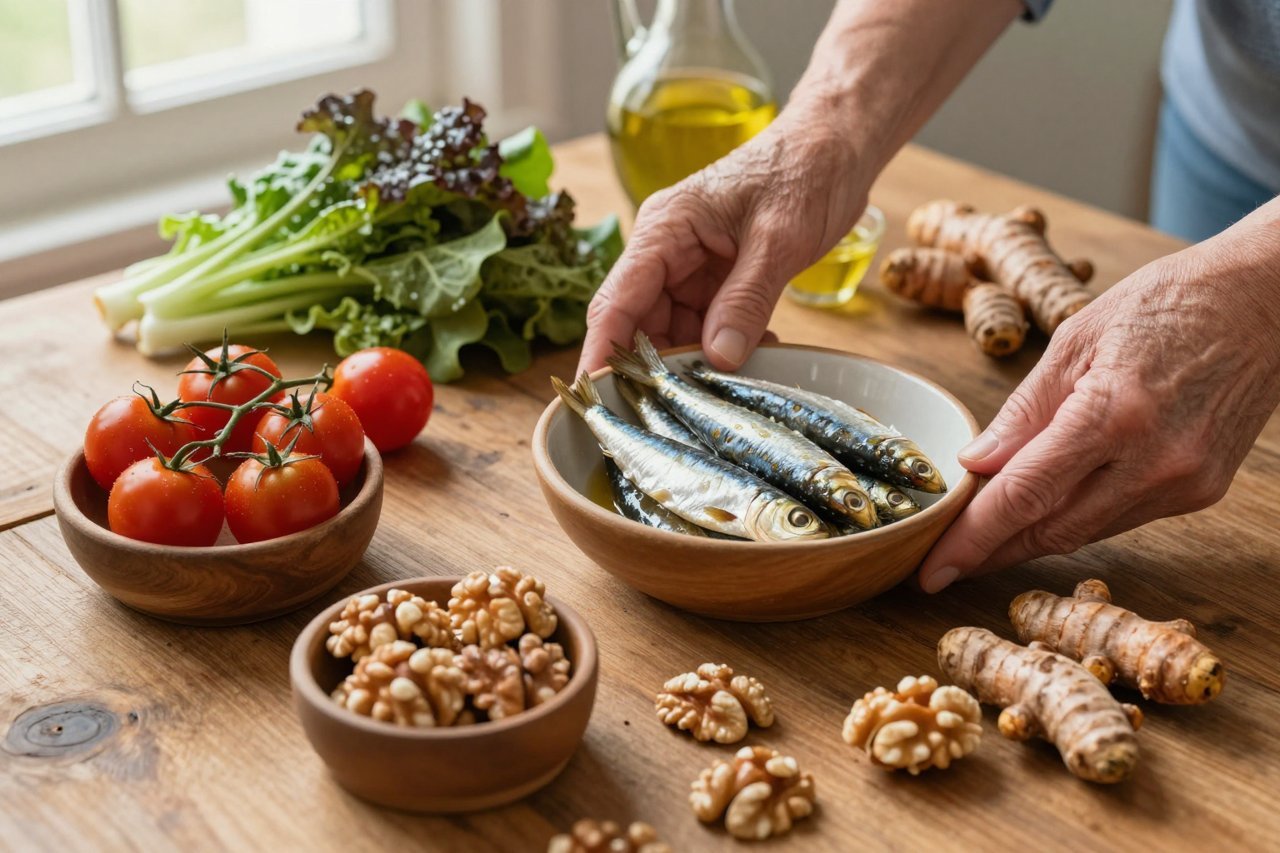
- Fatty fish two to three times a week (salmon, sardines, mackerel) for omega-3s
- Extra virgin olive oil as your main fat, roughly two to four tablespoons a day
- Beans, lentils, whole grains, vegetables, nuts, and fruit doing the bulk of the work
- Strong evidence base, and food you can eat at a restaurant without a briefing
What it costs you: patience. It works gradually, over months rather than days. It also does not eliminate anything, so if a specific food is your trigger, the Mediterranean pattern won’t find it for you. Fresh fish and good olive oil are expensive, and this way of eating assumes you cook.
There’s more than one version of it, too. If you want to see how the variations stack up, this comparison of different Mediterranean meal plan styles breaks down which format suits which kind of week.
Elimination and Anti-Inflammatory Resets: The Detective Work
This is the opposite philosophy. Instead of layering good foods in, you strip the usual suspects out for two to four weeks, then reintroduce them one at a time and watch your joints. Common candidates: nightshades, gluten, dairy, added sugar, alcohol, and refined oils.
The upside is real. Some people discover a genuine sensitivity this way, and a food that was quietly driving swelling shows itself within days of coming back. It’s also the fastest way to see results, which matters when you’re in pain and need motivation.
The downside is equally real. It’s restrictive, socially awkward, and hard to sustain past a month. Nutritional gaps creep in if you cut dairy and legumes without replacing the calcium and protein. And for people with a history of disordered eating, the tracking and rule-following can turn unpleasant fast.
If you go this route, do it as a structured trial with an end date, not as a new permanent identity. A guided step-by-step anti-inflammatory reset with planned meals is easier to finish than improvising, because the reintroduction phase is where most people quit.
Plant-Based and Vegan: Strong on Inflammation, Tricky on Nutrients
Plant-heavy eating scores well on inflammation markers, and it’s the pattern most likely to drop your weight without counting anything, which matters enormously for hips and knees carrying every extra pound.
The catch is that “vegan” describes what you don’t eat, not what you do. Chips, white bread, and coconut-oil desserts are vegan. A diet built on lentils, leafy greens, berries, walnuts, and tofu behaves very differently from one built on meat substitutes and packaged snacks.
Watch three nutrients specifically: vitamin B12 (supplement it), iron (pair plant sources with vitamin C), and omega-3s, which usually means algae oil since flax conversion is poor. Protein needs attention too, especially after 60. Roughly 1.0 to 1.2 grams per kilo of body weight is a reasonable target for most adults. And no, nightshades are not universally inflammatory, despite what you may have read; most people tolerate tomatoes and peppers fine. A broader guide to anti-inflammatory foods worth eating more of covers the specific items with the best evidence behind them.
Low-Carb and Keto: Great for Weight, Risky for Gout
Here’s where the trade-off gets sharp. Losing 10 percent of your body weight can meaningfully reduce knee osteoarthritis pain, and low-carb diets are an effective way to get there for people who struggle with hunger on low-fat plans. Many also report less pain and brain fog within the first few weeks.
But if you have gout, proceed carefully. Ketones and purines compete for the same kidney excretion pathway, and a very low-carb, high-meat diet can trigger a flare, especially in the first fortnight. Beer, organ meats, shellfish, and fructose-sweetened drinks remain the classic triggers. Some people also see their LDL cholesterol climb on keto, which is not a trade most cardiologists are comfortable with long-term. And the social cost is high, because almost every restaurant meal is built around bread, rice, or pasta.
Single-Food Fixes Versus a Whole-Diet Overhaul
There’s a middle path that gets overlooked in these debates: changing a handful of specific foods rather than adopting a named diet. A teaspoon of turmeric with black pepper. Two tart cherries’ worth of juice. Ginger tea. Green tea instead of a second coffee. Fatty fish twice a week.
Each of these has modest evidence, and none is a cure. Stacked together, though, they’re easier to maintain than any formal plan and can shave real points off a pain scale. If you’d rather test this route than commit to a full overhaul, a 10-day foods-for-arthritis plan is a low-risk way to find out whether food moves your symptoms at all.
How to Choose Without Wasting Six Months
Work through these before you shop:
- Which arthritis do you have? Gout argues against high-purine keto. Rheumatoid arthritis responds best to Mediterranean and plant-forward patterns. Osteoarthritis cares most about weight and movement.
- What’s your real blocker? If cooking is the issue, elimination diets will fail no matter how good they are. Pick the pattern that fits your actual evenings.
- Any medical rules? Kidney disease, diabetes medication, blood thinners (turmeric and fish oil both matter here), or a history of eating disorders should shape the choice, not the internet.
- Can you afford it for a year? A plan you abandon in March helps nobody.
For a broader look at how to fit these principles around real meals and real schedules, this practical guide to eating for joint relief is a solid companion to whichever path you pick.
Run a Three-Week Test Before You Commit
Pick one pattern. Run it for 21 days without layering in supplements, new exercises, or anything else that muddies the picture. Keep two numbers: how long your morning stiffness lasts, in minutes, and how many pain-relief tablets you take in a week. Rate your pain at the same time each evening, on a simple 0-to-10 scale, and write it on the fridge.
After three weeks you’ll have a genuine answer instead of a hunch. If morning stiffness drops from 45 minutes to 20 and you’re taking four tablets instead of nine, that pattern has earned a longer run. If nothing changes, you’ve spent three weeks and learned something worth knowing, and you can move to the next option with a clear head. Most people who stick with this end up on a Mediterranean-leaning diet with a few personal deletions and a couple of daily add-ons, which is neither glamorous nor a named plan. It’s just what their joints responded to.


