
Table of Contents
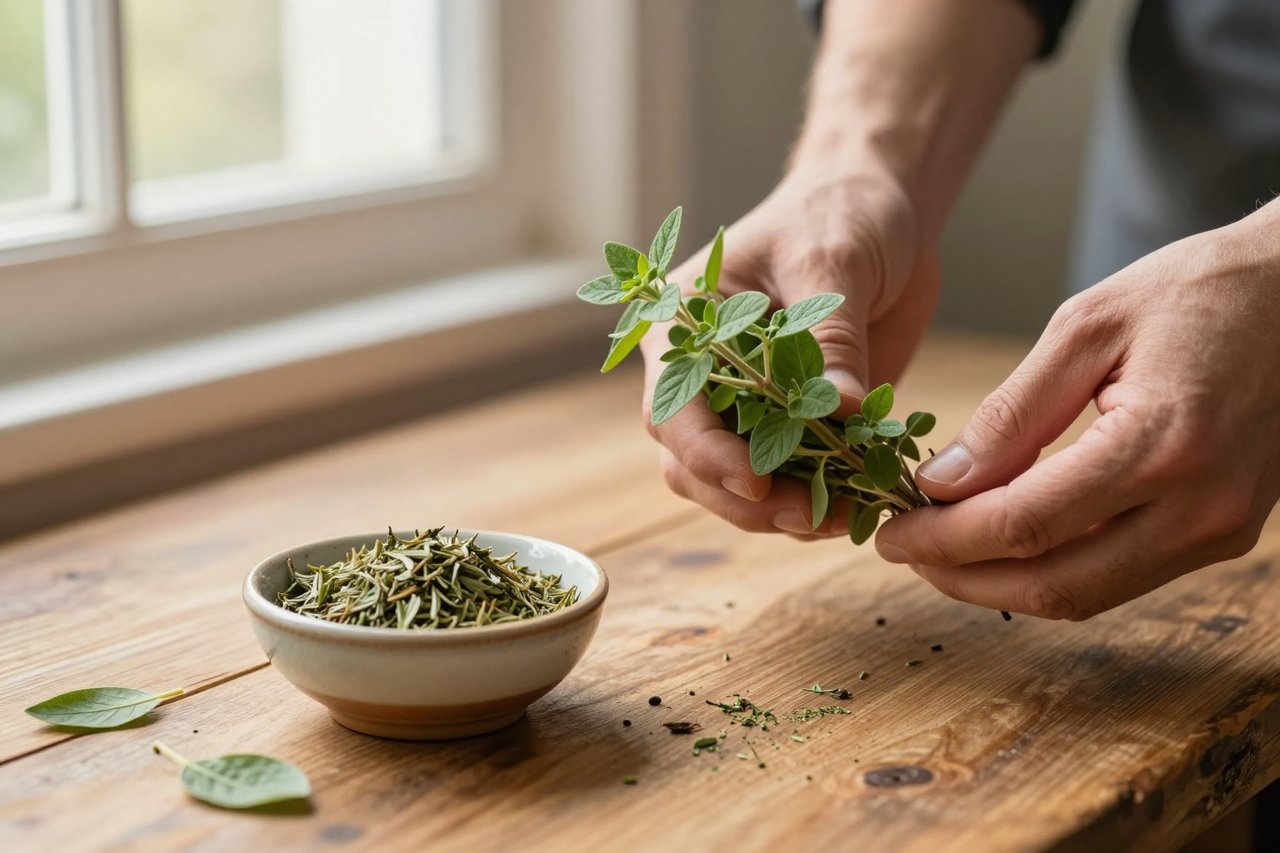
A bundle of fresh oregano from the market and a jar of dried leaves in the pantry can look like the same ingredient at two stages of life. They behave differently. Fresh oregano has a green, peppery snap that fades with long cooking. Dried oregano is more concentrated, earthier, and often the better choice for a pot of tomato sauce that will bubble for 40 minutes. Oregano: fresh vs. dried is less about one being superior and more about matching the form to the job.
What Fresh Oregano Brings to the Plate
Fresh leaves taste bright and herbal, with hints of mint, citrus peel, and tea. The stems are woody, so strip the leaves and discard the stems. One tablespoon of chopped fresh oregano stirred into a salad dressing adds more aroma than a teaspoon of dried, even if the dried version tastes stronger on its own.
Use fresh oregano where its texture and oils can survive. Think Greek salad with feta and cucumber, a quick marinade for chicken thighs, olive oil brushed over warm flatbread, or eggs folded with herbs just before they set. Add it at the end. A sprig tossed into a stew for the final five minutes is fine; 30 minutes of hard boiling turns it dull and bitter.
Best spots for fresh oregano
- Finishing a tomato salad or cucumber-yogurt dip
- Whisking into vinaigrette with red wine vinegar and Dijon
- Scattering over roast potatoes in the last 10 minutes
- Blitzing into a green sauce with parsley, garlic, and olive oil
- Laying under chicken skin before roasting
Fresh oregano also freezes well. Chop it, pack it into an ice cube tray, cover with olive oil, and freeze. Each cube is roughly 1 tablespoon of oil and herbs, ready for a skillet.

Why Dried Oregano Hits Harder
Drying removes water, so the remaining leaf is more concentrated by weight. The flavor shifts too. Dried oregano tastes earthier, more resinous, and a little bitter at the edges. That intensity holds up in long cooking, fatty meat, or acidic tomatoes. A half teaspoon rubbed into a pork chop can stand out; the same amount of fresh leaves would nearly vanish.
Dried oregano needs fat or heat to wake up. Crush the leaves between your fingers, then let them bloom in warm olive oil for 30 seconds before adding onions or garlic. That pulls out more aroma than dumping herbs into a cold pot.
The Conversion Math: 3-to-1, Then Taste
The usual rule: 1 tablespoon fresh chopped oregano equals 1 teaspoon dried. Going the other way, if a recipe calls for 1 teaspoon dried and you have fresh, use 3 teaspoons, or 1 tablespoon. This works for marinades, sauces, and roasted vegetables.
Treat the ratio as a starting point. Dried oregano varies wildly. A jar opened two years ago may taste like sawdust, while a fresh bag of dried leaves can be almost as loud as the fresh herb. Start with two-thirds of the converted amount, taste, then add more. In a raw dressing, dried oregano can feel gritty. In a 45-minute braise, fresh oregano can disappear.
Quick conversions
1 tsp dried = 1 tbsp fresh chopped. 1/2 tsp dried = 1 1/2 tsp fresh. 1 tbsp dried = 3 tbsp fresh. For big batches, 1 ounce of fresh leaves is roughly 3/4 cup loosely packed, though stem size makes that rough.
Flavor Differences You Can Actually Taste
Put a fresh leaf and a pinch of dried oregano side by side. The fresh leaf is juicy, grassy, and slightly numbing, with a clean finish. The dried version is drier, more medicinal, and leaves a faint bitterness. That bitterness is not a flaw. It is why dried oregano works with lamb, eggplant, and tomato sauce, where a little edge keeps things from tasting flat.
Mexican oregano is a different plant, with a stronger citrus and licorice punch. For chili or adobo, that is often the jar you want. Mediterranean oregano, fresh or dried, is gentler for Greek and Italian cooking.
Cooking With Fresh Oregano Without Wasting It
A supermarket bunch can cover four meals if you use it deliberately. Strip leaves on day one for a marinade. On day two, chop the rest into yogurt sauce. By day four, simmer the limp stems in tomato sauce and fish them out before serving. Do not treat the leaves like rosemary.
For quick oregano oil, warm 1/2 cup olive oil with 3 tablespoons fresh leaves over low heat for two minutes. Take it off the burner and let it sit for 20 minutes. Strain and spoon over grilled bread or fish. Do not fry the leaves crisp unless you want bitterness.
Where Dried Oregano Earns Its Jar Space
Dried oregano is the pantry workhorse. It belongs in a 30-minute tomato sauce, roasted chickpeas, a dry rub for steak, and spinach pie filling. Use 1/2 teaspoon for a four-serving pot of beans, or 1 teaspoon for a 24-ounce jar of tomato sauce. Add it early enough to hydrate, but not so early that it scorches in a dry pan.
Buy whole dried leaves rather than powder. Powder loses aroma faster and clumps. Crush the leaves yourself. Store the jar in a dark cabinet, not above the stove, and write the purchase date on the lid. Most dried oregano is at its best within 6 to 12 months, even if the jar says otherwise.
Buying and Storing Both Kinds
Fresh oregano should look perky, with no black spots or yellowing leaves. Wrap the bunch in a barely damp paper towel, tuck it into a plastic bag, and keep it in the crisper drawer. It will last about a week. Oregano tolerates cold better than basil, but it still hates standing water.
Dried oregano should smell sweet and peppery when you open the jar. If it smells like dusty hay, replace it. Keep it airtight and away from sunlight. Rub a pinch between your palms. Strong aroma means it still has life.
Freezing fresh oregano
Chop the leaves, pack them into ice cube trays, and cover with olive oil. Freeze, then transfer the cubes to a bag. Drop one into soup or sauce at the start of cooking. The oil carries the flavor and the herbs will not turn to slime.
When to Swap and When to Skip the Swap
Swapping works best in cooked dishes with fat and liquid. Fresh oregano can replace dried in a marinade, braise, or tray of roasted vegetables. Use three times the volume and add it closer to the end. Dried oregano can replace fresh in a long-simmered sauce, but it will not give you the bright, raw bite of a salad.
Skip the swap in uncooked dishes where the herb is the star. Dried oregano in a tomato sandwich or a bowl of whipped feta is gritty and harsh. Fresh oregano in a dry rub is too wet and bulky. Match the form to the texture you want, not just the flavor.
A Simple Taste Test for Your Own Kitchen
You do not need a chef’s palate to choose. Warm 2 tablespoons of olive oil in a small pan. Add 1/2 teaspoon dried oregano to one spoonful and 1 1/2 teaspoons fresh chopped oregano to another. Let both sit for five minutes, then taste each on plain bread. The dried version may taste more concentrated and slightly bitter; the fresh should taste greener and more aromatic. Keep notes on the jars you like. After a few rounds, you will know which one belongs in your tomato sauce and which one belongs on the salad.


