
Table of Contents
Most people walk into their first MMA class with two worries: that they’re too out of shape to keep up, and that someone is going to hurt them. Both concerns deserve respect. Neither is a good reason to stay on the sofa.
MMA training for beginners is unglamorous work. Your first few weeks are spent learning how to stand, how to move your feet, how to fall without smashing your tailbone, and how to escape from underneath someone twenty kilos heavier than you. There’s no cage-fighting glamour in any of it, which is exactly why it works. If you’re still deciding whether MMA is the right art for you at all, this breakdown of the best martial arts for beginners is a sensible place to look before you sign a twelve-month contract.
What Your First Month of Classes Actually Looks Like
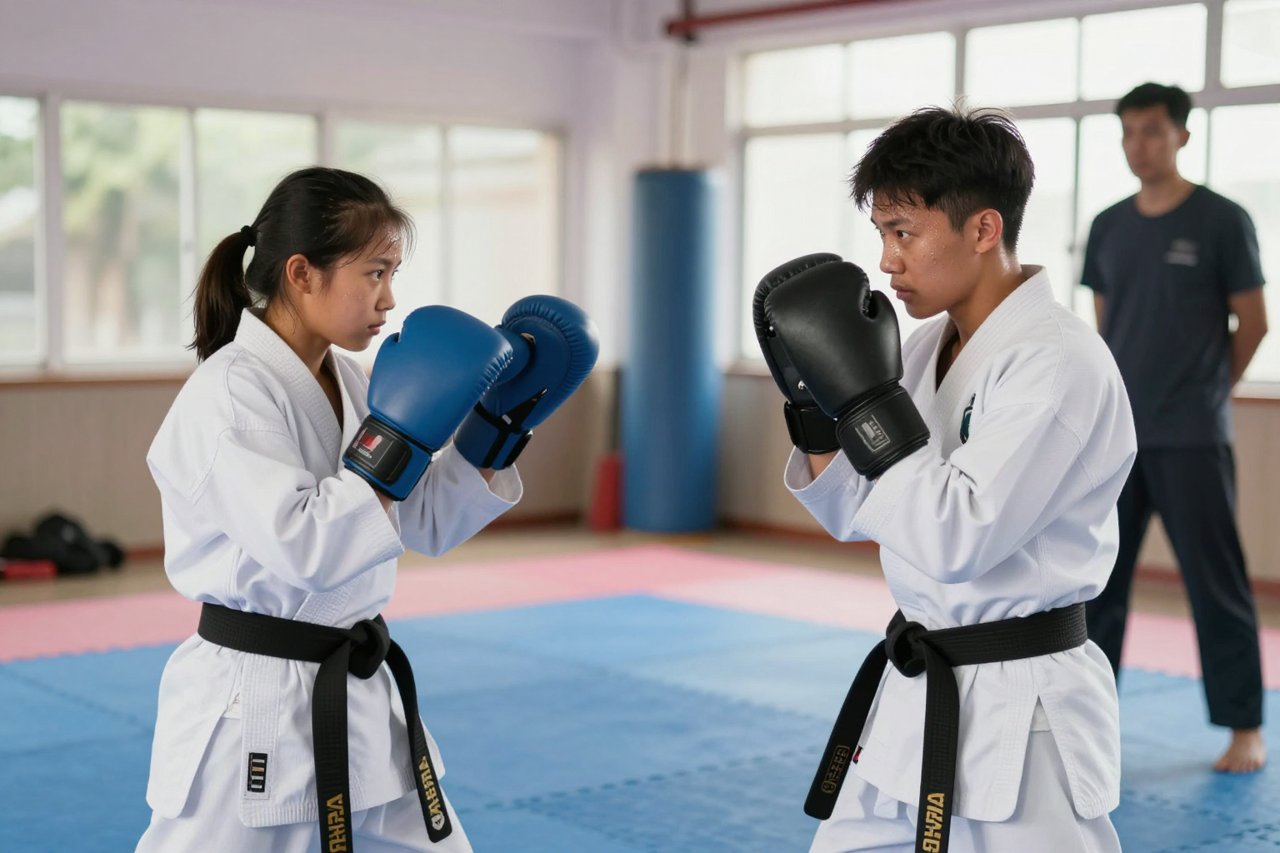
A beginner class runs 60 to 75 minutes and follows a predictable shape. Ten to fifteen minutes of warm-up: skipping, shrimping across the mat, hip escapes, sprawls, shoulder rolls. Then twenty-five to thirty minutes of technique, where the coach demonstrates one or two moves and you drill them with a partner until they stop feeling foreign. The last block is pads, positional sparring from a set start point, or conditioning.
Grappling fitness surprises everyone. Ten minutes of trying to escape from under a training partner will leave you breathing harder than a 25-minute run, and it has nothing to do with how much you can bench.

Nobody in the room is judging you
Beginner classes are usually half full of people in their first six months. The experienced guys are on the far side of the mat drilling for a competition you’ve never heard of. The person you’re convinced is watching you fumble a hip escape is thinking about their own footwork.
You will feel clumsy, and that’s the expected outcome
Throwing a jab without dropping your rear hand, or shrimping your hips out of mount without pushing with your arms, takes hundreds of repetitions before it looks like anything. Coaches assume you’ll look like a newborn giraffe in week one. That’s why they keep drilling the same three moves.
The Four Ranges You Have to Learn
MMA is unusual because it asks for competence at every distance a fight can happen at. Most gyms split training along those lines, and since no single style covers all four, any honest ranking of the most effective martial arts lands on a blend rather than one winner.
- Punching range. Boxing footwork, jab, cross, hooks, head movement, and the habit of keeping your chin tucked behind your shoulder.
- Kicking range. Low kicks, teeps and knees from Muay Thai, plus the balance to throw them without getting your leg caught and your feet taken away.
- The clinch. Underhooks, pummelling, wall work, trips and short punches from inside arm’s reach.
- The ground. Positional hierarchy, escapes, sweeps, submissions, and the patience not to panic when you’re pinned.
Beginners tend to fall in love with one range and quietly avoid the rest. The people who improve fastest are the ones who turn up to the grappling class even though it’s the most uncomfortable hour of their week.
MMA Is a Sport, Not a Self-Defence Course
This is worth being blunt about. Sport rules exist to keep you safe: no headbutts, no eye gouging, no strikes to the back of the head, weight classes, a referee within arm’s reach. All of that is good news for a beginner. It also means MMA doesn’t prepare you for a knife, three attackers, or a fight that kicks off in a car park. If personal safety is the actual goal, the comparison between Krav Maga and MMA spells out what each one genuinely covers.
How to Pick a Gym That Won’t Get You Hurt
Gym quality varies more in combat sports than in almost anything else. Two places can both advertise “MMA” while one is a serious competition gym and the other is a fitness boxing studio with a mat in the corner. Check these four things before you sign anything.
Ask directly about sparring
Good questions: when do beginners first spar, is it light or hard, is headgear required, is a coach watching? A decent answer names a timeframe, usually three to six months, and mentions controlled rounds. A bad answer is “whenever you feel ready” with nobody supervising.
Watch the room, not the promotional video
Do senior students help beginners? Does the coach correct people by name? Are the mats clean? Some gyms keep traditional elements in the warm-up and etiquette; others are strictly modern competition outfits. If the culture question matters to you, traditional martial arts versus modern martial arts covers the trade-offs.
Confirm a beginners’ programme exists
If the only option is the advanced class and you’re expected to survive, go elsewhere. An eight to twelve week fundamentals course is worth paying a little extra for, because it front-loads the safety basics you’ll rely on for years.
The Gear That’s Actually Worth Buying First
You can start with almost nothing. Most gyms lend gloves for the first few weeks. When you’re ready to spend:
- 16oz boxing gloves for sparring and pad work. 4oz gloves are for competition, not daily training.
- 180-inch hand wraps. Learn to wrap properly; your knuckles will thank you.
- A fitted mouthguard. Not the boil-and-bite version that drops out mid-round.
- Shin guards and a cup once kick sparring starts.
- Rashguard and no-gi shorts. Skip the branded fight kit for now.
Budget roughly $150 to $250 for the full set. Don’t buy the $300 starter bundle in week one, before you know whether you’ll still be turning up in March.
A Weekly Schedule That Won’t Break You
Three classes a week is plenty for the first three months: one striking, one grappling, one mixed. Add two short strength sessions built around squats, rows, push-ups and carries, plus one easy run or row. Take at least two full rest days.
The pattern that ends most beginners’ training is six sessions in week one, elbow tendinitis by week three, then six weeks off. Connective tissue adapts slower than enthusiasm. If you’re training partly to lose weight, this look at what actually burns fat in martial arts is a useful reality check, because a hard class burns a lot and the post-training appetite can undo it.
Mistakes Beginners Make in the First Six Months
- Sparring hard to prove a point. Ego rounds are how new students get concussed and quit by month four.
- Skipping grappling. It’s awkward, it’s sweaty, and it’s half the sport.
- Training through a niggle for weeks. Three days off early beats three months off later.
- Comparing yourself to people on social media who train twice a day and edit out every bad round.
What Six Months of Showing Up Actually Gets You
Concrete benchmarks, not vibes. After six months of three sessions a week, a typical beginner can hold three five-minute rounds of light sparring without gassing out completely, escape mount and closed guard against someone their own size, name the main positions without hesitating, and recognise danger positions before they’re stuck in them. You’ll also be the person a brand-new student gets paired with, which is when you realise how much you’ve picked up.
If competition appeals, most amateur promotions run beginner grappling brackets or amateur MMA bouts after about a year of consistent training. Nobody expects you to be ready sooner, and the coaches who push you into a cage at month three are telling you something about how they run their gym.
Pick a gym, book the trial class, and judge everything after you’ve actually sweated through one session. That’s the entire entry fee.


