
Table of Contents
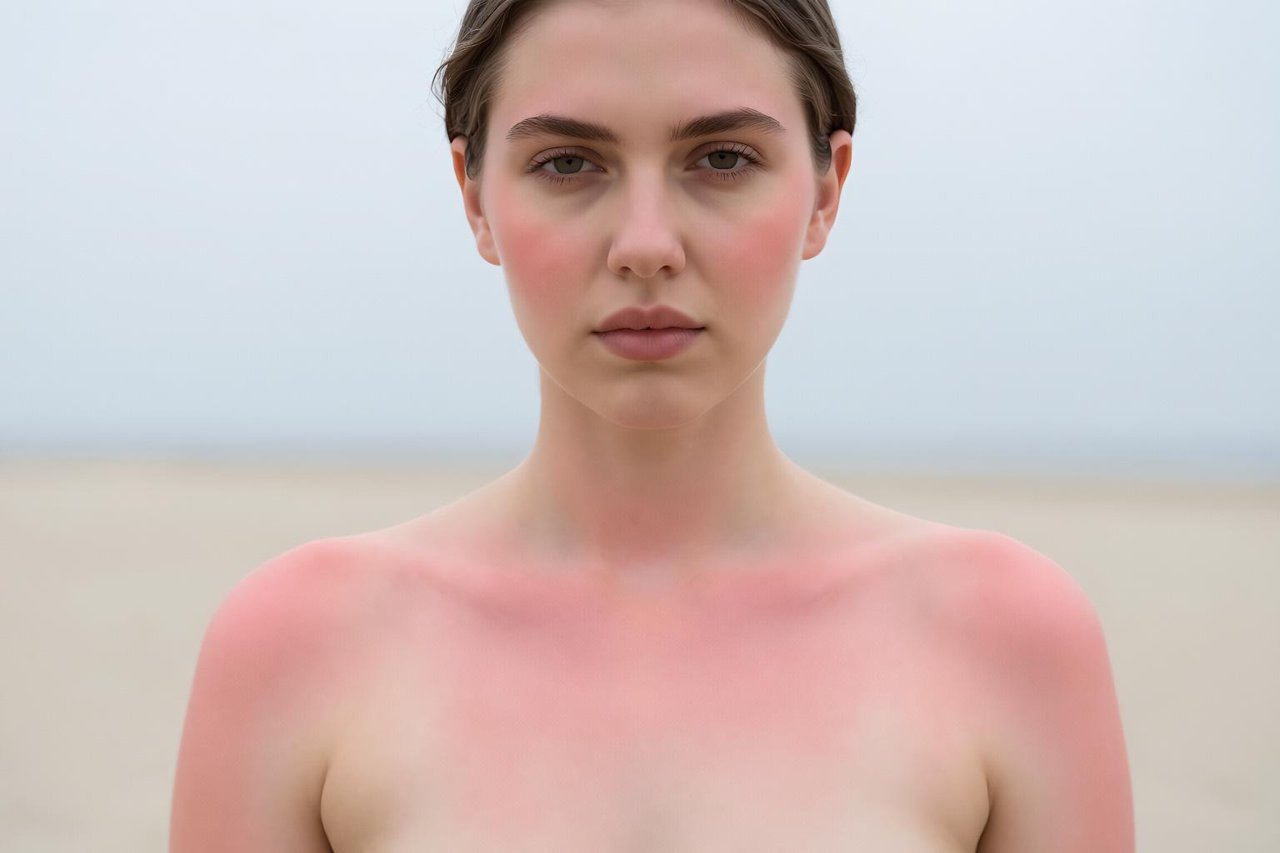
It’s 19°C, the sky is one flat sheet of grey, and sunscreen is the last thing on your mind. Six hours later your shoulders are tight, pink and radiating heat. That’s the classic cloudy-day sunburn, and it catches out a surprising number of people every single summer.
So can you get sunburned on a cloudy day? Yes, easily. Cloud cover slows down your UV dose. It doesn’t switch it off. Under the right conditions you’ll pick up 80% or more of the ultraviolet radiation you’d get in full sunshine, and the cool air means you’ll stay out far longer than you should.
Why Clouds Don’t Protect You the Way You Think
The sunburn you can see and feel comes from ultraviolet radiation, which is invisible and carries no heat. That’s the key point. A cloud can thin out visible light enough to make the day feel dull and cool while UVB and UVA keep pouring through.
Clouds work a bit like a sieve with an unpredictable mesh. Some of the UV gets scattered and absorbed, but the amount varies wildly depending on cloud type, thickness, altitude and how much of the sky is covered. Meteorologists call this the cloud modification factor, and it swings from almost full blockage to almost none.

Thin, high cloud is the sneakiest
Cirrus and thin altostratus create a bright but hazy sky. They block so little UV that roughly 80 to 90% still reaches the ground. The light looks soft, the shadows disappear, and your skin gets a near-full dose while your brain registers “not a sunny day.”
Heavy overcast still lets plenty through
Even a thick, dark, rain-threatening layer typically transmits 10 to 25% of UV. That sounds harmless until you do the maths. On a midsummer day with a clear-sky UV Index of 9, that leftover 25% gives you an effective index of about 2. Fair skin can burn in under an hour at that level. Spend three hours gardening and the damage is done.
Broken cloud can actually increase your dose
This one surprises people. Patchy, puffy cumulus with gaps of blue between them can bounce UV off the bright cloud edges and push your exposure above the clear-sky level, sometimes by 20 to 25%. You end up with a stop-start blast of intense sun that’s easy to underestimate.
The Temperature Trap
Heat and UV are two different things, and confusing them is how most cloudy-day burns happen. On an overcast 20°C afternoon you don’t feel prickling skin, you don’t squint, you don’t seek shade. So you take your shirt off for the garden, eat lunch outside for an hour, walk the dog the long way round.
Compare that to a blazing 32°C day, when you instinctively move to shade, cover up and cut your exposure short. The overcast day wins the sunburn contest almost every time, purely because nobody is on guard.
Who Burns Fastest When the Sun Isn’t Out
Anyone can burn under cloud, but some people hit their threshold much sooner:
- Fair skin, red or blonde hair, freckles. Fitzpatrick types I and II can burn in 20 to 30 minutes at a UV Index of 6.
- Children and teenagers. Thinner skin and far more time outdoors. Much of a person’s lifetime UV dose is banked before adulthood.
- Anyone on photosensitising medication. Doxycycline, some acne treatments like isotretinoin, certain diuretics, and even high-dose ibuprofen can make skin react faster to UV.
- People with photosensitive conditions such as lupus, rosacea or polymorphic light eruption, where even low-level UV triggers a rash.
- Travellers at altitude. UV strength climbs roughly 10% for every 1,000 metres of elevation, so a cloudy day in the mountains is not a cloudy day at sea level.
- Anyone who’s already caught some sun in the past day or two. Damage stacks.
Surfaces That Double Your Dose
Reflection is the quiet multiplier on grey days, because UV bounces off surfaces and hits you from below as well as above.
Snow is the worst offender, throwing back 80 to 90% of UV and producing sunburn on the underside of the chin and nose. Dry sand returns around 15 to 25%. Water reflects less directly, maybe 10 to 30% depending on the angle of the sun and how choppy it is, but swimming also washes sunscreen off and keeps you wet and cool, so you don’t notice the burn building. Pale concrete, light-coloured boat decks and sea walls all add a few percent.
Car windows deserve their own mention. Windscreens are laminated and block most UVB, but side and rear windows in many vehicles let a lot of UVA through. That’s why long-distance drivers and couriers often show more sun damage and more skin cancers on the arm nearest the window.
Read the UV Index, Not the Sky
The most useful habit you can build is checking the UV Index instead of looking out of the window. It’s a 0 to 11+ scale that already factors in cloud, altitude, ozone and time of year.
Rough guide: below 3 is low, 3 to 5 moderate, 6 to 7 high, 8 to 10 very high, 11+ extreme. Anything at 3 or above warrants sunscreen and a hat, and it’s worth remembering that UV peaks between about 11am and 3pm regardless of what the clouds are doing. During summer in much of Australia, southern Europe and the southern United States, the index sits above 8 for hours at a time, cloud or no cloud.
Protecting Yourself When the Sun Isn’t Out
The routine is identical to a sunny day. It just feels less obvious.
- Broad-spectrum SPF 30 or 50, applied 15 to 20 minutes before you go out. Use about two tablespoons for the body and half a teaspoon for the face and neck. Most people apply a quarter of what they should.
- Reapply every two hours and straight after swimming, sweating heavily or towelling off. A “once a day” formula is only once a day if you don’t rub, swim or sweat.
- Don’t rely on SPF in moisturiser or foundation for a full day outdoors. You’d need seven times the normal amount to hit the label rating.
- Wear UPF 50 clothing for long stints outside. A plain cotton T-shirt gives you roughly SPF 5 to 7, and less when it’s wet.
- A wide-brimmed hat with at least a 7.5cm brim covers the ears, nose and neck, which are the top spots for skin cancer.
- UV400 sunglasses, because your eyes and eyelids burn too, and UV exposure drives cataracts and ocular melanoma.
- Shade, especially for babies under six months, who shouldn’t use sunscreen at all.
Check expiry dates as well. A bottle that’s been baking in the car since 2022 has lost a chunk of its protection, and the label number only holds if the product is still in date and stored reasonably.
If You Realise You’re Already Pink
Sunburn keeps developing for several hours after you come inside, so what you see at 4pm may look worse at 10pm. Get out of the sun immediately, take a cool shower, and moisturise with something plain and fragrance-free. Drink more water than you think you need, since burnt skin loses fluid fast. Ibuprofen helps with the swelling and stinging if you can take it.
See a doctor if you have blistering over a large area, severe pain, fever, chills, headache or nausea. Those are signs of sun poisoning rather than a simple burn, and they need proper medical care. Any mole or patch of skin that changes after a burn is worth showing to a GP or dermatologist.
A Cloudy Forecast Is Still a Sun Forecast
The mental shift that solves this whole problem is simple. Stop treating cloud as protection and start treating it as camouflage. Overcast skies hide the warning signals, cool air removes the discomfort, and flat grey light makes a UV Index of 7 feel like a walk in the park.
Keep a bottle of sunscreen by the door, a hat on the hook next to it, and check the UV Index alongside the temperature when you plan your day. Ten seconds of checking beats a week of peeling shoulders, and it’s the one sun habit that works exactly the same whether the sky is blue or battleship grey.


