
Table of Contents
A $28,000 sedan can quietly turn into a $55,000 purchase. Not because the dealer did anything wrong, but because the sticker price is only the first of six or seven payments you’ll make on that car. AAA’s annual driving costs study puts the average new vehicle at roughly $12,000 a year to run, or about 80 cents a mile. Depreciation alone eats a third of it.
So the useful question isn’t which car is cheapest on the lot. It’s which one is cheapest to keep, and why. Here’s the breakdown, plus the models that keep landing at the bottom of the cost tables year after year.
The Five Bills You’re Actually Paying
Ownership cost is a stack of numbers, and they don’t move together. A car that wins on one line often loses on another.
- Depreciation. The gap between what you pay and what it’s worth when you sell. A typical new car sheds 45-50% of its value in five years, and around $4,000 in year one alone.
- Fuel. Anywhere from $700 a year in an efficient hybrid to nearly $2,800 in a 15-mpg truck, assuming 15,000 miles.
- Insurance. Full coverage averages somewhere around $1,800-$2,300 a year nationally, but the spread between a base Corolla and a loaded performance trim is wide enough to matter.
- Maintenance and repairs. Budget $500-$700 a year for a reliable compact. Double it for anything European and out of warranty.
- Financing, registration and taxes. At 7% on a $30,000 loan over 60 months, you hand over about $5,600 in interest before you’ve fixed a single thing.
The Models That Keep Showing Up
These aren’t guesses. They’re the cars that consistently score well on depreciation, insurance groupings, and long-term repair data at the same time.

- Toyota Corolla. 35 mpg combined, cheap insurance for the class, and five-year depreciation in the low-to-mid 30s instead of the mid 40s.
- Honda Civic. Similar profile, slightly higher premiums, notably stronger resale on hatchbacks and the Si.
- Toyota Camry. The 2025 LE hybrid is rated at 51 mpg combined. A mid-size sedan that sips fuel like a subcompact.
- Toyota Prius. 57 mpg combined on the LE trim, and brake pads that routinely last past 100,000 miles thanks to regenerative braking.
- Mazda3. Around 31 mpg combined on the front-drive sedan, no turbo on the base engine, repair costs close to Honda and Toyota.
- Hyundai Elantra. 31-37 mpg depending on trim, low insurance groupings, and a long warranty that props up used values.
Why the Corolla and Civic Keep Winning
Both cars share a deeply boring advantage: they’ve been built in enormous numbers for decades. A rebuilt alternator for a 2015 Corolla costs about $150, and every independent shop in the country has replaced one. Compare that to a low-volume European import where a single sensor runs $400 and the labor book time doubles because the technician has never touched that engine bay.
It’s not a coincidence that the models near the top of the U.S. sales charts are also the ones that are cheap to keep running. The best-selling cars in America win partly on parts availability, a deep bench of mechanics who know them, and enough aftermarket competition to keep repair prices honest.
The Warranty Play
Hyundai and Kia’s 10-year/100,000-mile powertrain coverage drops to 5 years/60,000 miles for later owners, but the 5-year/60,000-mile bumper-to-bumper coverage carries over in full. That does two things for ownership cost. It removes the scariest repair bills during the years you’re most likely to face them, and it lifts resale value because the second buyer inherits real protection.
Depreciation Does More Damage Than Fuel Ever Will
Take a $32,000 crossover. At 48% depreciation over five years, you lose roughly $15,400 in value. Fuel at 15,000 miles a year and $3.40 a gallon in a 28-mpg vehicle comes to about $9,100 over the same stretch. Depreciation is the bigger number, and almost nobody shops for a car by comparing it against gas receipts.
Models that hold their value do it for predictable reasons: steady demand, a reputation for durability, and thin factory incentives that stop used prices from collapsing. Cars with the lowest depreciation aren’t always the cheapest to fuel or insure, but they hand you back thousands of dollars on the way out the door. That return matters more than saving $8 a week at the pump.
Cheap Sticker, Expensive Life
The Nissan Versa starts at just over $17,000, which makes it the least expensive new car in America on paper. Insurance isn’t dramatically lower than a Corolla’s, though, and small cars tend to take a harder hit on resale. The monthly payment is smaller. The total cost of ownership isn’t automatically smaller with it.
The same trap shows up in trim choices. Moving from 17-inch to 19-inch wheels can add $200 per tire, and low-profile rubber wears faster. A sunroof, adaptive dampers, or a small turbo engine all add failure points that get expensive around year seven, exactly when the warranty is gone and the car is worth less than the repair bill.
The Electric Shortcut Has a Catch
Battery-electric cars rearrange the cost structure. Charging at home runs roughly $500-$700 a year for 15,000 miles, against about $1,700 for a 30-mpg gas car at $3.40 a gallon. There’s no oil to change, no spark plugs, no exhaust system, and regenerative braking stretches a set of pads well past 100,000 miles. Even the cheapest electric cars you can buy in 2025 undercut comparable gas models on fuel and routine service.
The catch sits on the insurance line. EVs cost more to cover because repairs are pricier and insurers total them out sooner. More than 30 states also charge an annual EV registration fee in the $100-$250 range to offset lost fuel tax. Add $600-$1,500 for a 240-volt charger install if your garage doesn’t have one. Run the whole stack before assuming the math wins.
What to Check Before You Sign Anything
You can predict most of a car’s ownership cost before you buy it, if you’re willing to spend 20 minutes on it.
- Get an insurance quote using the VIN, not the model name. Trim level alone can shift a premium by $600 a year.
- Check whether the engine uses a timing belt or a chain. A $900 belt service at 90,000 miles is a real cost; a chain usually isn’t.
- Price the tires. Look up the exact size on the car you’re considering and see what a replacement set costs.
- Ask whether the factory warranty transfers and for how long.
- Buy the volume model, not the rare one. Obscurity is expensive at the parts counter.
- Skip the turbo and the dual-clutch if you’re planning to keep the car past 120,000 miles.
The Exit Is Part of the Cost
The final number in the calculation is what the car is worth when you’re finished with it. Dealer trade-in offers typically land 10-20% below private-party value, and that gap widens fast if the car has a dented quarter panel or a rebuilt title. Knowing how to sell a damaged car without leaving money on the table can be worth a couple of thousand dollars on a single transaction, which is more than most people save on fuel in three years.
Habits That Cut the Bill on Any Car
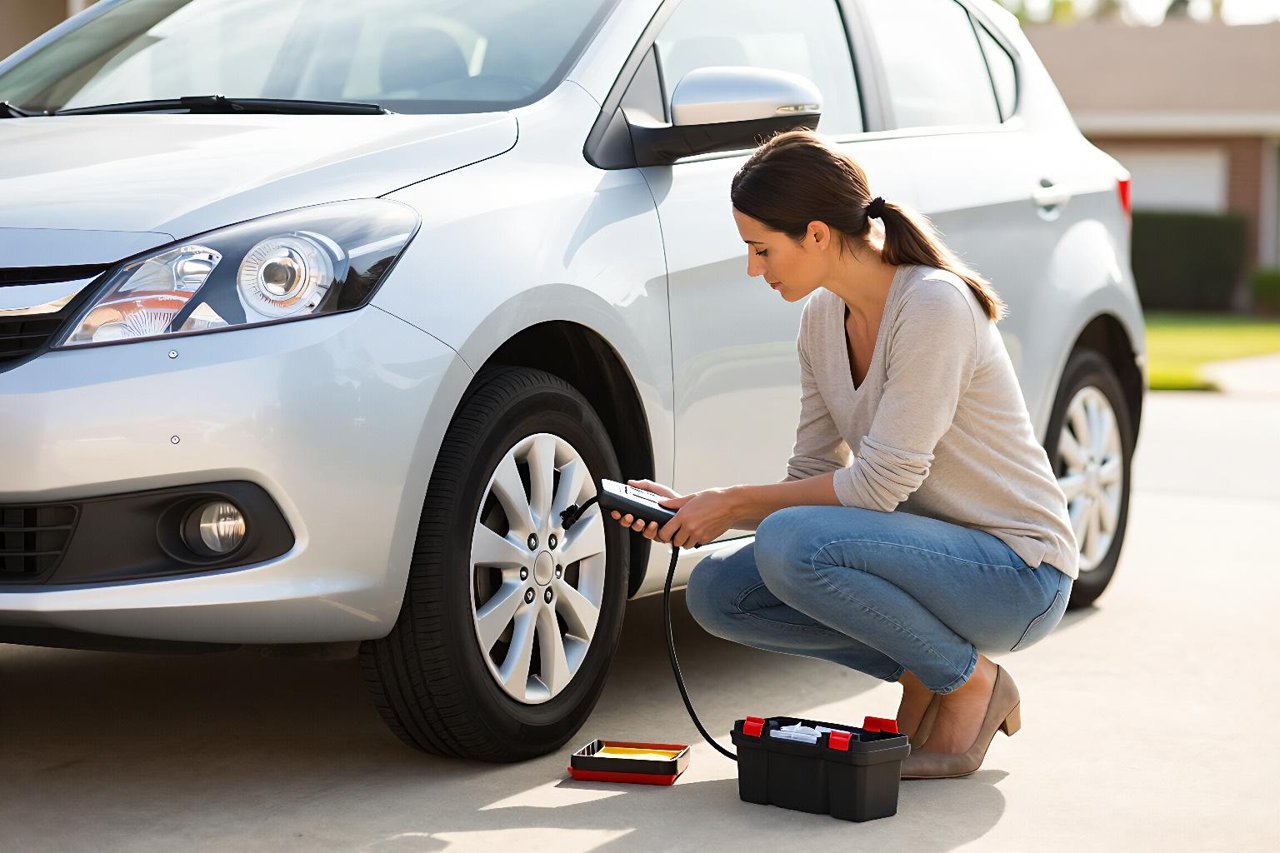
Ten minutes a month of attention goes further than most people expect. Tires running 5 psi low cost you 1-2% in fuel and wear out sooner. Short-trip driving counts as severe service, so follow the shorter oil interval in the manual rather than the marketing-friendly one. Brake fluid every 30,000 miles and coolant at 60,000 prevent the kind of corrosion that turns a $120 service into a $1,400 radiator job.
Use regular fuel if the manual specifies regular. Premium in a car tuned for 87 octane buys nothing but a lighter wallet. Raise your insurance deductible to a level you could actually cover in cash and bundle your homeowners or renters policy for the multi-policy discount, which is often 10-25%.
Then there’s the biggest lever of all: how long you keep the car. Financing a new vehicle every four years means you’re permanently in a payment cycle and permanently absorbing the steepest part of the depreciation curve. Buying a well-chosen model and driving it for ten years gives you six payment-free years, and those years are where the real savings pile up. Pick a car that’s cheap to insure, cheap to fix, and slow to lose value, then let the odometer do the rest.


