
Table of Contents
A cat can drink what looks like two sips a day, eat normally, sleep in the sun, and still be quietly dehydrated. Then a routine blood panel comes back with a raised kidney value, or the litter tray starts producing small hard stools, and the water bowl becomes the most important object in the house.
The reason is genetic. Domestic cats descend from African wildcats that hunted in dry country and got nearly all their moisture from prey. A mouse is about 70% water. A bowl of kibble is closer to 10%. Cats kept the low thirst drive that suited a desert hunter, and most won’t drink to make up a shortfall even when their body needs it. So getting a cat to drink more is rarely about willpower. It’s about making water easier to find and more appealing.
How Much Water Does a Cat Actually Need?
The rough guide is 3.5 to 4.5 ounces of water per 5 pounds of body weight each day. For a 10-pound cat that’s around 200 to 270 ml, or roughly a mug. A big Maine Coon needs more; a petite 7-pound cat less.
What that number hides is food. Wet food is 75–80% water. Dry food sits near 10%. A cat on kibble has to drink almost the entire daily requirement from a bowl, and many voluntarily drink half of it. Switch part of the diet to wet food and the arithmetic changes fast — two 3-ounce cans supply roughly 130–140 ml of water before the cat touches a bowl.

Water does more than flush the bladder. It keeps stools soft, because fibre needs fluid to do its job — which is why a high-fibre diet for hairballs and constipation only helps if your cat is actually drinking. It also supports kidney function and dilutes the minerals that form crystals.
Signs Your Cat Isn’t Drinking Enough
Cats hide dehydration well. These are the things worth checking:
- Gums that feel tacky rather than slick when you touch them
- Skin on the back of the neck that stays tented instead of springing back
- Small, dry, hard stools, or a cat straining in the litter box
- Dark yellow urine in small amounts with a strong smell
- Lethargy, reduced appetite, or a coat that starts looking dull
- In males especially: repeated trips to the tray with little or nothing produced, which is an emergency
One flag goes the other way. A cat that suddenly drinks far more than usual also needs a vet, since increased thirst can point to kidney disease, diabetes or an overactive thyroid.
Nine Practical Ways to Get a Cat to Drink More Water
1. Make wet food the centre of the diet
This beats every gadget on the market. Even replacing one meal a day with a pâté or shredded wet food moves the needle. Look for a named meat as the first ingredient and a moisture content of at least 75%. The best cat food recommended by vets is almost always a wet or mixed diet, for exactly this reason. If your cat is carrying extra weight, these wet and dry foods for indoor cats are built for that balancing act.
2. Turn dinner into soup
Add a tablespoon or two of warm water to the bowl and mash it through. Most cats accept gravy happily. Increase gradually — a quarter teaspoon at a time over a week — or your cat will notice and walk off. Warm water also releases aroma, which is what actually drives a cat’s appetite.
3. Try a fountain, but keep it clean
Many cats prefer moving water because it signals freshness. A fountain can genuinely double intake for the right cat. But a fountain growing biofilm is worse than a bowl: rinse the reservoir every two or three days, scrub weekly, and swap the filter monthly. If your cat ignores a sparkling fountain, they may be one of the many who prefer still water.
4. Rethink the bowl itself
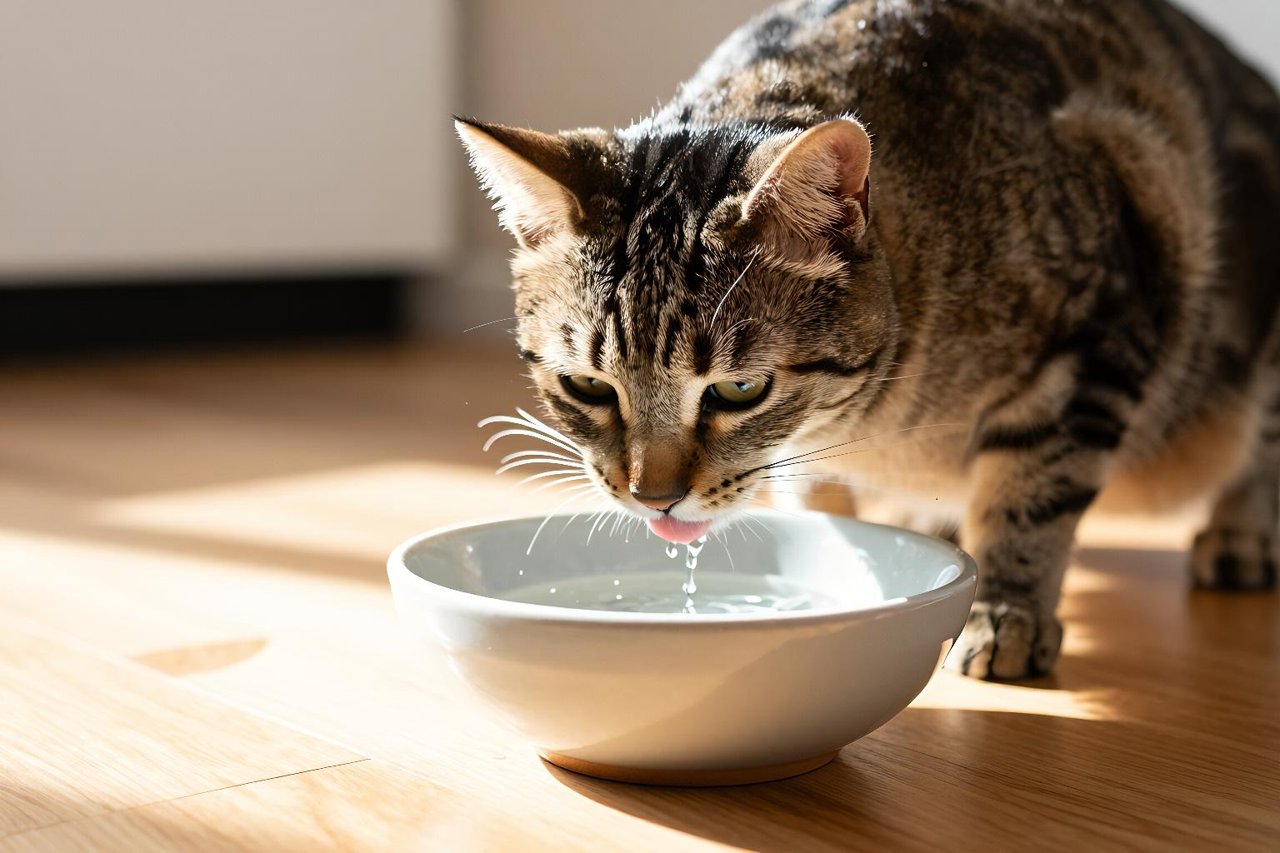
Whiskers are sensitive. A narrow, deep bowl forces them against the sides, and some cats drink less to avoid it. Use a wide, shallow ceramic, glass or stainless steel dish. Plastic holds odours and scratches into bacteria-friendly grooves. Fill it near the brim so the cat barely has to dip its nose in.
5. Put water where the cat actually goes
One bowl in a kitchen corner is rarely enough. Cats often prefer water away from their food, an instinct from avoiding water contaminated by carcasses, and well away from the litter tray. Set out three or four stations: a hallway, a favourite sleeping spot, a windowsill. Some cats drink far more from a glass left on a side table than from any bowl, so leave one there on purpose.
6. Add a little flavour
A teaspoon of water from a can of tuna in spring water, or a splash of unsalted onion-free chicken broth, makes an ordinary bowl interesting. Never use brine, stock cubes, or anything containing garlic or onion, both of which are toxic to cats. Plain lactose-free pet milk is fine in small amounts; ordinary cow’s milk will upset most adult cats.
7. Experiment with temperature
Some cats drink noticeably more from cool water with an ice cube in it. Others turn their nose up at anything cold and want it room temperature. Test each for a few days before deciding.
8. Let a tap drip
If your cat stages sit-ins at the bathroom sink, that’s a real preference, not a quirk. A slow drip costs very little and can be the difference between a cat that drinks and one that doesn’t.
9. Feed water as a treat
Freeze wet food or broth into ice cube trays for a hot afternoon. Smear pâté mixed with water onto a lick mat. Both count as intake and take a bored cat ten minutes to finish.
Things That Backfire
Don’t add salt to food or water to make your cat thirsty. It’s a genuine health risk. Don’t syringe water into a cat’s mouth unless a vet has told you to; the risk of aspiration is real and it makes the cat distrust being handled. And never restrict water, even for a cat with a bladder issue, because less fluid is exactly the wrong move. If you’re switching from dry to wet food, spread it over a week or two — a sudden change can cause vomiting or diarrhoea, which is its own kind of fluid loss.
Stress, New Surroundings, and the Cat That Stops Drinking
Water habits are behavioural too. A cat that has just moved house, lost a companion, or had a new pet added often drinks less for a few days. If your cat is settling into a new home and hiding under the bed, put a water station in the room they’ve chosen, close to their safe spot, and leave them to explore. Boredom plays a part as well, since under-stimulated indoor cats often eat and drink out of habit rather than need — the ideas in this guide to keeping an indoor cat happy work well alongside a hydration plan.
When It’s a Medical Problem
If a cat that has always drunk normally suddenly avoids water, or drinks dramatically more, book a vet visit. Dental pain, nausea, chronic kidney disease, diabetes, hyperthyroidism and feline lower urinary tract disease all change drinking behaviour. So does a blocked urethra in a male cat, which can be fatal within a day or two without treatment. Persistent reluctance to drink is a symptom, not a personality trait.
A Seven-Day Reset That Usually Works
Don’t change everything at once. You won’t know what worked, and your cat will notice the upheaval.
- Day 1: Put out three wide, shallow bowls in different rooms, filled to the brim. From now on, change the water twice a day.
- Day 2: Move the main bowl away from the food and any litter tray.
- Day 3: Add a tablespoon of warm water to one meal and mash it through.
- Day 4: Introduce one can of wet food, or swap one meal if you’re already feeding wet.
- Day 5: Try a fountain, a dripping tap or a glass on the counter, whichever is easiest.
- Day 6: Test a flavour addition such as tuna water, or an ice cube.
- Day 7: Measure how much your cat drinks from a bowl over 24 hours, and note how many wet meals they had.
Keep the two or three things your cat responded to and drop the rest. Most owners find that wet food plus a couple of extra bowls accounts for nearly all the improvement, and that the fountain was either a hero or an expensive ornament, depending entirely on the cat.


