
Table of Contents
Most kittens already know more than you think
A four-week-old kitten watches its mother scratch at a surface, dig, and cover. By eight weeks, when that kitten is riding home in a carrier, the behaviour is half-learned. That’s good news. Your job is less about teaching a skill from scratch and more about not confusing a kitten whose instincts are already pointing the right way.
So the plan is simple: set up the box properly, place the kitten in it at the right moments, and remove any reason it might prefer your duvet. Most kittens get it within three to seven days. A few take two weeks. If it’s stretching past that, something in the setup is usually wrong, not the kitten.
Get the box right before anything else
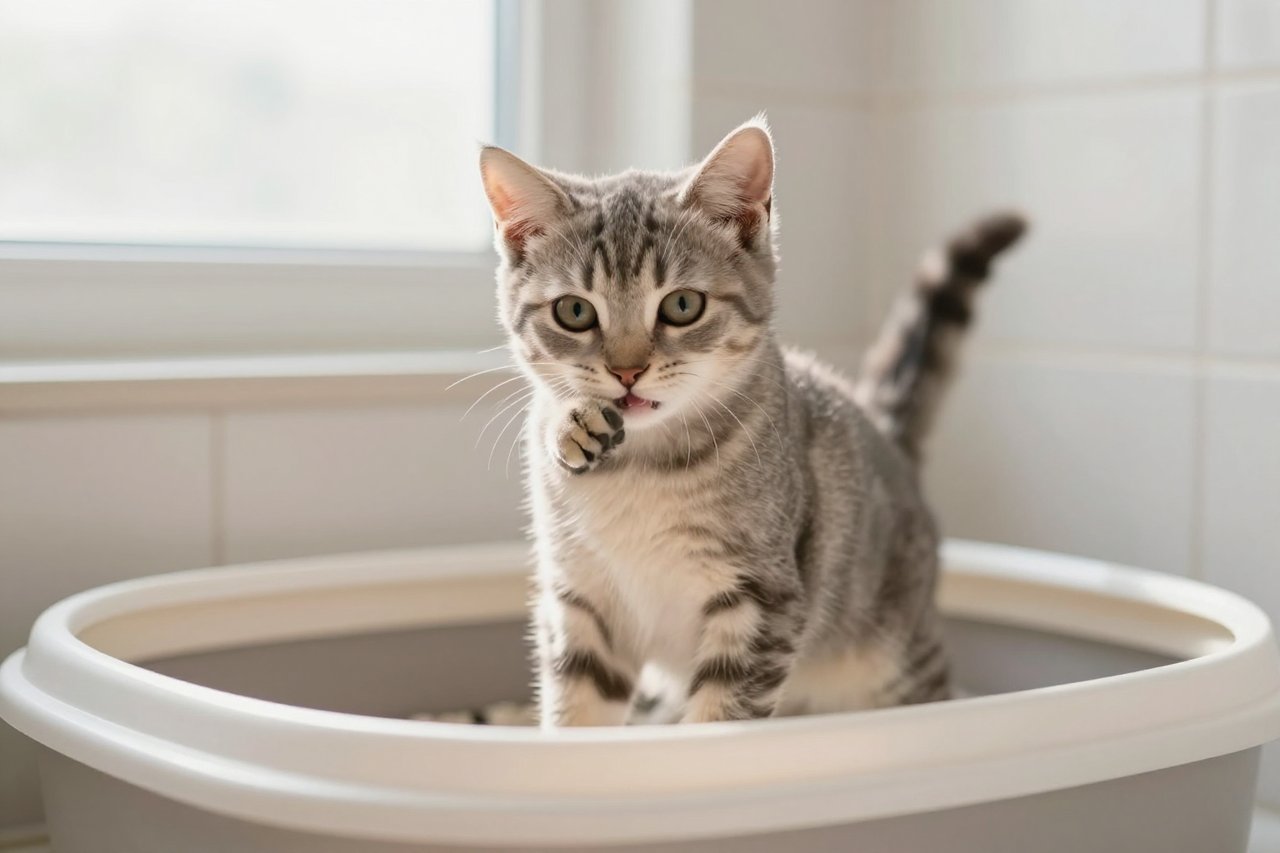
The most common mistake isn’t training failure. It’s a box a kitten physically struggles to use. A standard adult litter tray with six-inch walls is a climbing wall to a nine-week-old kitten. Look for something with a low front edge, roughly three inches, or cut a doorway into a plastic storage bin with a craft knife. The box should be about one and a half times the length of the kitten, nose to tail base, so there’s room to turn around and dig without standing in the mess.
Skip the covered box for now. Covered trays trap smells, hold in dust, and give a kitten one narrow exit, which feels like a trap when a toddler or another cat walks past. Add a lid later if you want one, once the habit is rock solid.

The two-box rule, and where to put them
The old guideline holds: one box per cat, plus one. With a single kitten that means two boxes, and it’s worth the extra few pounds. Kittens have short attention spans and sudden urges. If the only box is upstairs and the kitten is playing downstairs, the carpet becomes a legitimate option in its mind.
Placement matters more than people expect:
- Quiet corner, not beside a washing machine that thumps into a spin cycle mid-squat
- Away from food and water, ideally in a different room
- Two exits from the room, or at least a clear escape route, so the kitten never feels cornered
- Somewhere you walk past daily, so scooping actually happens
In a small flat, this takes some creativity. A box tucked into a bathroom or the corner of a hallway works fine, and small-space companions that thrive indoors generally adapt to a well-placed tray faster than owners expect.
Choosing a litter a kitten will actually use
Kittens are conservative about texture. Ask the breeder, fosterer, or shelter what litter the kitten has been using and buy a bag of that exact product before you bring it home. Changing litter and changing homes on the same day is a recipe for accidents.
If you’re starting fresh, fine-grained unscented clumping clay is the safest bet. Avoid perfumed litter; a kitten’s nose is far more sensitive than yours, and a lavender-scented tray reads as a place to avoid. Fill to about an inch and a half. Deep litter is fun to dig but harder for small legs to navigate.
One caveat: very young kittens, under about eight weeks, sometimes taste litter. Non-clumping options are safer if you’re worried, since clumping clay can gum up inside a small digestive tract.
The introduction takes about three minutes
Set the kitten in the box, scratch the litter gently with your finger to make the sound, and let it step out if it wants. That’s it. Don’t hold the kitten in place, don’t move its paws for it, and don’t hover. A kitten that feels restrained in the box learns the box is the place where being grabbed happens.
Timing beats technique
Kittens need to toilet on a predictable schedule. Put the kitten in the box:
- Within 10 to 15 minutes of every meal
- Immediately after waking from a nap
- After 10 minutes of active play, when the pouncing slows down
- Before you go to bed, and again when you get up
Do this consistently for a week, even if the kitten protests, and most will start heading to the box on their own. Quiet praise when it happens, no fanfare. Kittens spook at sudden noise near a tray.
When accidents happen, handle them properly
They will happen. The kitten gets distracted mid-dig, or the door to the litter room is shut, or it simply misjudges the distance. None of that is defiance. Kittens under four months don’t have the bladder control or the cognitive wiring for spite.
Clean the spot with an enzymatic cleaner, not bleach or ammonia-based products. Ammonia smells like urine to a cat, which invites a repeat performance. Ordinary detergent leaves behind proteins a cat’s nose can still detect long after yours can’t.
Then look at the pattern. If the kitten keeps choosing the same spot, that’s a message: put a box there. You can shift it a few inches a day towards where you’d rather it live, once the habit holds.
Confine the first week if things aren’t clicking
A kitten with free run of a four-bedroom house has a lot of places to make a mistake. Starting in one room, with food, water, bed, and a box at opposite corners, narrows the options and builds the habit fast. Once the kitten uses the box reliably for three or four days, open up another room. Repeat until it has the run of the place.
Reading the signs that the setup is the problem
If a kitten that had been using the box suddenly stops, work through the checklist before assuming anything behavioural:
- The box was cleaned with something harsh, or the litter brand got swapped
- It’s been two days since scooping, and the tray is fuller than a kitten will accept
- The kitten has outgrown the box and is now standing in its own waste
- A guest, a new piece of furniture, or a house move has shifted the box’s location
- The kitten is straining, going frequently, or crying while toileting, which points to a vet visit, not training
That last one deserves emphasis. Urinary problems in kittens are uncommon but serious, and a kitten that associates the box with pain will avoid it. Any straining, blood, or repeated tiny visits warrants a call to your vet the same day.
Stress and household changes
Litter avoidance is one of the first signs of an anxious cat, and kittens are easily rattled by things adults shrug off: a new baby, building work, a house move, a visitor who smells of three other cats. If something in the household changed right when the accidents started, that’s your answer. What causes cat anxiety covers the usual triggers and what actually helps settle a nervous cat.
Dogs are another common culprit. A kitten whose litter tray sits on the dog’s patrol route will hold on rather than risk an ambush. Keep the tray behind a baby gate or in a room the dog can’t reach, and if you’re still in the introduction phase, introducing a dog to a cat without turning your living room into a standoff is worth reading before you let them share space.
Small things that quietly undo litter training
A few habits can set a kitten back weeks without any obvious warning sign. Using scented litter because it smells nicer to you. Moving the box to a garage or utility room where the kitten can’t reach it during the day. Leaving a tray un-scooped over a weekend. Rubbing a kitten’s nose in an accident, which teaches fear of the owner and nothing about the box.
Scoop twice a day, do a full litter change weekly, and wash the tray with unscented soap and hot water. At around six months, when your kitten is closing in on adult size, size the box up. That’s the point where a tray that was perfectly adequate starts to feel cramped, and a sudden run of accidents in a previously reliable cat is often just a box that’s grown too small. If you haven’t picked your kitten yet and want a breed that tends to be relaxed about household routines, honest picks for first-time owners is a useful starting point.


