
Table of Contents
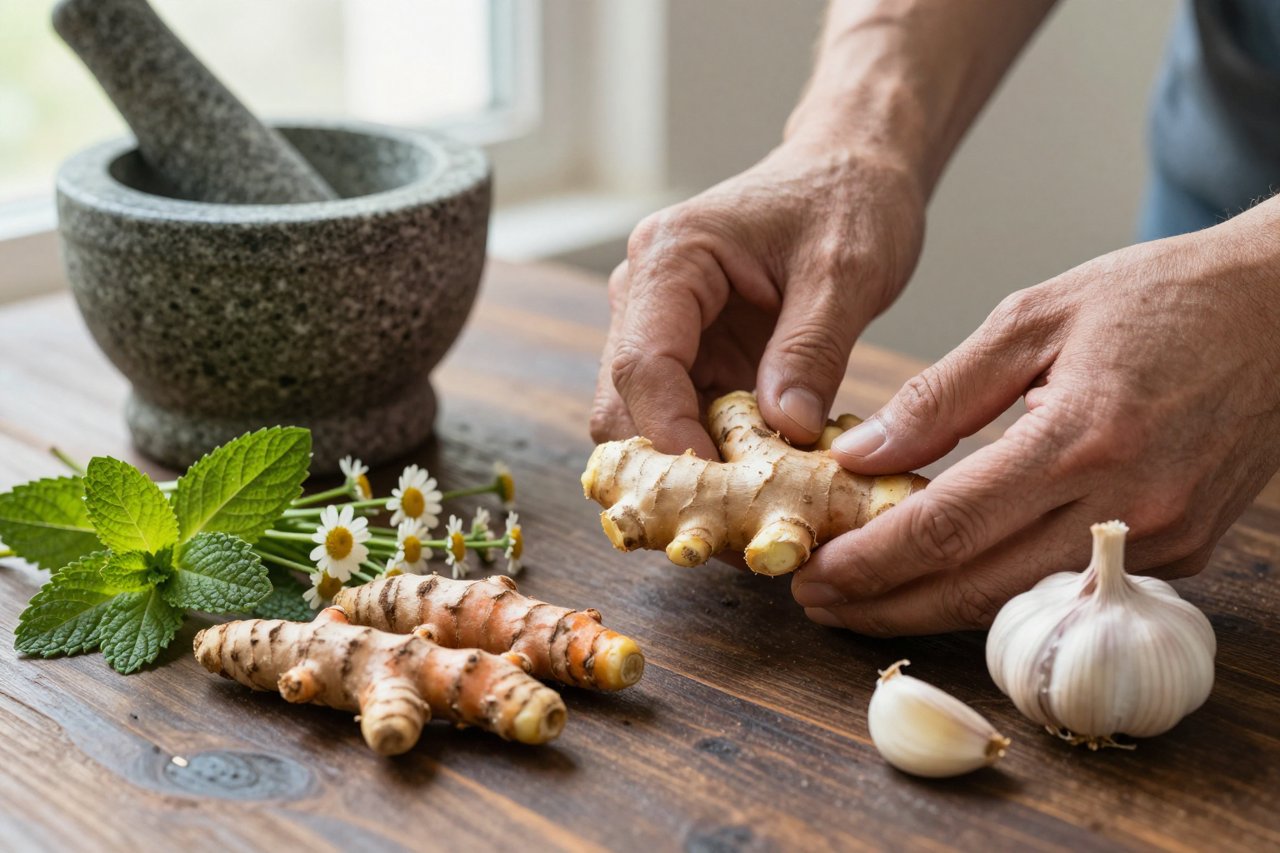
Walk into an herbalist’s shop in Marrakech, a Chinese medicine dispensary in Vancouver, or a village market in Oaxaca and you will see different plants, different languages, different rituals. Look closer and the same handful of species keeps appearing. Ginger. Turmeric. Chamomile. Peppermint. Garlic. Ginseng. Holy basil. That is the short list behind the top 7 herbs commonly used in traditional herbal practices, and it cuts across Ayurveda, Traditional Chinese Medicine, Unani, European folk medicine, and Indigenous traditions in the Americas. The reason is practical: these plants are relatively easy to grow, dry, and trade, and they have long records of use. Below is how each one is traditionally prepared, which part of the plant is used, and what to watch for.
1. Ginger (Zingiber officinale)
Fresh ginger rhizome is the workhorse. In Traditional Chinese Medicine, fresh ginger is sheng jiang and dried ginger is gan jiang; the two are used differently, with dried ginger considered hotter and more drying. In Ayurveda, ginger is called vishwabhesaj, roughly ‘the universal medicine.’ A household preparation is simple: slice a 2 cm piece of fresh rhizome, simmer it in 250 ml water for 10 minutes, strain, and add honey once the liquid has cooled slightly. Dried ginger powder is more concentrated, so start with 1/4 teaspoon in tea or soup. Modern research has focused on gingerols and shogaols, particularly around nausea and digestion. People on blood thinners or with gallstones should get advice before using large amounts.
2. Turmeric (Curcuma longa)
The orange rhizome is central to South Asian cooking and medicine. Traditional golden milk is not just a trend: warm milk, 1/2 teaspoon turmeric powder, a pinch of black pepper, and a small amount of ghee or coconut oil. The fat helps dissolve curcumin, and piperine from black pepper has been shown to improve absorption. In Unani and Ayurvedic practice, turmeric paste is also applied externally with water or honey. Raw turmeric root can be grated into soups; dried powder should be added early enough to cook out its raw edge. Curcumin supplements are widely sold, but high doses can interact with anticoagulants and may irritate the stomach. Food-level use is a different conversation from concentrated extracts.
3. Chamomile (Matricaria chamomilla)
German chamomile flower heads are the usual medicinal part; Roman chamomile (Chamaemelum nobile) is a different species with a similar but sharper aroma. European folk practice uses chamomile tea for restlessness and occasional digestive discomfort. Use about 1 tablespoon of dried flowers per 250 ml cup. Pour just-boiled water over them, cover the cup, and steep for 5 to 10 minutes. Covering matters because the volatile oils that carry much of the aroma can escape with the steam. Apigenin is one of the compounds researchers study. Chamomile is in the ragweed family, so people with daisy or ragweed allergies should be cautious.

4. Peppermint (Mentha × piperita)
Peppermint leaves are a classic after-dinner herb in Europe and the Middle East. A simple infusion uses 1 to 2 teaspoons of dried leaves or a small handful of fresh leaves per cup, steeped covered for 7 to 10 minutes. Menthol gives the cooling sensation and is the reason peppermint appears in balms, lozenges, and digestive teas. Traditional practice often pairs peppermint with fennel or ginger. One caution: peppermint can relax the lower esophageal sphincter, so it may worsen reflux for some people even though it soothes other digestive complaints. Enteric-coated peppermint oil capsules are a different preparation and have been studied for irritable bowel syndrome.
5. Garlic (Allium sativum)
Garlic is one of the few herbs that moves easily between kitchen and pharmacy. Mediterranean, Middle Eastern, and Asian traditions all use it, often raw or lightly crushed. The key detail is allicin: crushing or chopping garlic activates an enzyme that produces allicin, and letting the crushed garlic sit for about 10 minutes before cooking gives that reaction time to happen. Add it at the end of cooking or use it raw in dressings if you want more of that pungent chemistry. Aged garlic extract is a separate product with a milder profile. Garlic can increase bleeding risk, so people on warfarin or having surgery should discuss amounts with a clinician.
6. Ginseng (Panax ginseng and Panax quinquefolius)
Asian ginseng (Panax ginseng) and American ginseng (Panax quinquefolius) are both used, but Traditional Chinese Medicine treats them differently: Asian ginseng is considered warming and stimulating, while American ginseng is cooler and more moistening. The root is usually sliced and simmered. A common traditional method is to simmer 3 to 5 thin slices in 300 ml water for 30 to 60 minutes, then drink the liquid. Ginsenosides are the main compounds studied. Ginseng is often used in cycles rather than continuously. It can interact with stimulants, diabetes medication, and warfarin, so it is not a casual add-on if you take prescriptions.
7. Holy Basil (Ocimum tenuiflorum)
Holy basil, or tulsi, is a cornerstone of Ayurvedic practice and is grown in many Indian households. There are several types: Rama tulsi has green leaves, Krishna tulsi has purple-tinged leaves, and Vana tulsi is more wild. For tea, steep 5 to 7 fresh leaves or 1 teaspoon of dried leaves in 250 ml hot water for about 5 minutes. The aroma is clove-like because of eugenol. Traditional use includes daily tonic teas and respiratory support during seasonal changes. Tulsi is generally mild, but concentrated extracts are not the same as a cup of tea. Pregnant women should stick to food-level amounts unless a qualified practitioner advises otherwise.
Buying and storing: small details that preserve potency
Herbs lose aroma and activity through heat, light, and air. Buy from suppliers who list the botanical name, plant part, and harvest or packing date. If you can, smell before you buy: fresh dried chamomile should smell sweet and hay-like, not dusty. Use whole herbs when you can and grind them just before use.
- Whole over ground: Whole leaves and roots keep their volatile oils longer than powders.
- Label the date: Write the purchase month on the jar; it saves guessing later.
- Cool, dark, dry: A cupboard away from the stove beats a sunny windowsill.
- Buy small amounts: A 50 g bag you finish in six months beats a 500 g bag that goes stale.
Store in airtight glass jars in a cool cupboard, not above the stove. Dried leafy herbs are usually best within 12 months; powders within 6 months. Fresh ginger and turmeric keep for 2 to 3 weeks in the fridge, wrapped in paper. A simple infusion ratio is 1 tablespoon of dried herb to 250 ml of just-boiled water, covered and steeped for 5 to 10 minutes. Keep a small notebook of what you used, how much, and when. Specific notes are more useful than trying to remember a vague impression weeks later.


