
Table of Contents
The Mediterranean diet isn’t a fad. It’s a way of eating that people in countries like Greece, Italy, and Spain have followed for generations. It’s also one of the most studied eating patterns on the planet. Year after year, it claims the top spot in the U.S. News & World Report rankings. There’s a reason for that. It works. And unlike many restrictive plans, it doesn’t ask you to eliminate entire food groups. It simply invites you to eat more of what your body actually needs — and to enjoy yourself along the way.
What Exactly Is the Mediterranean Diet?
At its core, the Mediterranean diet reflects the traditional cooking of the Mediterranean region. It’s not a single diet plan with strict calorie counts. Instead, it’s a set of eating habits that emphasize whole, minimally processed foods. Think vegetables at every meal, a handful of nuts, beans simmered with garlic and herbs, and olive oil drizzled generously over everything.
A Rainbow of Plant Foods
Fruits and vegetables are the backbone. The goal is to fill half your plate with them at every meal. Aim for many colors — leafy greens, ripe tomatoes, purple olives, eggplant. The variety means a wide range of vitamins and antioxidants.
Healthy Fats Take Center Stage
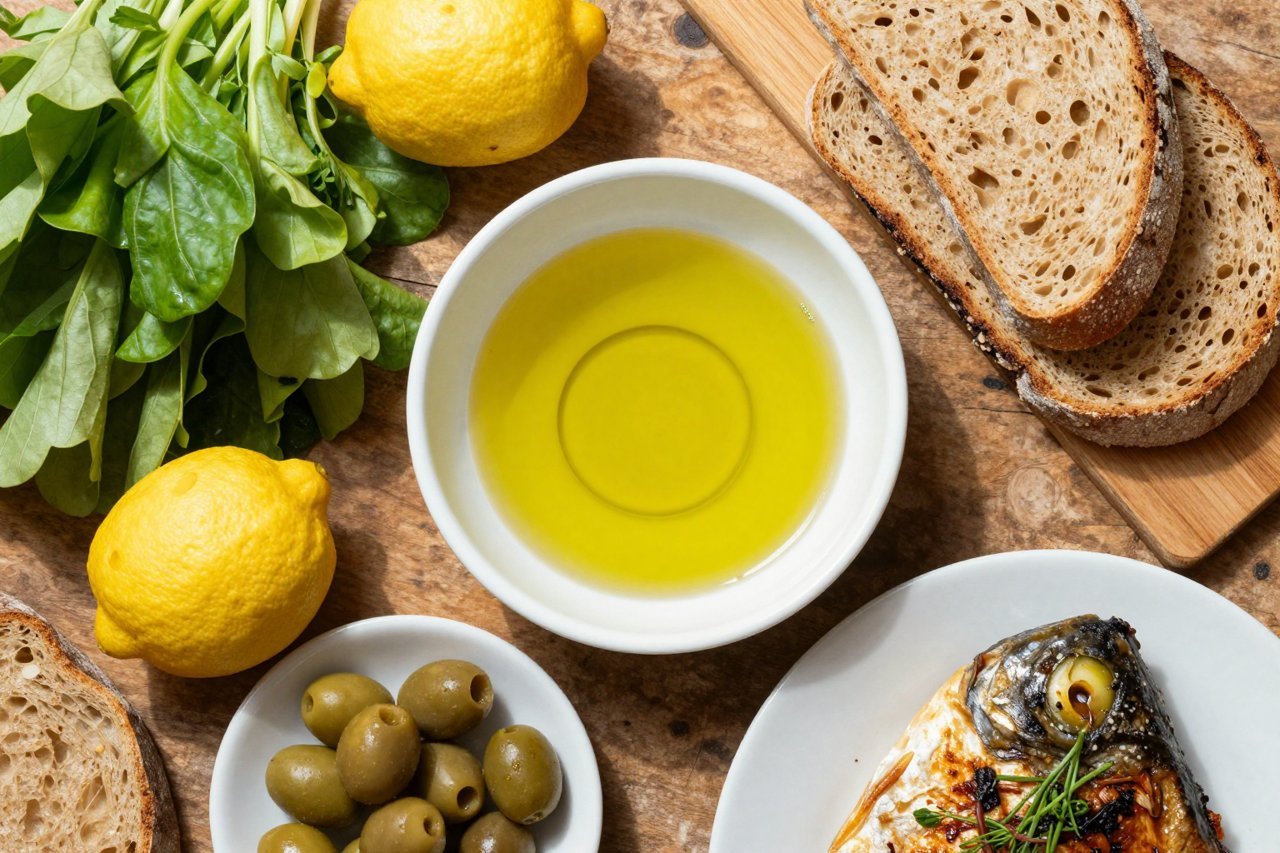
For decades, fat was the enemy. The Mediterranean diet turns that idea on its head. Here, extra-virgin olive oil is the primary source of fat. It’s rich in monounsaturated fats and polyphenols, which fight inflammation. Nuts, seeds, and olives also play important roles.

The Science Behind the Mediterranean Diet
Researchers have spent decades studying the Mediterranean diet. The results are hard to ignore. The landmark PREDIMED study, conducted in Spain, found that people following a Mediterranean diet supplemented with olive oil or nuts had a roughly 30% lower risk of major cardiovascular events compared to a low-fat diet.
Lowering Heart Disease Risk
The diet’s relationship with heart health is well documented. Healthy fats, fiber, and antioxidants work together to improve cholesterol, lower blood pressure, and reduce inflammation. If you’re looking to support your cardiovascular system, the Mediterranean diet is one of the best choices available. In fact, experts often recommend it as the go-to approach for better circulation and overall cardiovascular function. If you’d like to learn more about specific heart-boosting foods, check out this guide to the best food for good heart health.
A Natural Approach to Weight Control
Weight management is rarely about willpower alone. The Mediterranean diet is naturally satisfying because it’s high in fiber and protein. Legumes, whole grains, and fatty fish keep you full for hours. Plus, you’re not fighting hunger. Many people find they eat less without trying. If you want to focus on foods that keep you satiated, you’ll want to look at these weight loss foods that actually fill you up.
Building a Mediterranean Pantry: What to Add and What to Limit
One of the best things about this eating style is its simplicity. You don’t need fancy ingredients. Just stock your kitchen with these Mediterranean diet staples:
- Extra-virgin olive oil — for cooking, dressing salads, and finishing dishes
- Whole grains — brown rice, farro, barley, quinoa, and whole-wheat bread
- Legumes — chickpeas, lentils, white beans. Garbanzo beans are especially nutritious, packed with protein and fiber. They’ve been tied to healthier, longer lives.
- Fish and seafood — salmon, sardines, mackerel at least twice a week
- Nuts and seeds — almonds, walnuts, flaxseeds, sunflower seeds
- Fresh fruit — as a daily dessert replacement
- Herbs and spices — oregano, basil, rosemary, garlic, and cinnamon
What to Limit
The Mediterranean diet doesn’t forbid anything. But it does encourage you to limit processed foods, refined sugars, and red meat. That means skipping sugary sodas and ultra-processed snacks. Instead of hamburgers every night, try lean poultry. Save steak for occasional treats. Full-fat dairy is fine in moderation, but traditional Greek yogurt and cheese are often preferred over heavily processed dairy products.
A lot of people also wonder about wine. In Mediterranean countries, a small glass of wine with a meal is normal. That said, the research on alcohol is mixed. If you don’t drink, there’s no need to start. If you do, keep it moderate — one glass for women, two for men, and only with food.
A Week of Mediterranean Eating: Practical Meal Ideas
One question I get often is: “What does a typical day look like?” The answer is simpler than you might think.
Breakfast could be Greek yogurt topped with berries and a drizzle of honey. Or scrambled eggs with spinach and tomatoes, plus a slice of whole-grain toast.
Lunch is often a salad with a grain. Think quinoa and garbanzo beans tossed with cucumber, feta, and a lemon-olive oil dressing. Or a hearty lentil soup with crusty bread.
Dinner tends to be the biggest meal. Baked fish with roasted vegetables and a green salad. Whole-wheat pasta with a tomato-herb sauce and a sprinkle of Parmesan. Or a vegetable and bean stew flavored with garlic and rosemary.
Snacks? A handful of almonds and an apple. Hummus with sliced bell peppers. Olives with a piece of cheese.
The key is to cook from scratch as much as possible. That sounds time-consuming, but many Mediterranean dishes are straightforward weeknight meals. A pot of beans simmering while you cook rice is easy. Sheet-pan fish with vegetables takes less than 30 minutes.
Make Protein a Priority
Protein is important for preserving muscle and keeping you full. The Mediterranean diet gets plenty of it from fish, legumes, nuts, and dairy. But if you’re transitioning from a standard Western diet, you might want to be intentional. This guide on the best protein foods for weight loss offers useful tips on which protein sources keep you satisfied without excess calories.
Common Misconceptions About the Mediterranean Diet
Despite its popularity, a few myths still circulate.
First, it’s not a pasta-and-pizza free-for-all. In Italy, pasta is typically a small first course, not a massive platter. Portion control still matters. Second, olive oil isn’t fattening in moderation. It’s caloric, but replacing saturated fats with monounsaturated fats is associated with better health. A couple of tablespoons a day is appropriate.
Another misconception? That eating this way is expensive. Yes, Mediterranean countries have access to fresh seafood and produce year-round. But you can absolutely eat this way on a budget. Canned fish, frozen vegetables, lentils, chickpeas, and rice are among the cheapest ingredients in any supermarket. Olive oil is an upfront cost, but it lasts for weeks.
Finally, people assume you have to give up your comfort foods. You don’t. Just adapt them. Enjoy tacos? Swap the beef for spiced black beans. Love pizza? Make it with a thin whole-wheat crust, plenty of vegetables, and a small amount of mozzarella. The Mediterranean diet is about patterns, not perfection.
How to Start the Mediterranean Diet Today
You don’t need a dramatic overhaul. Start with one change this week. Buy a good extra-virgin olive oil and use it in place of butter. Add a can of garbanzo beans to your salad. Eat fish on Fridays. Swap one snack for an apple and a handful of nuts.
Remember, it’s a lifestyle, not a punishment. The Mediterranean diet offers a delicious, flexible way to nourish your body. And unlike quick-fix diets, you can actually live this way for decades. So, the next time you’re at the supermarket, pick up some olive oil, grab a bunch of leafy greens, and start with a single meal. Your heart, your waistline, and your taste buds will all thank you.


