
Table of Contents
Count the species in a single handful of garden soil and you’ll run out of patience long before you run out of animals. Mites, nematodes, springtails, fungal threads, bacteria by the billion. None of them have a publicist, and all of them are keeping the ground under your feet fertile.
That’s the trouble with most conversations about nature, animals, and the planet. We picture the photogenic stuff, the tigers and the glaciers, and skip the plumbing. But the plumbing is where the real work happens, and it’s where the most surprising stories live.
Animals Don’t Just Live in Nature. They Build It.
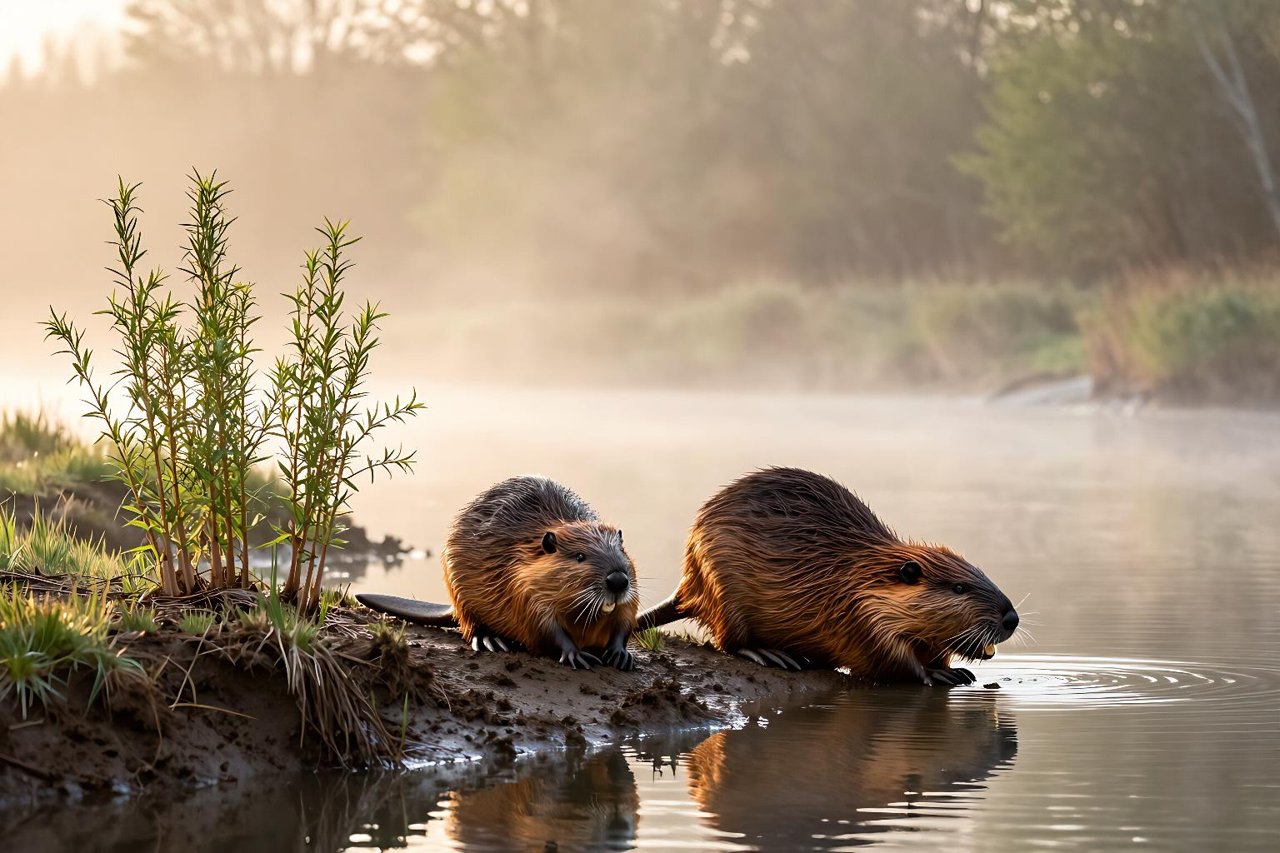
Wildlife isn’t furniture arranged inside a landscape. Animals are the carpenters, plumbers and demolition crews. A prairie dog town aerates soil and feeds hawks in the same afternoon. A beaver dam lifts a water table and creates a wetland that filters runoff for an entire watershed. Take the animal away and the place doesn’t just lose a resident. It changes shape.
The Yellowstone experiment
In 1995, biologists carried 14 wolves into Yellowstone National Park in crates. Elk had browsed the riverbanks without fear for seventy years, and the willows and aspen were chewed down to stubs. Within a few seasons, elk started avoiding the open valleys where they were most exposed. Willow and aspen regrew. Beavers returned to the streams, drawn by the new wood. Songbirds followed the growth. The riverbanks knitted together and erosion eased.

Ecologists still argue about how much credit the wolves deserve for every part of that story, and the honest answer is: less than the viral version claims, more than the sceptics allow. The core point holds anyway. A predator at the top of a food chain can ripple all the way down to the shape of a riverbed.
Elephants plant forests by eating them
An African forest elephant can swallow a fig whole, walk 50 kilometres, and deposit the seeds intact and wrapped in fertiliser. Some tree species in the Congo Basin germinate far more readily after a trip through an elephant’s gut. One study estimated that losing forest elephants would cut the carbon storage of those forests by around 7 percent, because the big, dense-wooded trees they disperse would struggle to regenerate. Slow, hungry, and completely irreplaceable.
The Unseen Workforce
Pollinators earn their headlines. Roughly a third of global food crops depend on animal pollination, including most fruits, many nuts, coffee and cocoa. The crew is broader than honeybees, though. Bats pollinate agave and durian. Moths work the night shift. Fig wasps have co-evolved with fig trees so tightly that neither species can survive without the other.
Then there’s decomposition, which nobody thanks anyone for. A healthy earthworm population can shift tens of tonnes of soil per hectare each year, dragging organic matter downward and leaving channels for roots and rain. Earthworms are also, quietly, a case study in how badly we misjudge animal intelligence, along with a lot of what passes for common knowledge about the myths we tell ourselves about the smartest animals. We tend to measure animal minds by how much they resemble ours, which is a bit like judging a fish by its tree-climbing.
What Falls Apart When a Species Goes
Extinction is usually quiet. A frog vanishes from a creek. A bat count drops by half. The systems that leaned on them adjust badly, and nobody notices for a decade.
Monarch butterflies make the point sharply. The eastern population overwintering in Mexico fell from an estimated one billion in the mid-1990s to well under 100 million in some recent years. The main driver is milkweed, the only plant monarch caterpillars can eat, which has been erased from millions of acres of farmland by herbicide-heavy agriculture. The record of how one agrichemical company reshaped American farmland is worth reading in that light, because the losses weren’t accidents so much as side effects nobody costed in.
Insects more broadly are in trouble. A long-running German study of 63 protected reserves found flying insect biomass had fallen by roughly 75 percent over 27 years. Protected areas. Not sprayed fields. That number should sit uncomfortably with anyone who likes eating.
A Planet That Keeps Rearranging Itself
Warming doesn’t just nudge the thermostat. It shifts timing and location, and species don’t shift at the same speed. A migratory bird that times its arrival to a caterpillar hatch can now show up after the caterpillars have already pupated. Great tits in parts of Europe have been laying earlier, but not always early enough to keep pace.
Everything is on the move. Fish stocks slide toward the poles. Ticks and mosquitoes expand into new territory. Alpine flowers run out of mountain and have nowhere left to climb. With average global temperatures already around 1.2°C above pre-industrial levels, these aren’t future scenarios in a report. They’re field notes.
Small Actions With Real Leverage
Individual choices don’t cancel out industrial-scale damage, and anyone who says otherwise is selling something. They do change the local maths, though, and gardens, balconies and verges add up to a serious land area.
- Plant native species. A native oak in North America supports more than 400 caterpillar species. A non-native ornamental often supports a handful, which means fewer birds, because birds raise chicks on caterpillars.
- Leave the leaves. Moth and butterfly pupae overwinter in leaf litter and hollow stems. Tidy gardens are wildlife deserts with nice borders.
- Skip the pesticide. A single lawn treatment can wipe out the pollinators and predators that keep aphids in check, so you buy a bigger problem next spring.
- Turn off unnecessary outdoor light. Migrating birds and moths navigate by night sky. Shielded, downward-facing, warm-toned bulbs cut the death toll dramatically.
- Log what you see. Platforms like iNaturalist have passed 200 million observations, and plenty of them have flagged species in places scientists didn’t know they still existed.
- Show up for local decisions. Planning meetings about hedgerows, wetlands and street trees are dull, short, and often decided by five people in a room. Five people is a number you can join.
Learning to See It
The fastest route to caring about a system is watching it closely for a while. Sit by one pond through a spring and you’ll notice the frog spawn, the heron, the algal bloom, the midges, and start asking questions you can’t answer. That itch is the whole thing.
If you want a shortcut, the best wildlife documentaries about animals and nature do more than show you a lion. They show you a system. And if what pulls you in first is pure charm, there’s no shame in starting with the animals most of us find impossible not to love. Curiosity needs a doorway, not a curriculum.
What We Get Back
None of this is charity work on behalf of beetles. New York City chose to protect and restore the Catskill watershed rather than build a filtration plant, saving billions in capital costs, because forested land filters water for free. Mangroves and coral reefs absorb the overwhelming majority of wave energy before it reaches a coastline. Aspirin began as a compound in willow bark, and several cancer drugs trace back to a molecule found in Pacific yew bark.
The planet’s resilience is stored in its biodiversity, in the messy redundancy of species that overlap and cover for each other. Lose enough of that padding and the systems get brittle, then surprising, then expensive. Wolves, elephants and earthworms aren’t decorations on a landscape. They’re the maintenance crew, and they’ve been on shift for a very long time.


