
Table of Contents
Four hundred square feet, one window with decent afternoon light, and a cat who has decided the top of the fridge is prime real estate. That’s the setup most apartment cat owners are working with. The cat needs height. The apartment has none to spare. Finding the best cat trees for small apartments is really a geometry problem wearing a shopping hat.
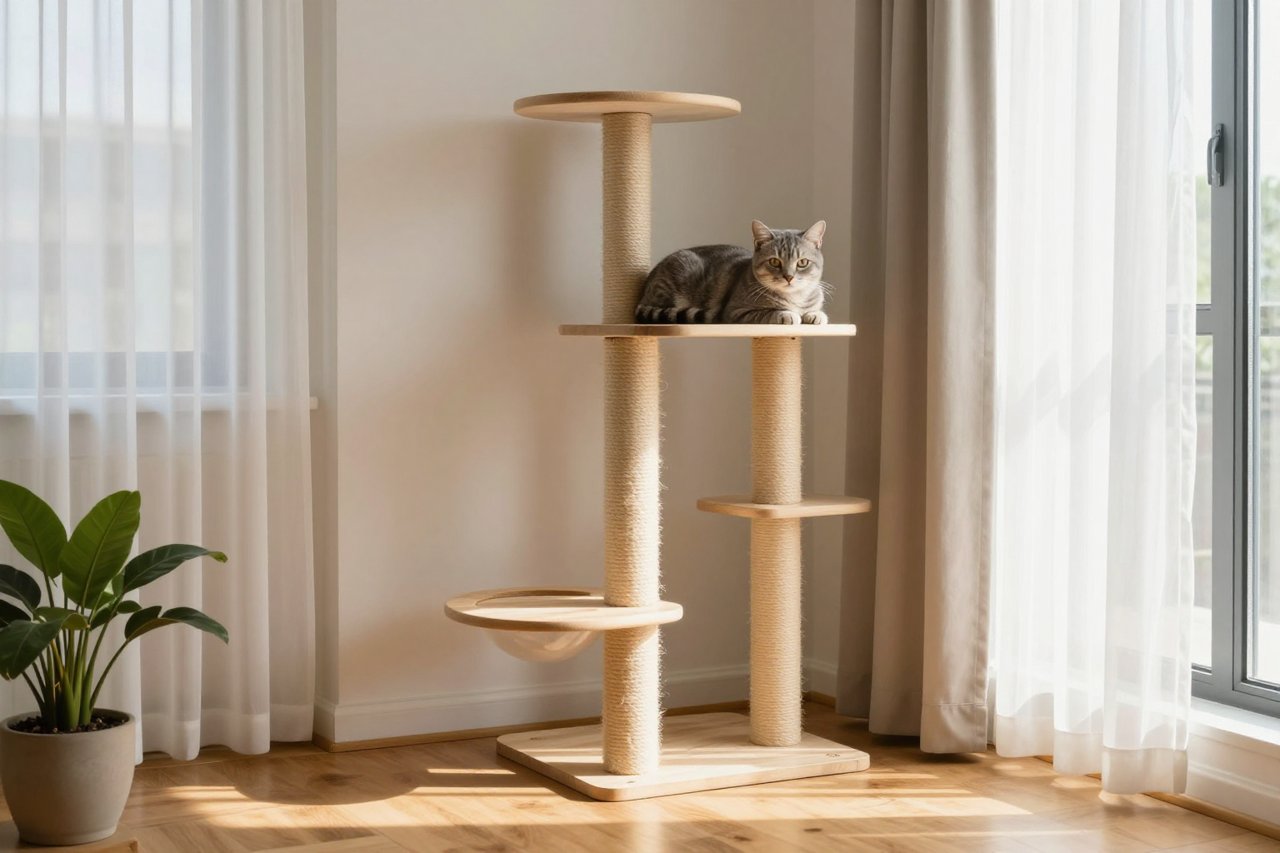
The good news is that cats don’t need much floor to climb high. A well-chosen tree can take up less than two square feet of carpet and still give your cat three levels, a scratching post and a sleeping spot at eye level. What matters is the ratio between the space a unit eats and the climbing it gives back.
Why most cat trees are built for houses, not flats
Pet shop floor models are designed for living rooms with a spare corner. Thirty-inch bases, three platforms, a hammock swinging off one side. Plenty of climbing, sure, but that footprint can swallow a sixth of a studio apartment.
Height isn’t the number to fixate on. A 72-inch tower on a 16-inch base is a great apartment buy. A 40-inch condo with a 28-inch base and a ramp jutting out is a bad one, even though it’s shorter and cheaper. Look at the base dimensions on the spec sheet before anything else, then check whether the platforms stack vertically or fan outward.

Weight matters too, for a different reason. Light trees wobble, and a wobbling tree is a tree your cat stops using. On carpet you can get away with a lighter base. On hardwood or laminate, you want something with heft or a wall strap.
Measure three things before you buy
- Ceiling height. Tension poles usually adjust between roughly 7.5 and 9 feet. Measure floor to ceiling in the exact spot you plan to use, since older buildings vary room to room.
- Window sill height. Window perches need a sill that sits below your cat’s sightline. A sill at 40 inches is ideal. One at 20 inches means your cat is staring at the radiator.
- Wall run and corner angles. Wall-mounted shelves need 30 to 40 inches of clear wall between door frames. Corners are the most efficient spots in any room because two walls share the load.
Four styles that actually fit
Ceiling-height tension poles
These run from floor to ceiling with a footprint often under a square foot, and they give a cat a full vertical circuit of staggered platforms. No wall drilling, which matters if you rent. The catch is pressure. A pole pressing into a ceiling can leave a mark, so slide a small square of foam or a scrap of cardboard under the top pad.
Wall-mounted shelves and steps
If your lease allows a few screws, a shelf system is the most space-efficient option available. Six staggered shelves can turn a blank wall into a climbing route for the cost of about a foot of floor space. Anchor into studs, not drywall plugs. A 12-pound cat launching off a shelf generates more force than most people expect.
Compact corner towers
Look for units with a triangular or L-shaped base that tucks into a corner. An 18-inch corner tower reads as almost invisible in a small room because it occupies space you weren’t using anyway. Check that the top perch sits at least 40 inches high. Below that, cats tend to ignore it.
Window perches and hammocks
These clip or suction onto glass and add zero floor footprint. They’re brilliant in a small flat because they double as entertainment. A cat with a window perch and a view of a street tree will often skip the tower entirely. Suction cups need clean glass and a re-press every few months.
What to check before you click buy
- Sisal wrap thickness. Thin twine shreds in weeks. Look for 4mm or thicker and a full wrap, not a half-covered post.
- Base material. Plywood or solid wood holds screws. Particleboard chips and starts wobbling within a year.
- Replaceable parts. Good brands sell individual posts and perches, so you aren’t binning a whole tree because one section is frayed.
- Platform depth. Perches under 12 inches across don’t fit an adult cat curled up. Measure your cat nose to tail base, then add two inches.
Placement matters more than the product
You can buy a mediocre tree and place it well, or a great one and hide it in a hallway. Cats want height, a view and proximity to their people. Put the tree near a window, in the room where you actually spend evenings, angled so your cat can see the door.
Avoid the corner next to the litter box and the spot directly above a radiator. Both get refused with impressive consistency. Indoors, territory is the thing cats negotiate constantly, and a vet’s assessment of whether cats can be happy in apartments lands on the same point: vertical space solves more behaviour problems than extra toys do.
Match the tree to the cat you have
Activity level changes the answer. A sedate cat wants two wide perches and a soft top spot. A young, bored cat needs a route: multiple levels, a scratching section, and something to launch from. If you’re still working out which temperament you’ve ended up with, this roundup of cat breeds that suit first-time owners is a useful reference for what’s typical and what’s just personality.
If you haven’t committed to a species yet, the same calculus applies. The thinking behind small-space pets that do well indoors is identical to choosing a cat tree: footprint versus payoff.
Two cats, one tree
The rule of thumb worth following is one perch per cat, plus one. Two cats sharing a single top platform will negotiate, and the negotiation usually involves swatting. Two smaller towers in different rooms beat one big tower, especially in a studio where there’s nowhere else to retreat.
The first week decides whether it gets used
A new tree often sits untouched for three or four days. That’s normal. Speed things up by rubbing a pinch of catnip into the sisal, draping a worn T-shirt over the top perch so it smells like you, and serving a couple of meals on the second platform. Hand-place your cat rather than dropping them on it. If a fortnight passes and the tree is still furniture, move it somewhere with a better view before you conclude it was a bad buy. Placement is the usual culprit, and a repositioned tree gets adopted more often than people expect.


