
Table of Contents
There is a certain kind of defeat in pulling on black jeans, walking past the sofa, and arriving at work with a light dusting of tabby fluff across your knees. If your cat seems to be moulting enough to stuff a duvet every single week, you are not imagining it. A healthy cat sheds constantly, and during the seasonal coat change in spring and autumn, a short-haired cat can lose a truly startling volume of hair in a matter of days.
The good news: most excessive shedding is not something you have to accept. A handful of changes to grooming, feeding and your cleaning routine will cut the volume noticeably within a few weeks, and often sooner. Here is what actually moves the needle.
First, Work Out Why Your Cat Is Shedding So Much
Shedding is a normal cycle, driven by daylight hours and temperature. As the days lengthen in spring, a cat’s body pulls the plug on the heavy winter undercoat and pushes out the old hair. Indoor cats under artificial lighting can drift out of sync and shed more steadily across the year instead of in neat seasonal bursts.
Breed and coat type play a big part
A Siamese or a Burmese will leave a faint haze on the armchair. A Maine Coon, Persian or British Shorthair has a dense double coat with a thick underlayer, and that underlayer is where most of the tumbleweeds come from. Double-coated cats need dedicated de-shedding, not a quick flick with a soft brush, which mostly just smooths the top layer.

And sometimes it is a health signal
Shedding that suddenly increases, or hair that comes out in patches, is worth a vet visit. Hyperthyroidism, skin parasites, food sensitivities, stress and plain old malnutrition can all show up first as a dull, patchy or heavily shedding coat. If your cat is also scratching, over-grooming, or developing bald patches on the belly and flanks, book an appointment before buying more grooming tools.
Choose the Right Brush (The Wrong One Wastes Your Time)
Most people brush their cat with something too soft, then wonder why the fur keeps coming. What you want is a tool that reaches through the topcoat and pulls out loose undercoat before it lands on your duvet.
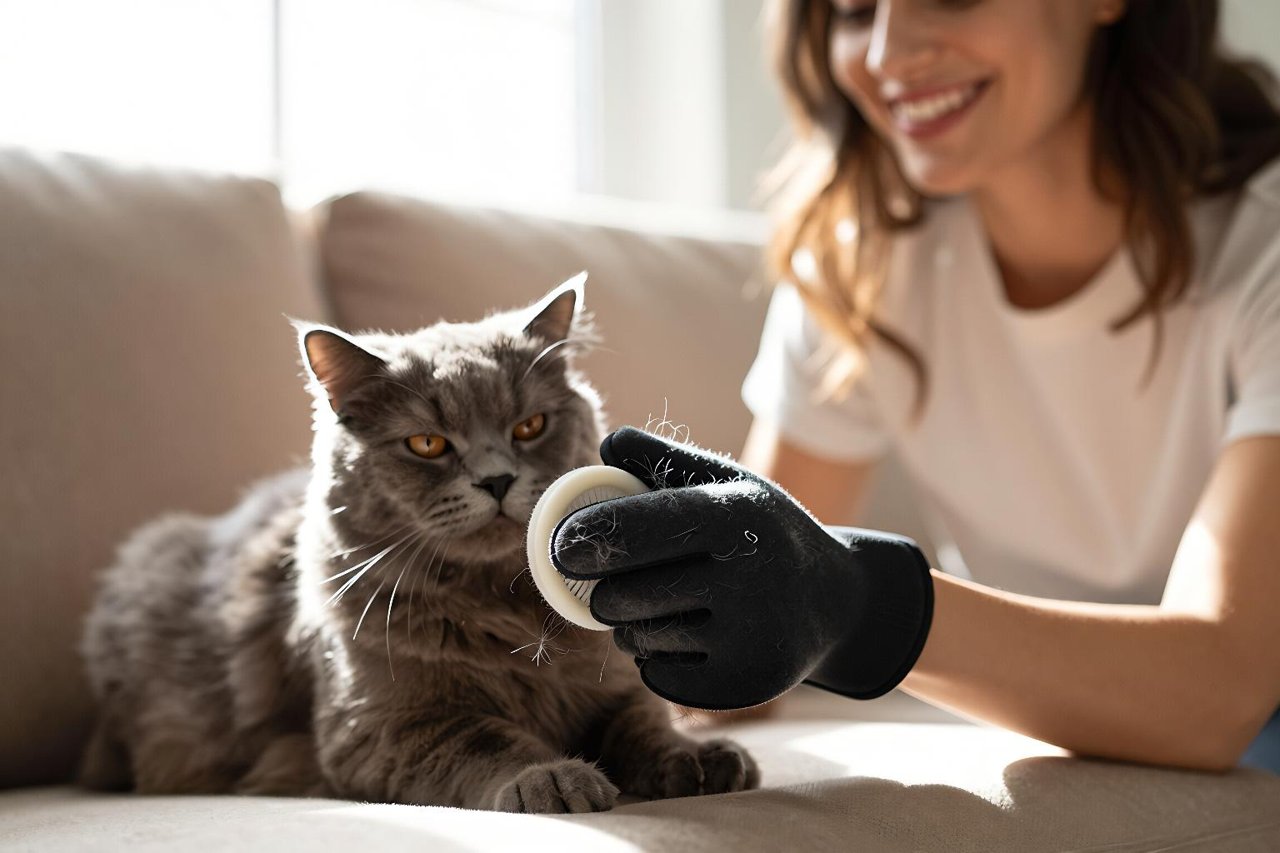
- Rubber curry brush or grooming glove: ideal for short-haired cats and for cats who hate being brushed. Great for lifting surface hair and much better tolerated than metal.
- Slicker brush: good all-rounder for medium coats, but go gently or you will scratch the skin.
- Undercoat rake or de-shedding tool: the workhorse for double-coated breeds. Use once or twice a week, never on a cat with skin irritation.
- Steel comb (greyhound-style): brilliant for long-haired cats, especially behind the ears, under the armpits and around the ruff where mats form.
- Lint roller and rubber squeegee: not for the cat, but the fastest way to clear a sofa cushion in ten seconds flat.
Build a Routine That Fits the Coat
Short-haired cats do well with two or three sessions a week, about five to ten minutes each. Long-haired cats need daily combing, and semi-longhaired breeds usually need a proper session every other day. During a spring blow, double the frequency for two or three weeks.
Brush in the direction of the coat first, then back-brush gently in small sections to lift the undercoat, then smooth everything back down. Pay attention to the areas where fur collects: the base of the tail, the trousers, under the chin and behind the front legs. Finish every session with a wipe-down using a damp microfibre cloth, which picks up the loose hairs your brush left floating.
Start slowly with a cat who treats grooming like a personal attack. Two minutes, a treat, then stop. Cats build tolerance quickly when sessions are short and end before they get fed up.
Feed the Coat From the Inside
You cannot brush your way out of a poor diet. Hair is protein, and a cat whose food is short on quality animal protein will grow a weaker coat that breaks and sheds more readily. Look for a named meat as the first ingredient and a protein level suited to your cat’s age and activity. If you are weighing up options, this guide to high protein cat food and whether it suits your feline covers what to check on the label.
Omega-3 fatty acids are the other big lever. A daily fish oil supplement providing EPA and DHA, or a food with added salmon oil, supports the skin barrier and gives the coat a visible sheen within six to eight weeks. Ask your vet for a dose based on your cat’s weight. Too much oil causes loose stools, so start low.
Hydration matters more than most owners realise. Cats are naturally stingy drinkers, and a dehydrated cat has drier skin and a duller coat. A water fountain, a wider bowl and a couple of wet food meals a day all help push water intake up.
Bathe Occasionally, But Not Often
Most cats do not need frequent baths, and over-washing strips the natural oils that keep skin healthy, which can backfire and increase shedding. For a greasy or heavy-shedding cat, a bath every four to six weeks during peak moulting season is plenty. Use a cat-specific or kitten shampoo, rinse thoroughly, and dry with a towel in a warm room.
If your cat is genuinely unbatheable, a waterless foam shampoo or pet grooming wipe does a decent job of removing loose hair and dander from the surface. The same logic that decides how often you should bathe your dog applies here: coat type, skin condition and lifestyle matter far more than a fixed schedule.
Tackle the Hair That Has Already Landed
Grooming removes maybe half the problem. The rest is environmental.
Vacuum twice a week with a HEPA-filter machine, and go over soft furnishings, not just the floor. A HEPA air purifier placed near your cat’s favourite sleeping spot will pull a surprising amount of floating hair and dander out of the air, and it makes a real difference for anyone in the house with a sensitive nose. Wash cat beds and blankets weekly on a hot cycle. Keep humidity in the 40–50% range, since very dry indoor air in winter makes fur brittle and flyaway.
Sticky rollers, a rubber squeegee for upholstery, and a dedicated microfibre cloth for the sofa will save you from endless frustration. Keep one roller in the car and one by the front door.
What If Someone in the House Is Allergic?
It is worth knowing the allergen is not really the hair itself. The protein Fel d 1 lives in cat saliva and skin secretions, and it rides on dander and dried hair. Reducing shedding helps, but it will not remove the allergen entirely, and no cat breed is genuinely allergen-free. If you have been researching low-allergen pets, the same myth-busting applies to cats as to dogs, and this piece on what actually works with hypoallergenic dog breeds explains the reality clearly.
Practical steps that do help: keep the cat out of the bedroom, wipe down hard surfaces, use HEPA filtration, wash hands after grooming, and consider a low-dander diet or a product that neutralises Fel d 1 in saliva. Allergy management is a stack of small measures, not one magic fix.
Your First Two Weeks: A Simple Plan
Buy one tool that matches your cat’s coat, not five. Short-haired: a rubber curry brush. Double-coated: an undercoat rake. Long-haired: a steel comb and a slicker. Then set a realistic routine: ten minutes of brushing on alternate days, a fish oil supplement started at a low dose, one HEPA vacuum pass through the main rooms twice a week, and bedding washed every weekend.
You should see less fur on the furniture within about ten days, and a shinier coat in six to eight weeks. If shedding is still heavy after a month of consistent grooming and decent food, or if your cat is losing hair in patches, itching or losing weight, get a vet to check the thyroid and skin. A coat is one of the most reliable read-outs of a cat’s health, and often the shedding is the messenger rather than the problem.


