
Table of Contents
Dandelion root rarely gets credit. The plant appears in lawns and pavement cracks, yet most people pull it up and toss it. Herbalists and cooks have done the opposite for centuries. The root has served as a bitter digestive tonic, a folk liver herb, a wartime coffee stand-in, and a versatile kitchen ingredient.
That range explains the interest in dandelion root: traditional uses and food applications. It is not a miracle cure, and it is not just a weed. It is an earthy, slightly sweet, bitter ingredient with a practical history. Here is how people use it, what it tastes like, and how to prepare it at home.
Why Dandelion Root Has Staying Power
Dandelion (Taraxacum officinale) is a perennial with a deep taproot. The root stores inulin and bitter compounds that give it a sharp, cleansing flavor. Those bitters explain its place in aperitif blends and old digestive formulas. A small amount before a meal can make the mouth water and, in traditional herbal thinking, wake up digestion. Modern research has looked at antioxidant and anti-inflammatory activity, but human trials are limited. The traditional reputation is interesting, not a prescription.
Traditional Uses of Dandelion Root
A Bitter Tonic for Digestion
One of the oldest uses is simple: a decoction sipped before meals. Herbalists valued bitter plants for sluggish digestion, bloating, and heaviness after rich food. A common folk preparation simmered 1 to 2 teaspoons of dried root in a cup of water for 10 to 15 minutes. The taste is strong and earthy, so many people blended it with ginger, fennel, or honey. European bitter aperitifs followed the same logic, though with wine and sugar instead of tea.

Liver and Gallbladder Traditions
Dandelion root appears in many liver tonic formulas. Folk practitioners recommended it in spring, often with burdock or chicory, as a bitter cleanse after winter. Some animal and laboratory studies suggest dandelion extracts affect bile flow and liver enzymes. Human evidence is thin. People with gallstones, bile duct obstruction, or active gallbladder inflammation should avoid strong bitter preparations unless a clinician approves them, because increasing bile flow can be risky in those cases.
Diuretic and Spring Tonic Use
The leaves are the part most often called a diuretic. The root still found a place in blended spring tonics with nettle, parsley, or cleavers. Old herbal books describe blood cleansing and depurative actions, language that sounds outdated now. The practical idea was to support elimination through urine, bowel movements, and sweat after a sedentary winter. Dandelion root tea is mild compared with pharmaceutical diuretics, but it still matters for anyone taking fluid-balance medication.
Coffee Substitutes and Wartime Standbys
Roasted dandelion root has a dark, nutty, chicory-like flavor. During coffee shortages in 19th-century Europe and again during the World Wars, households roasted dandelion and chicory roots to stretch scarce beans. The habit never disappeared. New Orleans coffee with chicory is a famous cousin, and modern caffeine-free coffee substitutes often blend roasted dandelion, chicory, and barley. The root does not taste exactly like coffee. It tastes like a bitter roasted root with a hint of caramel, which is why some drinkers prefer it.
Food Applications: More Than Tea
The root works as a vegetable, tea, coffee substitute, and powder. Each form has a different texture and intensity.
Roasted Dandelion Root Coffee
Scrub fresh roots, chop them into half-inch pieces, and spread them on a baking sheet. Roast at 150°C (300°F) for 20 to 30 minutes, stirring every 10 minutes. The roots should turn deep brown and smell toasty, not burnt. Cool, then grind in a spice grinder. Simmer 1 tablespoon of ground roasted root in 250 ml water for 8 to 10 minutes and strain. A pinch of cinnamon or a few cocoa nibs rounds out the bitterness. The ground root also works as 10 to 20 percent of a coffee blend.
Tea and Decoctions
Dried dandelion root needs heat and time. Steeping it for three minutes produces a weak, woody cup. Simmer 1 to 2 teaspoons of cut dried root per cup for 10 to 15 minutes, covered, then strain. The flavor is earthy and slightly sweet at the finish. Iced dandelion root tea with orange is a good summer drink. A reduced decoction can also become a base for herbal syrups. Keep the simmer gentle, because a hard boil drives off aromatics and makes the cup harsher.
Dandelion Root in the Kitchen
Young roots are edible as a vegetable. Scrub them well, slice thin, and sauté in butter or olive oil with garlic and a splash of vinegar. They keep a pleasant chew and a bitter edge, similar to parsnip crossed with endive. Older roots turn woody, so save those for roasting and tea. Pickled dandelion root is another old-fashioned option: pack slices into a jar with vinegar, salt, peppercorns, and a little sugar, then refrigerate for a week. The result is crunchy and sharp, good with roasted meat or cheese.
- Roasted and ground: brew as a coffee substitute or blend with chicory.
- Fresh and sliced: sauté, stir-fry, or roast with other root vegetables.
- Pickled: preserve thin slices in vinegar brine for a tangy condiment.
- Powdered: add small amounts to spice rubs, bread dough, or granola.
- Syrup: reduce a strong decoction with honey for pancakes or cocktails.
Some historical root beer recipes include dandelion root with sassafras, burdock, and ginger. The root adds bitterness and body. For a simple project, add a few tablespoons of chopped fresh root to beef or mushroom broth. It deepens the flavor without making the broth taste medicinal.
How to Harvest and Prep Dandelion Root
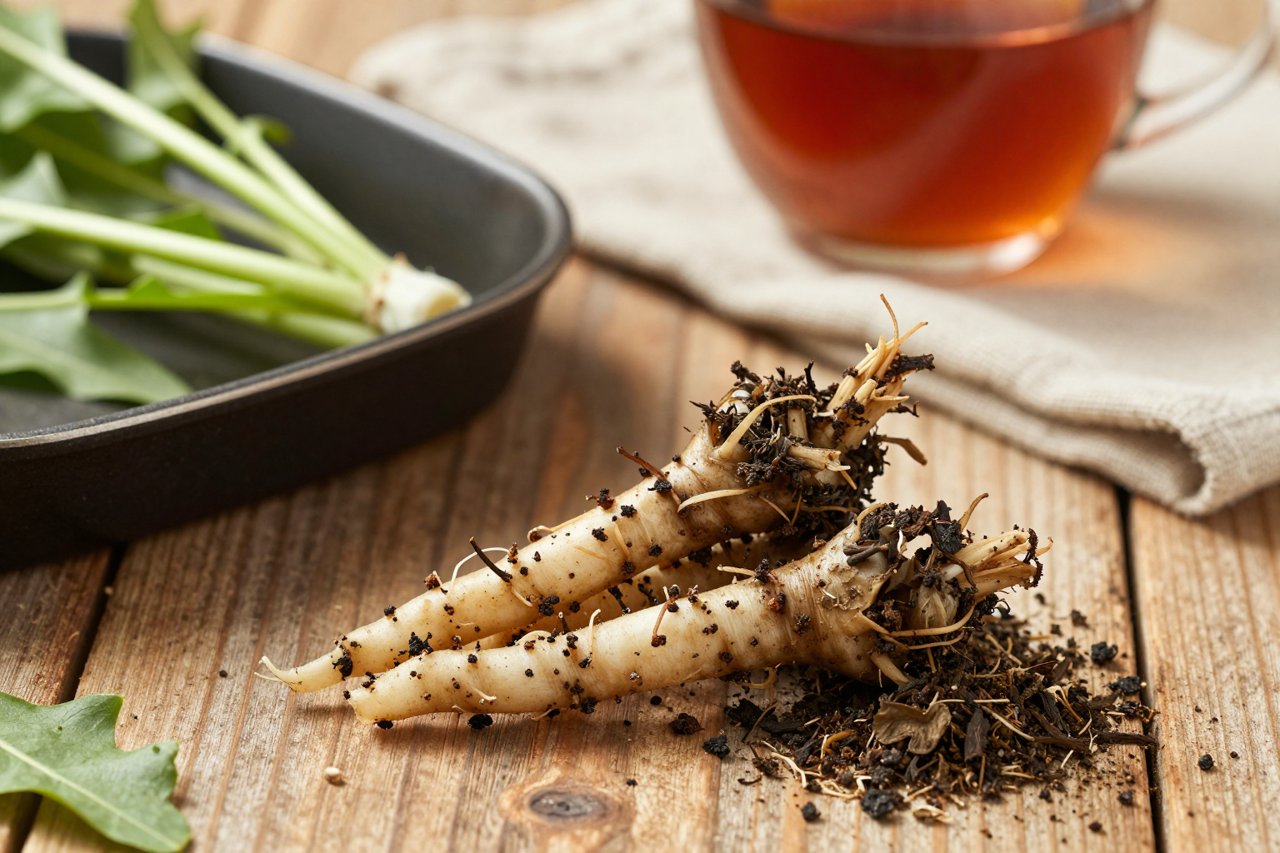
Harvest roots from a clean spot. Avoid roadsides, treated lawns, industrial lots, and dog-walking routes. Dig in autumn after the leaves have stored energy in the root, or in early spring before flowering. A narrow trowel or fork helps loosen the long taproot. Lift the plant, cut off the leaves for another use, and scrub the roots. Slice them lengthwise so they dry evenly. A dehydrator at 40°C (105°F) works well; roots are ready when they snap instead of bending. Store dried root in a glass jar away from light for up to a year. Fresh roots keep in the refrigerator for about a week.
Identification matters. Dandelion has a rosette of jagged leaves, a hollow stem, and one yellow flower per stem. The root is pale and fleshy. If you are new to foraging, go with an experienced guide or buy from a reputable supplier. Confusing a wild root with another plant is a real risk.
Buying and Using Dandelion Root
Dandelion root comes cut, powdered, roasted, and as tincture or capsules. For tea, buy cut dried root rather than powder; it is easier to strain and keeps its aroma longer. For coffee substitutes, roasted pieces or roasted powder save a step. Look for Taraxacum officinale on the label, a harvest date, and a supplier that tests for contaminants. Good dried root smells earthy and slightly sweet, not musty. Tinctures vary widely in strength, so follow the bottle rather than a random online dose.
A useful house blend: two parts roasted dandelion root, one part chicory, and one part cinnamon bark. Simmer one tablespoon per cup for 10 minutes. It makes a caffeine-free after-dinner drink with enough bitterness to feel like a digestif. For baking, start with one teaspoon of fine dandelion root powder per cup of flour. More can make muffins taste like a health food experiment.
Safety and Who Should Ask First
Dandelion is generally considered safe in food amounts, but it is not for everyone. People allergic to ragweed, chrysanthemum, daisy, or other Asteraceae plants may react to dandelion. Avoid it with bile duct obstruction, gallstones, or acute gallbladder inflammation unless a clinician says otherwise. Pregnancy and breastfeeding evidence is limited, so ask a provider before using concentrated teas or tinctures. Dandelion may interact with diuretics, lithium, blood sugar medication, and blood thinners. That does not make it dangerous for every person, but a quick conversation with a pharmacist is worthwhile if you take prescription drugs.
Start small. A weak cup of root tea is a sensible first test. Strong decoctions and tinctures are more concentrated and more likely to cause digestive upset. If you get heartburn, loose stools, or a rash, stop.
A Practical Roasted Root Recipe
For a first batch, use about 250 g of fresh dandelion root. Scrub, chop into 1 cm pieces, and dry with a cloth. Toss with a teaspoon of olive oil if you want a darker roast, then spread on parchment. Roast at 150°C for 25 minutes, stir, and continue for 10 to 15 minutes until the pieces are mahogany brown. Cool and store in an airtight jar. Grind small amounts as needed. Use it in a French press or a simple saucepan simmer. A spoonful of roasted root added to a pot of rice or lentils gives a subtle bitter, savory depth that salt alone cannot match.


