
Table of Contents
The first time we took a three-year-old camping, we picked a site from a photo of a lake. Nice lake. What the photo didn’t show was the 300-metre walk from the parking lot, the slope where the tent was supposed to go, and the vault toilets at the far end of the loop. We spent more time carrying things than sitting down.
Ten years and a lot of bad reservations later, the criteria have sharpened. The best camping destinations for families aren’t the prettiest ones on Instagram. They’re the ones where the logistics quietly disappear: flat ground, water you can see the bottom of, and a washroom close enough that a four-year-old can make it in time.
Here is what has earned a repeat visit.
What makes a campground work for families
Before the list, the filter. When we compare sites now, these are the things that decide it:

- A flat, shaded tent pad. Grass or sand beats hard-packed gravel every time. Roots and a slight tilt will have you sliding into the tent wall by 2 a.m.
- Shallow entry water. A beach that stays waist-deep for twenty metres is worth an extra hour of driving. A sudden drop-off means one adult is on full alert the entire afternoon.
- Flush toilets within a five-minute walk. Vault toilets are fine for adults. With kids, they’re a negotiation.
- Something scheduled. Ranger talks, a nature centre, a Sunday pancake breakfast. Anything that fills the 4 p.m. slump when everyone is tired but nowhere near ready for bed.
- A town or camp store nearby. You will forget something. Ice, marshmallows, a spare bottle of calamine lotion.
Ontario’s provincial parks: the dependable starting point
Ontario runs one of the better park systems in North America for families, mostly because the parks are close together and the facilities are consistent. You’re rarely more than a two-hour drive from a decent one, which matters when the whole trip is two nights long. There’s a solid rundown of the best family camping locations in Canada if you want to widen the search past one province.
Bonnechere Provincial Park: for first-timers and toddlers
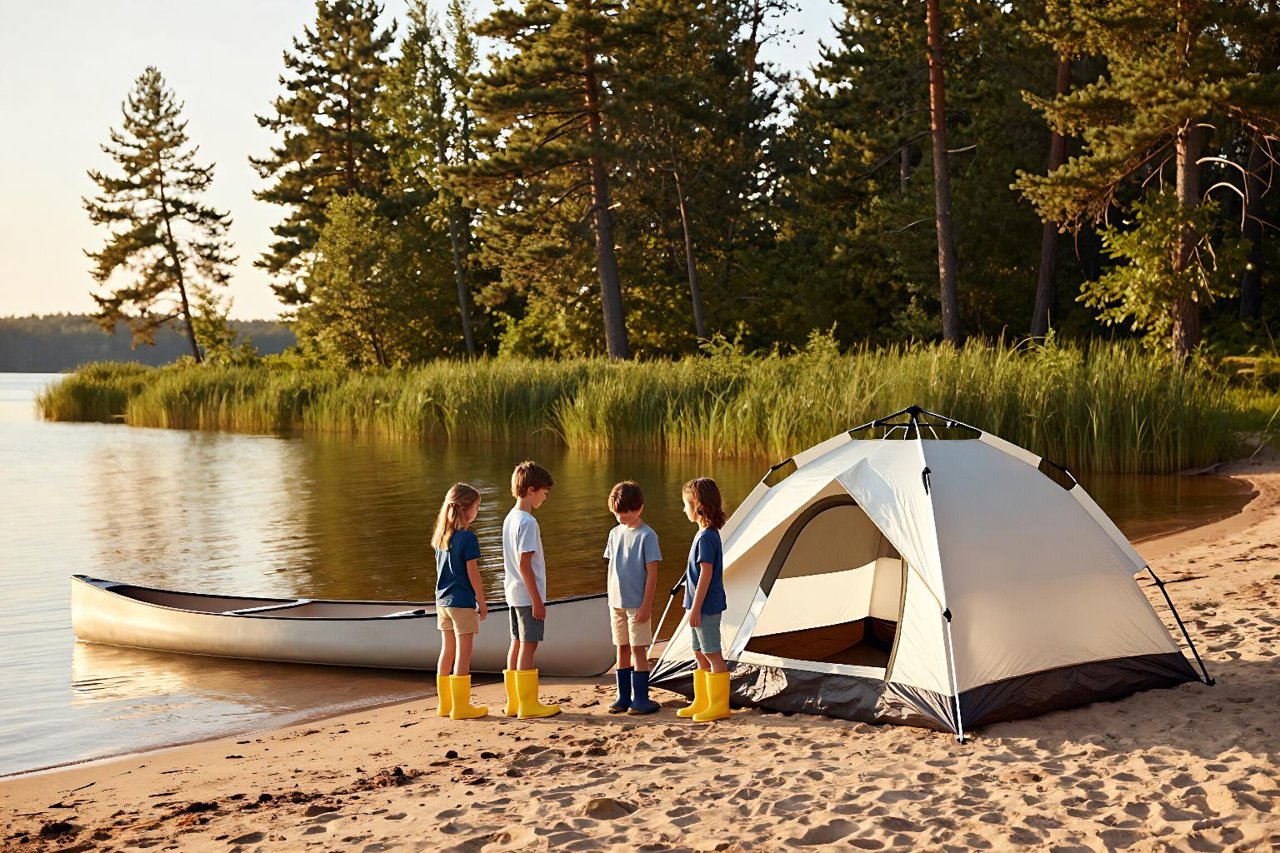
Round Lake at Bonnechere stays shallow for an absurd distance. You can wade out forty metres and still be at knee height, which means you can sit on a towel and actually watch your kid rather than shadow them. The beach is sand, the sites on the Lakeside loop back almost onto it, and the park is small enough that a bike ride around the whole loop takes fifteen minutes. It’s the park I recommend to anyone doing a first trip with a child under five.
Killbear Provincial Park: for climbers
Georgian Bay is granite and wind-bent pines, and the shoreline at Killbear is essentially a natural playground for kids who like scrambling. Harold Point has flat rock shelves that slope gently into deep water, a different kind of supervision than a beach, but the discovery centre and evening programs are genuinely good. Sites in the Beaver Dams area are roomy enough for two tents and a screen shelter without feeling crowded.
Book through Ontario Parks the moment the five-month window opens. Reservations go live at 7:00 a.m. ET and the good loops vanish within minutes on a summer weekend. If the park you want is full, a serviced cabin or a nearby weekend getaway in Ontario makes a decent plan B.
Fundy National Park, New Brunswick: tides as entertainment
The Bay of Fundy does something no playground can. The water disappears. Tides here run up to twelve metres, and at low tide you can walk out across the ocean floor at Alma or watch the sea stacks at Hopewell Rocks emerge from the mud. Fundy National Park has three front-country campgrounds, with Chignecto the most sheltered and Point Wolfe the prettiest, plus a saltwater pool and a heated one, which is exactly the sort of detail that rescues a cold August afternoon.
One warning: the fog is real, and coastal trails hold moisture. Pack rain jackets you trust rather than the twelve-dollar ones that soak through in ten minutes.
The private-park shortcut
Jellystone and KOA parks get dismissed by purists, and fair enough: a waterslide and mini-golf aren’t wilderness. But if you’re travelling with a five-year-old and a nine-year-old who have very different ideas about fun, a private park with a pool, a playground, and a camp store selling ice cream removes roughly 80% of the friction. We use them as one-night stops on longer drives. Arrive at 5, swim, eat, sleep, leave at 9.
Crossing the Atlantic: Lake Garda and the Italian lakes
European camping is a different animal. Pitches are tighter, sites are smaller, and the amenities are better. Plenty of Italian lakeside campsites have a restaurant, bike rental, and a supervised kids’ club through July and August. Lake Garda is the easiest introduction: the southern shore is flat and family-oriented, the water is warm by June, and Gardaland sits twenty minutes away as a rainy-day backup. This piece on finding your own rhythm on Lake Garda is a good guide to which shore suits which kind of trip.
If your kids are older and the tent has started to feel limiting, it may be time to trade the campground for something with a bit more story. These adventure travel destinations for travellers who want a real story are a natural next step once everyone can carry their own pack.
Booking windows, quiet hours, and other boring things that matter
Reserve early, but not blindly
Ontario Parks opens bookings five months ahead. Parks Canada releases most summer inventory in January. US national parks run on recreation.gov, and Yosemite’s family sites disappear within seconds of release. Set an alarm, and have a second-choice park picked out before you start.
Go Tuesday to Thursday
Weekend campgrounds are loud, full, and in some private parks noticeably more expensive. A Tuesday-to-Thursday trip gets you a quieter loop, a better site, and rangers with time to actually talk.
Check the alcohol and generator rules
Several Ontario parks restrict alcohol on long weekends. Generator hours vary from park to park. Both are worth knowing before you arrive with a cooler and a power inverter.
A packing list that fits in one car
You need less than the internet suggests. What actually gets used:
- A four-person tent for three people. The extra space is for bags, not bodies.
- Two tarps: one underneath the tent, one overhead.
- A camp stove and one pot. Not three.
- Headlamps for everyone, including the child who insists they don’t need one.
- A small axe, a fire starter, and dry wood bought locally rather than hauled across a border, which is how invasive pests spread.
- Folding chairs with cup holders. Underrated.
The rainy-day plan saves the trip
Every family camping trip has one washout day. The trips that go badly are the ones with no plan for it. Ours is simple: a nature centre or visitor centre in the morning, lunch somewhere with a roof, then a board game under the tarp with the stove going for hot chocolate. Fundy has the indoor pool. Killbear has the discovery centre. Bonnechere is fifteen minutes from Eganville if you need a diner and a dry hour.
If the forecast is genuinely terrible, meaning three days of rain rather than one wet afternoon, swap the trip. A day trip from Toronto or a cabin with a wood stove beats a sodden weekend, and nobody remembers the trip you cancelled. The one you push through in the rain, though, they remember forever. Not always fondly.


