
Table of Contents
The queue at the Zion shuttle stop starts forming at 6:40am. By 7:15 it snakes past the visitor centre and the first bus pulls away with people standing in the aisle. Two thousand miles west, at Great Basin in Nevada, you can roll into a trailhead at nine on a Saturday morning in July and be the only car in the lot.
Both are national parks. Both are spectacular. So when people ask about the best national parks to visit, the honest answer is that it depends entirely on which of those two mornings sounds like your kind of holiday.
Start With What You Actually Want From the Trip
“Best” gets thrown around a lot in park coverage, usually meaning “most famous.” That’s a useful starting point and a terrible decision-making tool. The parks that top every list are also the ones where you’ll share a viewpoint with 400 strangers and wait 25 minutes for a parking space.
Three questions narrow it down fast. How far will you drive? What season can you travel? And do you want infrastructure (lodges, ranger programmes, a coffee shop) or solitude? A park that scores badly on all three for you is still a great park — it’s just not your park.

If you’d rather see a full shortlist before committing, our guide to the best national parks in the US after 15 years of travel covers the ones we keep returning to, with honest notes on what each is actually like on the ground.
The Big Names That Earn Their Reputation
Some parks are crowded because they’re genuinely irreplaceable. These three justify the hype, provided you plan around the crowds rather than through them.
Yellowstone, Wyoming, Montana and Idaho
At 2.2 million acres, Yellowstone holds roughly half the world’s active geysers. Old Faithful still erupts every 90 minutes or so, and the Grand Prismatic Spring’s colour comes from heat-loving bacteria rather than minerals. Go in late September: the elk are bugling, the bison are shaggy, and the boardwalks at Midway Geyser Basin are walkable instead of queue-shaped.
Yosemite, California
The valley is only about a mile wide, and El Capitan rises 3,000 feet straight out of the meadow. That scale is why photos never quite work. Tunnel View at sunrise is the obvious shot; Sentinel Bridge at dusk, with Half Dome reflected in the Merced, is the better one. Book accommodation eleven to twelve months out or accept a gateway town like Mariposa.
Zion, Utah
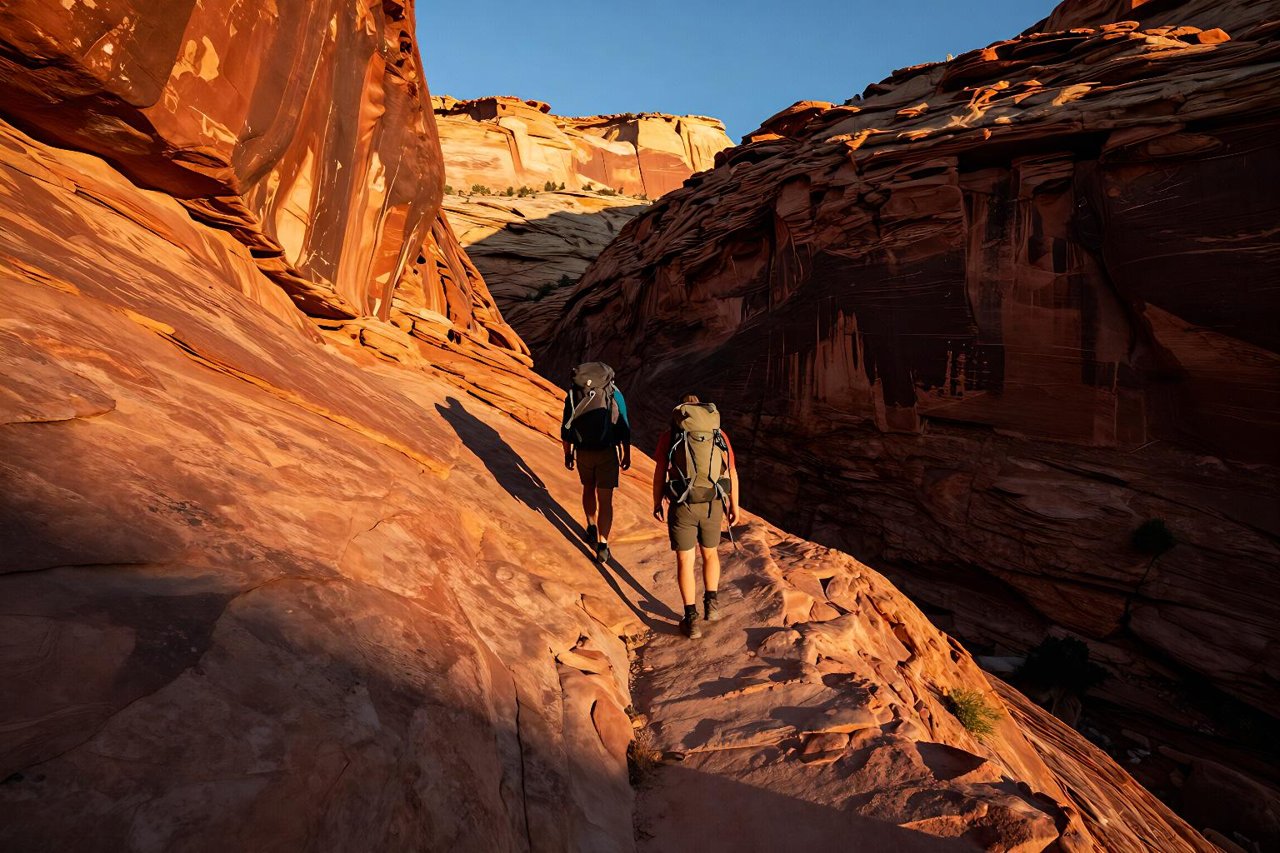
Fifteen miles of canyon with 2,000-foot walls, and a shuttle system that’s mandatory most of the year. The Narrows — wading upstream through the Virgin River — is the experience people remember. Angels Landing needs a permit from a seasonal lottery and gives you about 1,500 feet of gain over five miles, with chain-assisted sections that are genuinely exposed.
The Quiet Parks Almost Nobody Bothers With
These two get a fraction of the traffic and lose nothing on scenery.
Isle Royale, Michigan
An island in Lake Superior reachable only by ferry or seaplane, with around 25,000 visits a year. There are more moose than people on most trails. Backcountry camping is the default, the lakes are cold enough to reset your nervous system, and the silence at dusk is the thing people describe first when they get home.
Great Basin, Nevada
Wheeler Peak tops out at 13,063 feet, the bristlecone pines near the summit have been alive for more than 4,000 years, and Lehman Caves runs a ranger-led tour through marble-lined chambers. At night it’s one of the darkest skies in the lower 48. Pack layers — the temperature swing between afternoon and 3am is brutal.
Best National Parks to Visit With Kids
Acadia in Maine is the family winner and it isn’t close. The carriage roads are car-free and bikeable, the Jordan Pond loop is flat enough for short legs, and low tide at Bar Harbor turns the shore into a free marine biology lesson. Cadillac Mountain catches the first sunrise in the US from October to March, which requires a vehicle reservation and an alarm set for an unreasonable hour.
Shenandoah works well too: 105 miles of Skyline Drive means you can see a lot from the car when someone’s had enough walking. For budget maths on trips like these, there’s a solid breakdown of cheap family vacation destinations where a week for four stays under $2,000.
Shoulder Season Is Where the Value Is
Late May and late September are the sweet spots nearly everywhere. Great Smoky Mountains in mid-October gives you the foliage without the summer haze. Rocky Mountain in early June still has snow on the high trails and far fewer cars at Bear Lake. Lassen Volcanic in northern California often doesn’t fully open its main road until July because of snowpack, so check conditions rather than trusting a calendar.
Winter is underrated at a handful of parks. Bryce Canyon under snow, with the hoodoos wearing orange-and-white stripes, is a completely different place, and the crowds drop by 90 percent.
The Permits and Reservations Worth Booking Early
- Arches and Rocky Mountain: timed-entry reservations run from spring into autumn and sell out within minutes of release.
- Half Dome cables: a preseason lottery in March, then a daily lottery during the season. Plan for both.
- Angels Landing: seasonal lottery, plus a small next-day pool.
- Cadillac Mountain sunrise: vehicle reservations open 90 days ahead and vanish fast in summer.
- Lodges inside the parks: twelve months ahead is normal, not excessive.
If You’ve Only Got a Weekend
You don’t need ten days to make a park trip work. Shenandoah, Congaree, Cuyahoga Valley and Pinnacles all fit comfortably into two nights if you fly or drive in on a Friday. The trick is one ambitious hike and one easy one, not three of each. Our list of weekend getaway destinations worth two nights and a full tank has more short-trip options if a park isn’t the right call this time.
Going Alone, or Going Hard
Solo park trips are easier than most people assume, and a few parks are especially well set up for it — ranger programmes, staffed visitor centres, and shuttle systems that remove the driving anxiety. If that’s your plan, these destinations worth booking alone pair well with a park itinerary.
For something more demanding, look at North Cascades for glacier travel, Gates of the Arctic for true remoteness, or the Grand Canyon’s rim-to-rim crossing, which needs a permit and a serious training block. These are the trips that turn into the stories you tell for a decade — the same instinct behind our pick of adventure travel destinations for people who want a real story to bring home.
Pick One Park and Go Deep
The most common mistake is treating parks like a checklist. Four parks in eight days means four drives, four parking lot arguments, and almost no actual time on a trail. Yellowstone alone could absorb a week. Zion plus Bryce plus a slot canyon in Escalante is a solid ten days without ever feeling rushed.
So pick one, give it three or four full days, and learn a corner of it properly. Get up before sunrise once. Take the ranger walk you’d normally skip. Sit still at a viewpoint for twenty minutes instead of ninety seconds. That’s the difference between having seen a park and having been in one — and it’s the only metric that actually matters when you’re deciding where to go next.


