
Table of Contents
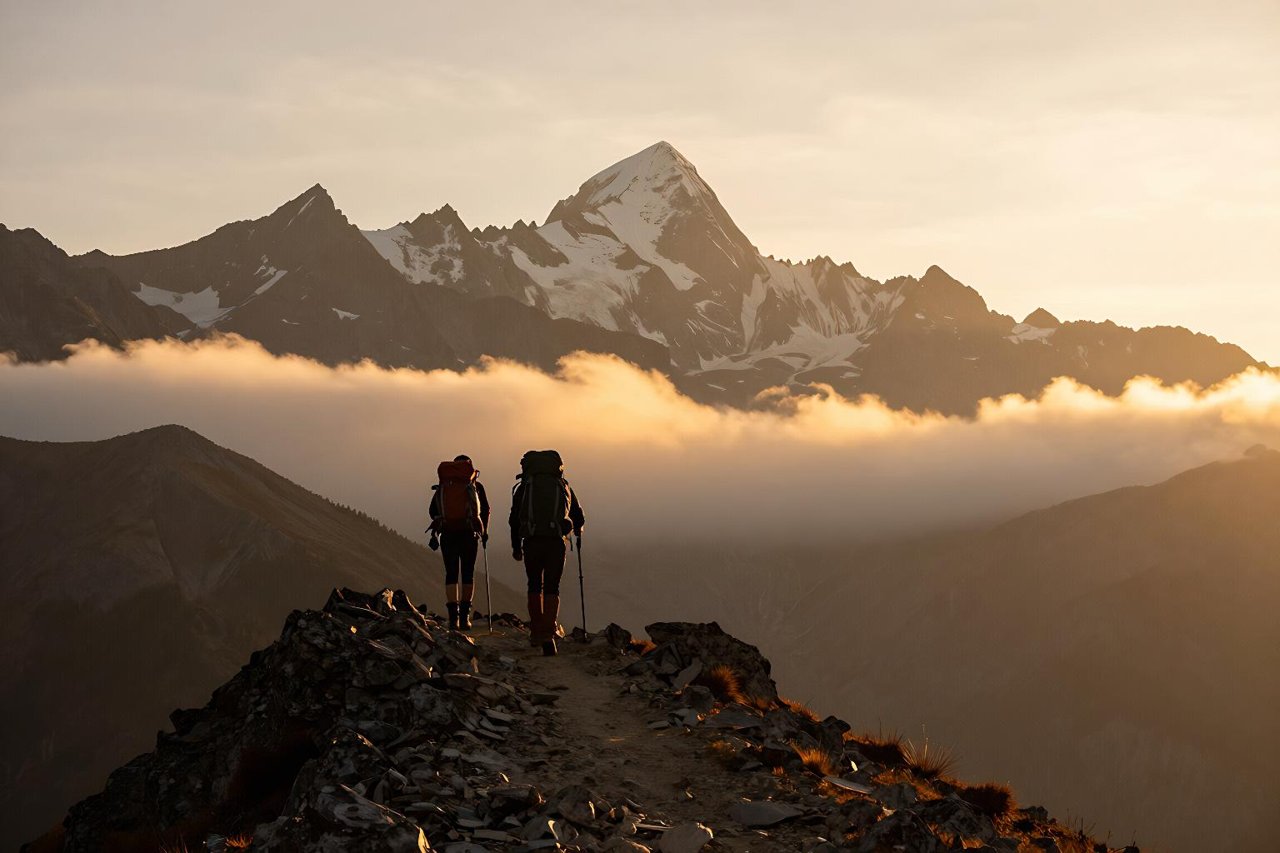
Somewhere above Courmayeur, six hours into the Tour du Mont Blanc, the trail stops being a hike and turns into a weather report. Cloud comes over the ridge, the temperature drops ten degrees, and every walker on the path does the same thing: pulls out a jacket, zips up, keeps going. That is the strange bargain of a great trail. It is rarely comfortable, and the discomfort is somehow the point.
The routes below are the ones people fly across the world for. Some take four days, some take three weeks, and a couple will hurt in ways you will still be describing to friends years later.
If you are building a bigger trip around a single trek, it helps to look at the wider picture first. Our list of destinations genuinely worth the long-haul flight is a decent place to start before you commit to a trailhead on the other side of the planet.
The Alps: Two Trails That Explain the Obsession
Europe has been walking for pleasure for about 250 years, and the infrastructure shows. Signage is excellent, mountain huts serve hot food, and you can resupply with cheese in almost any valley.

Tour du Mont Blanc (France, Italy, Switzerland)
Roughly 170km with around 10,000 metres of climb, usually walked in 10 or 11 days. The circuit loops around the Mont Blanc massif and crosses three borders, which means lunch in Italy and dinner in Switzerland is a perfectly normal Tuesday. Book refuges in January for a summer walk; the Chamonix valley fills up fast, and the stages around Les Contamines and Bonhomme are the first to go.
Alta Via 1 (Italian Dolomites)
About 120km of limestone towers, scree and rifugi, walked over 8 to 10 days from Lago di Braies south toward Belluno. It is gentler than the TMB in terms of altitude and far quieter mid-week. The payoff is scenery that looks almost fake: vertical pink walls, via ferrata cables bolted into the rock, and espresso at 2,500 metres.
Patagonia: Torres del Paine’s W Trek
Chile’s W covers roughly 80km in four to five days, and the highlight is Day Three: a 900-metre climb before dawn to watch the three granite towers turn orange above a glacial lake. Wind is the real opponent here. Gusts of 100km/h are not unusual, and a tent that survived a Scottish summer will be tested.
The season runs November to March. January is busiest, March has better light and fewer people, and the refugios at Chileno and Cuernos sell out roughly six months ahead. Fly into Punta Arenas, bus to Puerto Natales, then another bus to the park entrance. Budget two buffer days, because Patagonian weather cancels things.
Nepal: High Roads to Everest and Annapurna
Everest Base Camp is 12 to 14 days from Lukla and tops out at 5,364 metres. It is a teahouse trek rather than a camping one, which means dal bhat, yak-dung stoves and a lot of card games at 4,000 metres. The trick is the pace: gain no more than 400 to 500 metres of sleeping altitude per day, and take the acclimatisation day at Dingboche even if you feel fine.
The Annapurna Circuit remains the better all-round trek for many people. It runs 160 to 230km depending on how much road walking you skip by jeep, crosses the Thorong La at 5,416 metres, and moves through subtropical forest, pine, and high desert in a single fortnight. October and November give the clearest skies; April is warmer but hazier.
North America: Big Country, Bigger Days
The Grand Canyon’s Rim-to-Rim is only 34km, which sounds manageable until you register the numbers: about 1,400 metres down and the same back up, with the heat doubling at the river. Start at South Kaibab before first light, finish on Bright Angel, and never attempt it in July.
The Appalachian Trail is the opposite experience entirely. Around 3,500km from Georgia to Maine, walked by a few thousand people a year and finished by roughly one in four. You do not need to thru-hike it. Virginia’s 190km section through Shenandoah, with shelters, waysides selling ice cream and relatively gentle grades, is a fine two-week introduction.
Japan’s Kumano Kodo: A Pilgrimage, Not a Summit
The Nakahechi route runs about 40km over three or four days through the Kii Peninsula, linking shrines that have been walked to for more than a thousand years. There is no summit moment. Instead you get cedar forest, stone staircases, tiny villages, and nights in ryokan with hot springs and multi-course dinners.
It is also one of the most forgiving long trails anywhere, which makes it a strong pick for anyone travelling alone. Our guide to the best destinations for solo female travellers covers why Japan keeps appearing on these lists. Register as a Dual Pilgrim if you have also walked the Camino de Santiago; you get a badge and, more usefully, a good story.
New Zealand: The Great Walks Done Properly
The Milford Track is 53.5km across four days in Fiordland, finishing at Sandfly Point after the climb over Mackinnon Pass. Bookings open in a lottery system around May for the following season and sell out within hours. If you miss out, the Routeburn and Kepler tracks are almost as spectacular and slightly easier to secure.
What makes the New Zealand system work is the huts: gas cookers, mattresses, rangers, and a hard cap on numbers. You will not be alone, but you will not be queuing for a view either.
Iceland’s Laugavegur: Four Days of Colour
Fifty-five kilometres from Landmannalaugar to Þórsmörk, usually walked in four days with hut nights in between. The rhyolite mountains are yellow, green and rust red, steam rises from the ground beside the trail, and the river crossings are genuinely cold. Add the Fimmvörðuháls extension if you want two more days and a walk between two glaciers.
Iceland’s weather punishes poor preparation more than most places. Waterproofs, not water-resistant, and a buff for the wind.
Scotland and Peru: Old Trails, New Blisters
The West Highland Way covers 154km from Milngavie to Fort William over seven or eight days, taking in Loch Lomond, Rannoch Moor and the descent into Kinlochleven. Midges in June are not a rumour. Walk it in May or September and add Ben Nevis at the end if your knees still work.
Peru’s Inca Trail is short at 43km and brutal at altitude, crossing Dead Woman’s Pass at 4,215 metres on day two. Only about 500 people per day are permitted on the trail, including guides and porters, so permits for the May to September window are typically gone four to six months out.
Book Early, Walk Slow: The Practical Bits
Most disappointments on these trails come from logistics rather than fitness. A few things worth sorting before you book flights:
- Permits and lotteries: Milford Track, the Inca Trail, the Wave and the Grand Canyon overnight zones all operate quotas. Check opening dates now and set calendar reminders.
- Season windows: Patagonia is November to March, Nepal is October to November and March to April, the Alps are late June to mid-September. Go outside those and you are mountaineering, not hiking.
- Hut bookings: Alpine refuges and New Zealand Great Walks huts are separate bookings from your flights and sell out first.
- Insurance: Standard policies often exclude hiking above 3,000 metres, which rules out Nepal and much of the Andes. Read the altitude clause before you pay. Our guide to choosing travel insurance without paying for cover you’ll never use explains exactly what to look for.
- Timing your trip around weather: if your dates are fixed by work, check where to go in November for shoulder-season options that still have decent trails.
Matching a Trail to the Trip You’re Actually Taking
The single biggest mistake is choosing a trail by photograph rather than by holiday. A three-week thru-hike needs a sabbatical, a tolerant partner and a lot of dehydrated food. A four-day hut walk fits neatly into a week off with a city at either end.
Ask three questions before you book. How many consecutive days can I genuinely walk, day after day, without a rest? Am I happy carrying 12kg, or do I want my bag moved between huts? And do I want a summit, a circuit, or a line of villages and shrines?
Answer those honestly and the shortlist narrows fast. The person who wants a hot spring and a ryokan is not the same person who wants Thorong La in the snow, and both are fine. Our breakdown of the best vacation destinations for every travel style is useful for pairing a trek with the rest of the itinerary, so the hike becomes part of a trip rather than the entire trip.
Then train a little. Not much, but some. Stairs with a loaded pack, three evenings a week, for six weeks before you fly. It will not make the Tour du Mont Blanc easy, and it is not supposed to. It just means you arrive at the refuge with enough energy left to eat dinner and watch the light go off the peaks, which is, honestly, the whole reason you came.


