
Table of Contents
Cats are obligate carnivores, which means their bodies are built for meat. That does not stop most cats from showing intense interest in whatever is on your plate. The good news is that several human foods cats can safely eat in small amounts, provided you keep the preparation plain and the portions tiny. A teaspoon of shredded chicken is a treat. A bowl of chicken is a meal replacement, and that is where problems start.
Start With the 10 Percent Rule
Treats, including human foods, should make up no more than about 10 percent of your cat’s daily calories. The other 90 percent needs to come from a complete and balanced cat food. This matters more for cats than for many other animals because cats have specific requirements for taurine, arginine, vitamin A and other nutrients. A few bites of plain chicken will not hurt a healthy adult cat. A steady diet of shared snacks can leave nutritional gaps.
Small portions also protect the waistline. A 10-pound cat needs roughly 200 to 250 calories a day, depending on age and activity. A single tablespoon of shredded cheese can add 30 calories or more. That is a big chunk of the daily budget for a animal that weighs less than a bag of flour.
Safe Proteins Cats Can Share
Cooked chicken and turkey
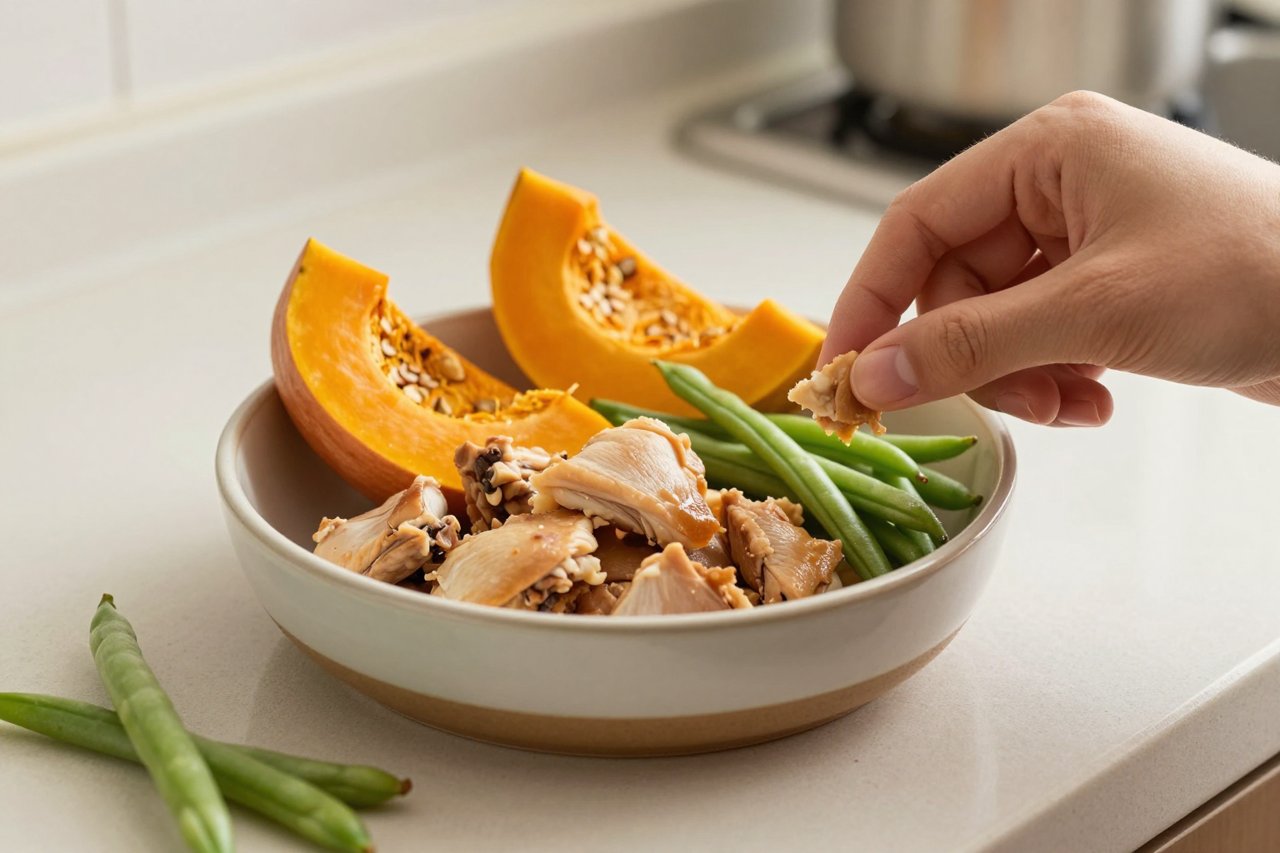
Plain, boneless, skinless chicken or turkey is one of the simplest safe options. Boil, bake or poach it with no salt, onion, garlic, butter or sauce. Shred it into pea-sized pieces so your cat does not gulp a chunk whole. Skip deli slices, seasoned rotisserie chicken and anything fried. Those often carry high sodium, preservatives or onion powder.

Cooked fish
Cats can eat plain cooked salmon, whitefish or sardines packed in water. Remove every bone, keep the portion to a teaspoon or two, and avoid fish canned in oil or brine. Tuna is fine as an occasional tiny taste, but not as a staple. Large tuna can carry mercury, and cats should not live on fish alone.
Eggs
A plain scrambled or hard-boiled egg is safe once it is fully cooked. Raw egg whites contain avidin, which can interfere with biotin absorption, and raw eggs carry a Salmonella risk. Cook the egg without butter, oil, salt or cheese, then offer a small forkful. Some cats love it; others ignore it completely.
Vegetables and Fruits That Usually Pass Muster
Cats do not need produce in their diet, but small pieces of certain vegetables and fruits are generally safe. Think of them as a curiosity snack, not a nutritional boost.
- Plain pumpkin: Use plain canned pumpkin, not pie filling. A teaspoon mixed into food or offered on its own can add fiber. Learn more in this guide to whether pets can eat pumpkin.
- Cooked green beans: Chop them into small pieces. No salt, butter or garlic.
- Carrots: Cook until soft, then cut into tiny cubes. Raw carrot is a choking risk for some cats.
- Cucumber: A thin, seedless slice is fine. Many cats treat it like a toy before they treat it like food.
- Blueberries: One or two berries, mashed or cut, is plenty. Do not add sugar or cream.
- Melon: A small cube of cantaloupe or honeydew is safe. Remove the rind and seeds.
Keep every piece pea-sized or smaller. If your cat has a sensitive stomach, skip produce and stick with plain protein. If you are trying to add fiber to your cat’s diet, a complete high-fiber cat food is far more reliable than piling pumpkin into the bowl.
Dairy and Grains: Small, Plain, and Optional
Many cats are lactose intolerant, so the classic saucer of milk is a bad idea. A teaspoon of plain unsweetened yogurt or a tiny crumble of hard cheese is usually tolerated by cats who do not react badly to dairy. Watch for diarrhea or vomiting afterward. If either appears, skip dairy entirely.
Plain cooked white rice or plain oatmeal can be offered in small amounts, especially if a vet has suggested a bland diet. Cats do not need carbohydrates, though. These foods are fillers, not essentials, and they should never replace a meat-based cat food.
Foods That Should Stay Off the Plate
Some human foods are dangerous for cats, even in tiny amounts. Keep these away from the bowl and the counter.
- Onion, garlic, chives and leeks: These can damage red blood cells. Cats are especially sensitive, and onion powder hides in many prepared foods.
- Chocolate, coffee, tea and energy drinks: Caffeine and theobromine are toxic to cats.
- Alcohol and raw bread dough: Both can cause serious illness. Raw dough also expands in the stomach.
- Grapes and raisins: They have been linked to kidney damage in pets. Do not test the theory.
- Xylitol: This sweetener appears in sugar-free gum, some peanut butters and baked goods. It is dangerous for pets.
- Cooked bones and fatty trimmings: Cooked bones splinter, and rich fat can trigger pancreatitis.
- Raw fish and raw meat: They carry bacteria and parasites. Raw fish also contains thiaminase, which can break down thiamine.
Processed meats, salty snacks, sugary treats and heavily seasoned leftovers belong in the same category. A cat’s liver and kidneys are not designed for human levels of salt and sugar.
How to Introduce a New Food Without a Mess
Offer one new food at a time, starting with a teaspoon. Wait 24 to 48 hours before trying something else so you can spot a reaction. Serve the food plain and at room temperature. Cut everything small, and never mix a new food into an entire meal if your cat is suspicious. A separate small dish works better.
Watch for vomiting, diarrhea, itching, swelling or a sudden change in appetite. Call your vet if any of those appear. Cats are not small dogs, and dog feeding advice does not map cleanly onto cats. If you also have a picky dog at home, the best dog food for picky eaters guide can help with that pet, but do not use it to choose cat meals.
A Realistic Safe-Taste Menu for the Week
For a healthy adult cat, a simple tasting week might look like this: a teaspoon of shredded chicken on Monday, a pea-sized piece of plain pumpkin on Tuesday, a small piece of cooked egg on Wednesday, a chopped green bean on Thursday, and one blueberry on Friday. Skip the weekend or repeat a favorite. Keep the total treat load under 10 percent of daily calories.
Offer these tastes after your cat has eaten their regular meal, not before. A hungry cat may fill up on treats and leave the balanced food behind. Fresh water should always be available, and any cat with a health condition, a kitten, or a pregnant cat should get the vet’s approval before trying human food. Small, plain, occasional. That is the pattern that keeps sharing safe.


