
Table of Contents
My neighbour Ruth adopted a kitten at 74. Three months later she was back at the shelter, not because she didn’t love the little thing, but because a 14-week-old kitten had decided her curtain rails were a climbing frame. She swapped him for Otis, a seven-year-old tabby who sleeps eighteen hours a day and has never once climbed anything taller than the sofa.
That story sums up the search for the best pets for seniors better than any list of breed traits. The right animal is the one that matches your knees, your budget, your schedule and your tolerance for noise. Get those four things right and you have a companion for years. Get them wrong and you have a very expensive source of guilt.
Start With Your Body, Not the Breed
Before you look at a single photo of a puppy, answer some unglamorous questions. Can you get down to the floor and back up again without holding onto something? How far can you walk before your hip starts complaining? Who feeds the animal if you end up in hospital for a week?
These matter more than pedigree. A cat’s litter tray needs scooping twice a day, every day, forever. A dog needs to go out in the rain at 6am in February, whether or not you slept well. If either of those sounds unbearable on a bad day, that’s useful information, not a character flaw.

Strength is worth thinking about too. A 25kg dog that lunges at a squirrel can pull a fit adult off balance. For anyone with osteoporosis or a history of falls, an animal under about 10kg, or one that walks politely on a loose lead, is the safer bet by a wide margin.
Cats: The Most Forgiving Choice
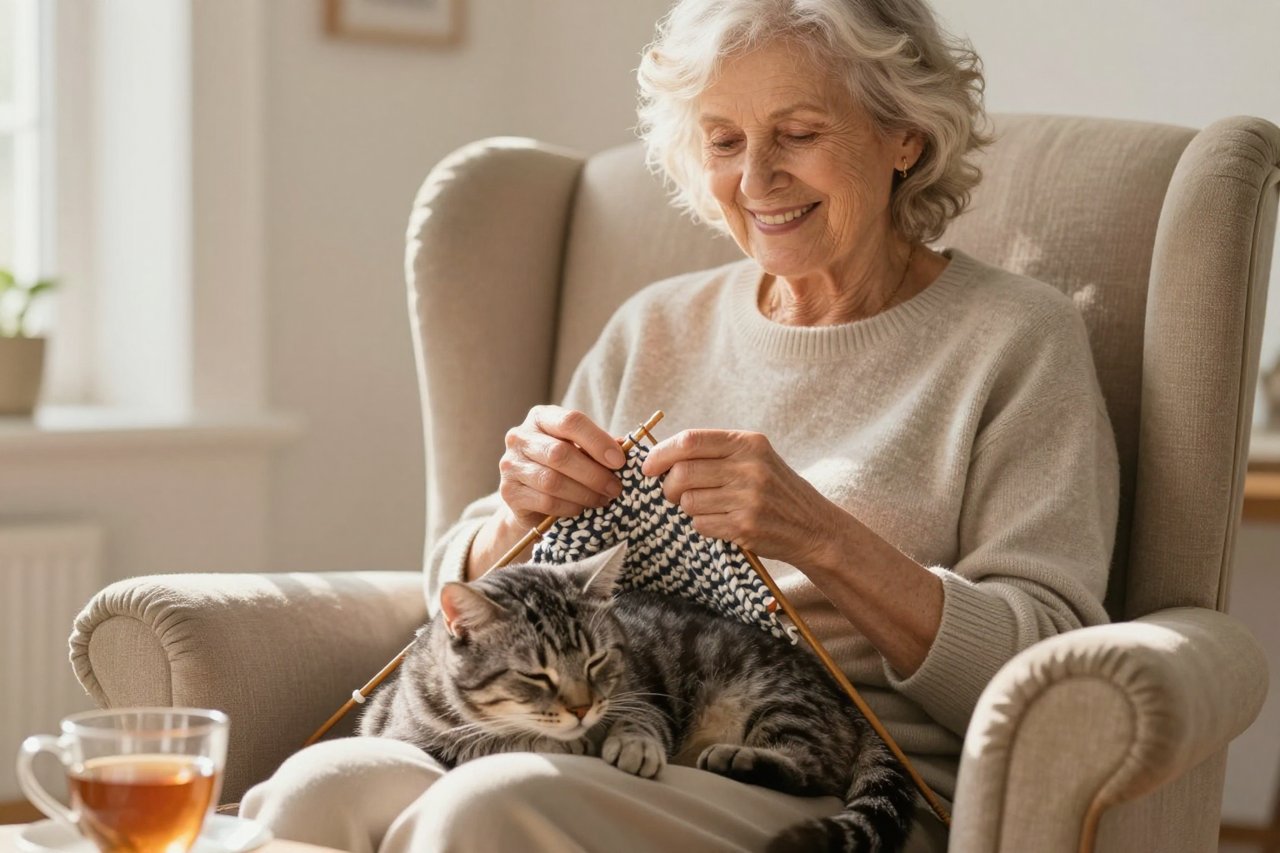
Ask any vet what they’d recommend for a 75-year-old living alone and most will say a cat, ideally an adult one. Cats are portable in the sense that they don’t need walking, they’re clean by instinct, and they’re perfectly happy with a human who naps in the afternoon. A healthy indoor cat costs roughly $1,500 a year all in, which is less than half the lifetime-average bill for a medium dog.
Why older cats suit older owners
A ten-year-old cat has already done its chaos. It knows how a house works, it isn’t chewing cables, and it will spend most of the day asleep on a warm windowsill. Many shelters waive or heavily discount adoption fees for cats over seven, and some run programmes that pair senior cats with senior people. You also get a clearer picture of the animal’s personality than you ever would with a kitten.
What to check before you commit
Buy a litter tray with low sides, because a high-sided box is a hurdle for an arthritic cat and a recipe for accidents on the rug. Put food and water bowls on a raised stand if your cat is stiff in the morning. And think seriously about adopting a bonded pair: two cats keep each other company during the hours you’re out or unwell, and the extra cost is mostly food.
Dogs: Wonderful, But Be Honest About the Walking
Dogs get you out of the house, which is genuinely good for blood pressure, mood and the vague sense that the day has a shape. Studies of older dog owners keep finding the same thing: more steps, more small talk with strangers, fewer GP visits. The catch is that a dog is a fourteen-year commitment made by someone who may be 78 when it starts.
There’s a solid shortlist of calm, manageable dog breeds that suit older owners, and it’s worth reading before you fall for a face at the shelter.
Breeds that usually work
Cavalier King Charles Spaniels are affectionate lap dogs at around 6kg, though be aware of heart issues in the breed. Maltese and Shih Tzus are small and happy with a short daily walk, but need professional grooming every six to eight weeks. A retired greyhound is one of the great secrets of dog ownership: it sprints for ninety seconds and then sleeps for eighteen hours, and it’s calm enough to live in a flat.
Breeds that usually don’t
Border collies, huskies, Jack Russells and anything marketed as “energetic” will want two hours of stimulation a day and will rearrange your furniture if they don’t get it. That’s not a bad dog, just the wrong one.
Small Mammals: Cheaper, Quieter, Still Needs Company
The appeal here is obvious. No walks, no barking, a cage in the corner. The catch is that most small mammals are social animals that suffer when kept alone, and their vet bills are often higher than a cat’s because fewer clinics treat them.
- Guinea pigs need to be kept in pairs, eat endless hay, and live five to seven years. Sweet, vocal, and genuinely good company if you handle them daily.
- Rabbits are not cage pets. They need a run, hay, and a rabbit-savvy vet, and they live eight to ten years.
- Rats are the underrated pick: trainable, affectionate, content on a shoulder, but their lifespan is only about two years.
- Hamsters are solitary and nocturnal, so you’ll mostly see them at 10pm. Fine as a low-key pet, less good as a companion.
If the priority is genuinely minimal effort, there are a handful of genuinely low-maintenance pets worth comparing, plus a few popular ones that are secretly far more work than the pet shop admits.
Fish and Birds: More Work Than the Bowl Suggests
A betta in a vase is a slow death, not a low-maintenance pet. A proper setup means a 20-litre tank, a heater, a filter and a 25% water change every week. Once it’s cycling, a temperate tank costs maybe $6 a month to run, which is unbeatable. Just budget $150 to $200 upfront and accept that the weekly water change is non-negotiable.
Birds are the opposite problem. A budgie is cheap to buy and lives ten to fifteen years. A cockatoo can outlive its owner by decades, which is why so many end up rehomed in their forties and fifties. Parrots are loud, messy, and socially needy. Finches in an aviary are a far gentler option if birds appeal.
What a Pet Actually Costs Each Month
Rough figures, based on routine care with no emergencies:
- Adult cat: $50 to $80 (food, litter, insurance)
- Small dog under 10kg: $90 to $150, plus grooming for long coats
- Pair of guinea pigs: $60 to $90, mostly hay and vegetables
- Temperate fish tank: $10 or less once established
Add an annual vet visit of $150 to $300, and keep $1,000 to $2,000 in a separate account for the day something goes wrong at 9pm on a Sunday. That fund is the single most important piece of equipment you’ll buy, and it prevents the awful choice between a bill you can’t pay and a pet you can’t treat.
Feeding is where people overspend without noticing. Marketing on the front of a bag is largely meaningless; the ingredients panel is what counts, and a bit of knowledge goes a long way. This guide to reading best-of lists and pet food labels sensibly is a decent starting point for a first-time owner.
If Grandchildren Visit Often
Your pet has to survive other people’s children. A nervous cat that hides for three days after each visit isn’t having a good time, and neither is a child who’s been scratched. If young grandchildren are a regular fixture, it’s worth looking at animals known for patience and forgiving temperaments, and there’s honest guidance on pets that cope well with children that applies just as much to a grandparents’ house as a family one.
Try Before You Commit
Most shelters will let you foster a cat or dog for two weeks before signing anything. Take them up on it. You’ll learn within about four days whether the animal howls at 5am, whether the litter tray smell bothers you, and whether your back can handle the bending. It’s a no-cost trial on the single biggest lifestyle decision you’ll make this year.
Ask the shelter frankly about the animal’s vet history, teeth, and any known anxiety. Ask whether the pet has lived with older people before. Ask what happens if you can no longer care for it, because good rescues take their own animals back and that safety net matters enormously. And if you’re on the fence between a cat and a dog, borrow a friend’s for a weekend walk. Twenty minutes on a lead will tell you more about your own capabilities than a year of reading breed profiles.


