
Table of Contents
Start With Your Cat’s Version of Normal
Every cat runs on a routine you probably know better than you think. Mine sits on the same windowsill from 7am until about nine, meets me at the door with a creaky chirp, and sleeps across the foot of the bed. When she quietly stopped doing all three within the same fortnight, that was the real warning sign. Not the yowling. Not the scratched sofa.
Cats are built to hide discomfort. As small predators that are also prey, they mask weakness instinctively, so stress rarely shows up as obvious distress. It shows up as a drift away from the script: new sleeping spots, a shorter fuse, a habit that appears out of nowhere. Knowing your particular cat’s baseline gives you something concrete to measure against, which is far more useful than any generic checklist.
The Signs Most Owners Walk Right Past
Hiding that isn’t a game
A cat who disappears under the duvet for two hours after a supermarket delivery is fine. A cat who spends 18 hours a day in the back of a wardrobe, comes out only to eat, and flattens when you walk past is not. Pay attention to whether she’s still using her favourite high perches and sun patches. A stressed cat gives up territory she used to defend, shrinking her world down to one safe room.
Grooming that crosses a line
Overgrooming is one of the most reliable physical clues in a stressed cat. Look for symmetrical thinning on the inner thighs, belly, and forearms, plus a coat that suddenly feels sparser than it did a month ago. Some cats lick themselves raw enough to leave pink skin and small scabs. If you can’t brush her without a wrestle, that’s its own stress signal, and these tips on how to groom a cat at home without a fight can help you check her skin and coat without adding to the tension.

Body language you can read in five seconds
Cats broadcast stress through posture long before they act out. Watch for these:
- Tail: tucked tight against the body, or held low with the tip flicking while the cat is resting
- Ears: rotated sideways or flattened back rather than facing forward
- Whiskers: pulled back flat against the cheeks instead of fanned out
- Eyes: pupils fully dilated in ordinary indoor light
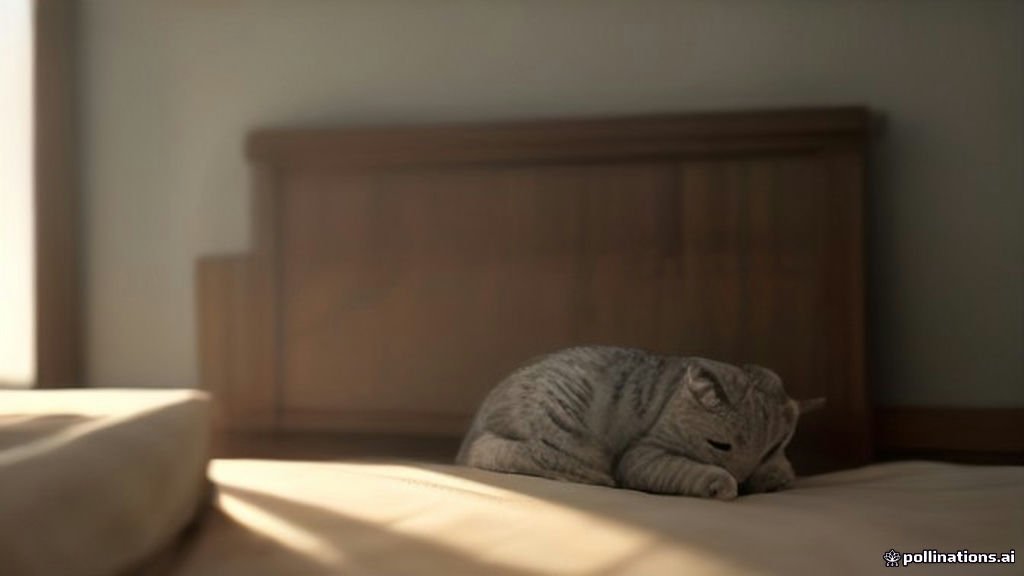
- Posture: a crouch that looks like a relaxed loaf but has all four paws planted, ready to bolt
The Litter Box Is a Stress Diary
Few things tell you more about a cat’s state of mind than what she does in the tray. Peeing on the bath mat, spraying vertical surfaces, or producing unusually small urine clumps all point to trouble. A stressed cat may hold urine for hours to avoid a box she doesn’t feel safe in, and that retention is a known contributor to feline cystitis, especially in indoor males.
Run the numbers. The accepted rule is one box per cat, plus one, placed in separate rooms rather than lined up together. Boxes next to a washing machine, behind a door that gets shut, or under a hood with poor airflow get avoided. If your cat has started going beside the box rather than in it, change the litter back to what she used before and move the box somewhere quiet for a week before assuming it’s behavioural.
Appetite, Water, and the Slow Fade
Stress in cats often shows up at the bowl. Some go off food entirely, sniffing and walking away. Others bolt their meals and vomit within minutes, or start stealing food in a multi-cat house where one animal guards the kitchen. In a household with two or more cats, watch for the one who hangs back and eats after everyone else has finished. That cat is usually the one under pressure, and separating feeding stations into different rooms fixes it more often than people expect.
Weigh your cat monthly by standing on the bathroom scale with and without her. A drop of 200 to 300 grams over a few weeks is easy to miss by eye and worth a vet call.
Purring Doesn’t Always Mean Happy
Plenty of owners assume a purring cat is a contented cat, which is why genuine stress gets missed. Cats also purr when they’re anxious, in pain, or recovering, and the low-frequency vibration seems to be self-soothing as much as social. If you want the fuller picture, this piece on why cats purr and what that motorboat hum actually signals is worth ten minutes, because context changes everything. A cat purring on your lap with soft eyes is relaxed. The same cat purring flat on the floor of a vet clinic is not.
Triggers You Might Have Missed
Cat stress is usually about territory, routine, and control, and the causes are often invisible to us. A few common ones:
- A neighbourhood cat walking past the window each morning, triggering territorial patrol
- New furniture, a rearranged living room, or building work next door
- A guest who stays for a week and sleeps in your cat’s room
- A new baby, a new puppy, or a partner moving in
- A change of litter brand or a moved food bowl
- The carrier appearing from the cupboard, which your cat has learned means the vet
That last one is worth tackling properly. If the basket only comes out for injections, your cat has learned to fear the object itself, and every journey starts from a point of panic. The advice in everything you need to know about cat carriers with Dr. Mansum Yau covers how to make the box a normal, boring part of the furniture instead.
When It’s Not Stress: Health Problems That Mimic It
Before you reorganise the house, rule out pain. Dental disease, arthritis, hyperthyroidism, and cystitis all produce irritability, hiding, and appetite changes that look identical to stress. Cats are also living far longer than they used to, and this roundup of cat breeds that regularly pass 15 is a reminder that a 16-year-old cat who suddenly avoids the stairs is more likely sore than anxious.
Illness can upend a household fast too, as anyone who has rushed a sick cat to an emergency clinic knows. There’s even a news story about Paul Hollywood caught speeding due to a sick cat, which tells you how quickly a poorly cat takes over your day. Get a vet check first. A clean bill of health makes everything else easier to interpret.
Practical Changes That Take the Pressure Off
Most stress reduction comes down to giving your cat more choice and more control. Try stacking a few of these rather than relying on one:
- Add vertical space. A shelf above head height or a tall cat tree near a window lets a nervous cat get out of the way without leaving the room.
- Leave boxes and covered beds down. Hideaways should be permanent fixtures, not things you tidy away.
- Separate resources. Two water bowls in different rooms, two feeding spots, two scratching posts. Crowding at one station is a quiet source of friction.
- Play before food. Two ten-minute wand sessions that mimic a hunt, followed by a meal, mimic the natural catch-eat-groom-sleep cycle and settle a wound-up cat.
- Keep the timetable steady. Feed at similar times each day. Predictability is the single biggest comfort for cats.
- Consider a pheromone diffuser in the main room, though give it two to three weeks before judging whether it’s helping.
If Nothing Shifts, Bring In Help
Give structured changes about a fortnight, and keep a short log as you go: what she did, when, and what happened just before. Patterns you can’t see day to day become obvious in a list, and a vet will take that record far more seriously than a vague description. If your cat is still hiding, overgrooming, or avoiding the litter tray after that, ask for a referral to a veterinary behaviourist rather than a trainer. They can assess whether anxiety medication is appropriate, which for some cats is the difference between coping and genuinely suffering. Nothing about that is a failure on your part.
One last, practical test. Take a photo of your cat’s resting posture today, and another in three weeks. Owners are consistently surprised by what they missed in the moment and can spot clearly afterwards.


